



How much protein do you need when exercising?


Question: I’ve taken up running and signed up for a half-marathon to keep me motivated. I know training puts a lot of wear and tear on the body, and I’ve heard protein is essential. How do I make sure I’m getting enough protein so I can perform at maximum ability?
Answer: As you prepare for your upcoming race — or any other athletic event — you may be looking for ways to fine-tune your training program and up your performance. Since nutrition is such an important component of training, it is a great idea to undertake a review of what you’re eating to maximize your efforts.
Do you know how much protein you need when exercising? Judging by all the protein bars, shakes and powders out there, you could be led to believe you need a protein supplement.
Contrary to the hype that everyone needs more protein, most people in the U.S. meet or exceed their needs. This is especially true for males ages 19 to 59. The Dietary Guidelines for Americans 2020-2025 indicate that men in that age range exceed their protein recommendations, especially from meat, poultry and eggs. Even athletes often get more protein than they need without supplements because their calorie requirements are higher. With more food comes more protein. However, being mindful of the type of protein is important. So, too, is knowing how much protein you actually need.
Where does protein come from?
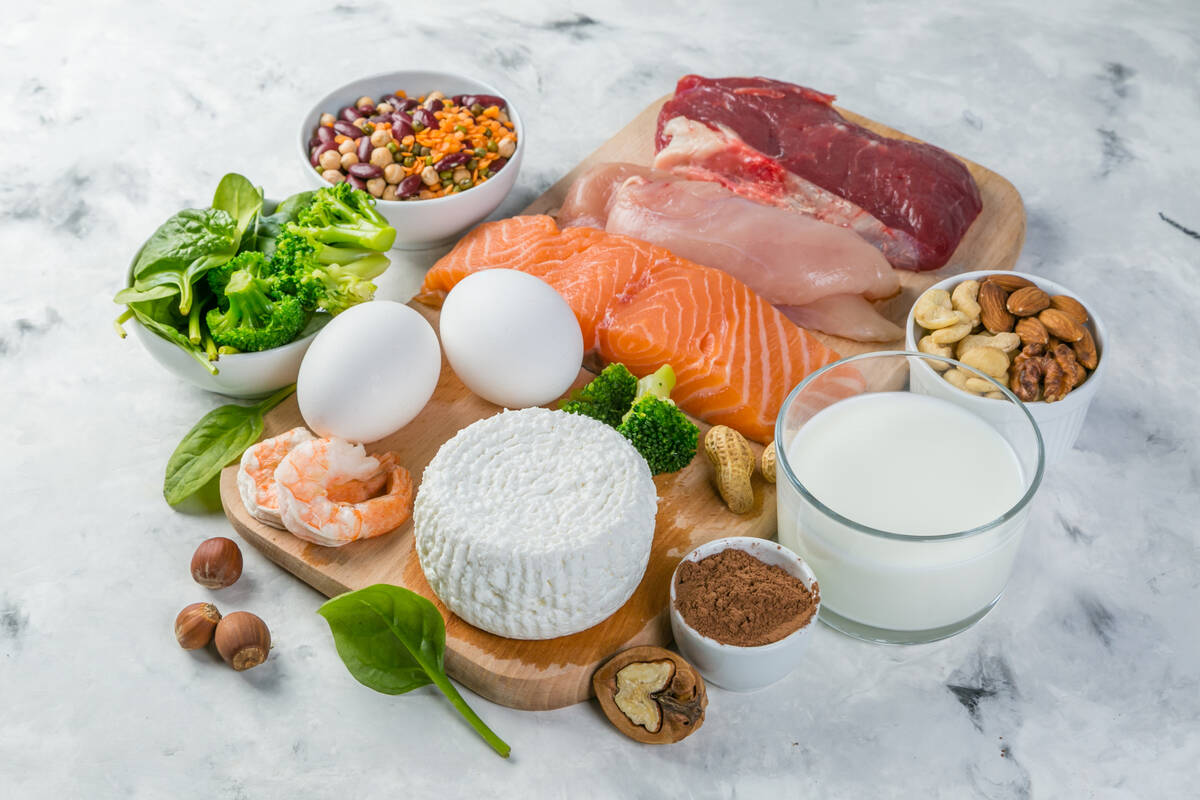
The healthiest protein options are plant sources, such as soy, nuts, seeds, beans and lentils. But lean meats, such as skinless, white-meat chicken or turkey; a variety of fish or seafood; egg whites; and low-fat dairy are also excellent protein sources.
It is better to meet dietary protein needs with whole foods like these rather than with the use of supplements. Manufactured supplements are no more effective in building lean muscle mass than whole foods, as long as you’re eating enough whole foods each day. Supplements also don’t contain the additional nutrients you get from whole foods.
How much protein do you need?
Anywhere from 10 percent to 35 percent of your calories should come from protein. So, if your needs are 2,000 calories, that’s 200 to 700 calories from protein, or 50 to 175 grams. The recommended dietary allowance to prevent deficiency for an average sedentary adult is 0.8 grams per kilogram of body weight. For example, a person weighing 165 pounds, or 75 kilograms, should consume 60 grams of protein daily.
People who exercise regularly have higher protein needs, about 1.1 to 1.5 grams per kilogram of body weight. People who regularly lift weights or are training for a running or cycling event need 1.2 to 1.7 grams per kilogram. Excessive protein intake would be more than 2 grams per kilogram of body weight each day.
Once you reach ages 40 to 50, sarcopenia, or loss of muscle mass, begins to set in. To prevent it and maintain independence and quality of life, your protein needs increase to about 1 to 1.2 grams per kilogram body weight or 75 to 90 grams per day for a 75-kilogram person.
Protein shouldn’t be the entire meal, but should be paired with fruits, vegetables and whole grains. If you think you need more protein, consider adding more beans, lentils, soy or seafood rather than processed supplements.
Joel Hollow is a registered dietitian nutritionist with the Mayo Clinic Health System in La Crosse, Wisconsin.


