What does a diagnosis of dense breasts mean?
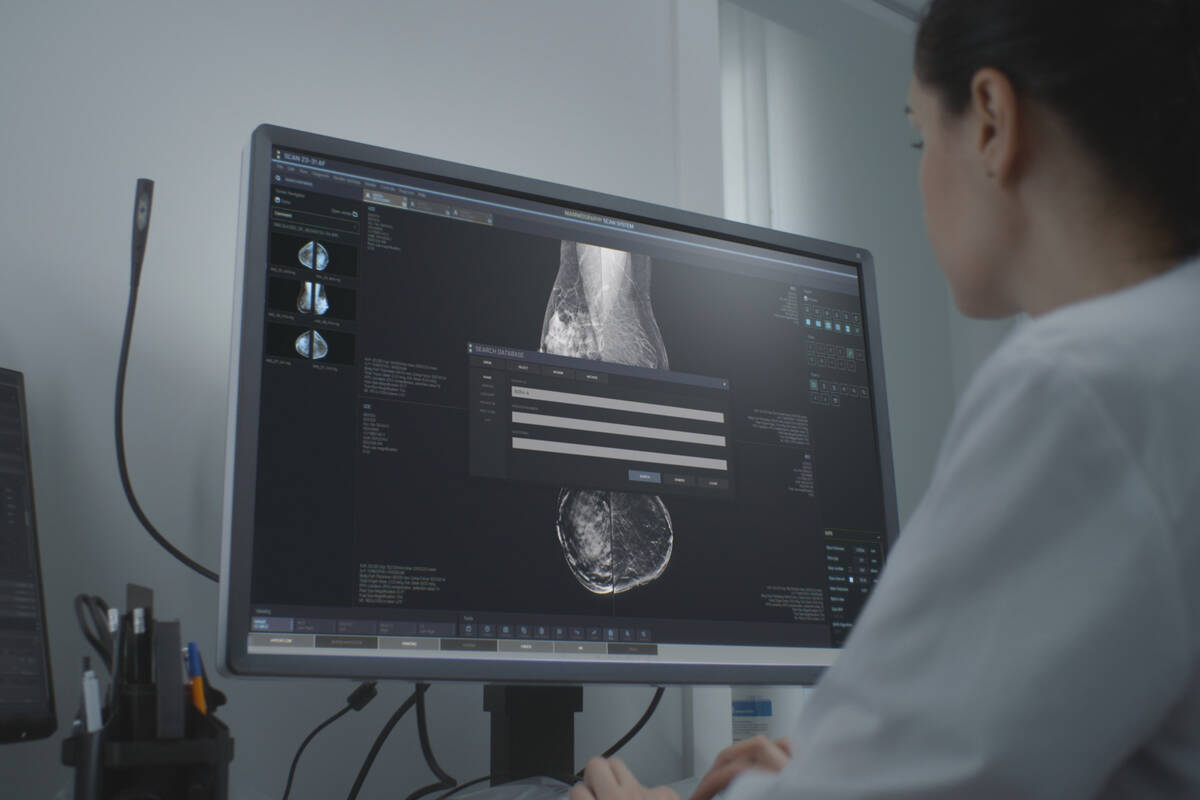


The Food and Drug Administration issued a rule in March 2023 that requires health care professionals to notify people if they have dense breasts. Facilities subject to the Mammography Quality Standards ACT must comply with this requirement no later than Sept. 10 of this year. Studies have shown that dense breast tissue can make it more difficult to detect breast cancer early.
Dr. Kristin Robinson, a Mayo Clinic breast radiologist, says women with dense breast tissue are at a slightly increased risk of developing breast cancer compared with women without, and that’s why early detection is so important.
“About 50 percent of women have dense breast tissue,” Robinson says.
Robinson says you can’t tell by looking at a woman whether she has dense breasts. She says people with dense breasts have less fat and more glandular and connective tissue in their breasts.
“When we see a woman’s mammogram, that dense tissue, that fibroglandular tissue, looks white, whereas the fat looks dark or like a black color. So, when we’re looking at a mammogram, the more white tissue we see, the more dense a woman’s breasts are considered,” Robinson says.
She says it’s difficult to detect cancer in dense breasts because breast cancer and dense tissue both appear white on a mammogram.
“Our sensitivity or our ability to detect breast cancer goes down in women who have dense breast tissue for that reason,” she explains.
The radiologist encourages women with dense breast tissue to have supplemental screenings.
Whole-breast screening ultrasound, MRI, molecular breast imaging, and contrast-enhanced mammography are some options patients might consider, Robinson says.
Mayo Clinic health care professionals recommend annual mammograms starting at age 40 for most women. In addition, a personalized breast cancer risk assessment is suggested at age 30 for all women to see if screening is needed before age 40.