A Precious Heirloom
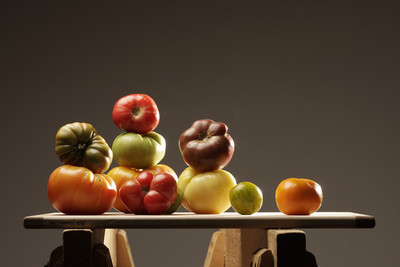
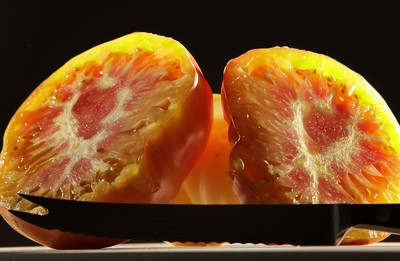



The parameters of what defines an heirloom tomato are subject to debate.
There's the camp that believes that the seeds -- well, not the seeds, per se, but the cultivars whence they came -- must be at least 100 years old. Then there are those liberals who say 50 years will do. And finally we have the romantics, who insist that the term accurately applies only to those successive generations of seed that are passed down by successive generations of people, along with the family snuffboxes and antimacassars.
"There are," said Martin Heierling, executive chef of Sensi at Bellagio, "quite a few definitions."
But it all comes down to this: "What we understand of heirloom vegetables," he said, "is of them being naturally pollinated vegetables." Which applies to fruits, as well.
And which means they're pollinated the way Mama Nature intended -- by the birds and the bees and the wind and ... well, you get the picture.
What results is sometimes not a very pretty product, which is kind of the whole point. These are warts-and-all tomatoes, with uneven coloration and crevices, craters and other imperfections a'plenty. Generally available only July through October, they're not like the rosy-red tomatoes you're used to seeing in the supermarket year-round.
So why would anyone choose -- let alone pay extra for -- an heirloom tomato?
"Basically, the tomatoes that we're used to buying have been bred to get rid of all of those flaws that we get in heirloom tomatoes," said Jeff Biddle, produce coordinator for Whole Foods Markets' Southern Pacific Region. "A lot of the flavor has been bred out, also. They look perfect but don't taste all that great. Heirlooms taste great but don't look as perfect."
(And here's a fun fact, while we're revealing the dirty little secrets of conventionally grown tomatoes: Many of them -- particularly the winter varieties -- are picked green, while they're still firm, so that they can be shipped without much damage. Then they're placed in special storage facilities and exposed to ethylene gas, which brings out that nice, red color. Tomatoes naturally produce ethylene gas, which is why they'll further ripen if you put them in a paper bag on the counter when you bring them home from the store, but somehow, artificially gassing the green ones doesn't seem natural.)
"Heirloom tomatoes have not been bred for ease of shipping and retailing," Biddle said. "They've been bred for flavor."
Which is why they're so appealing to Heierling and his fellow chefs.
"They have a huge content of sweetness, because they are ripened on the vine," said Heierling, who gets his heirloom tomatoes from the Santa Monica farmer's market in California. "And not only flavor, but they have aroma.
"I love that they're uneven shapes, different sizes, different colors. And there are so many different kinds. We don't peel them; we do nothing with them other than cutting them into uneven shapes -- not perfect shapes; I don't want to use such a beautiful, natural ingredient and then make it perfect."
The tomatoes are cut into wedges and mixed with some grape-sized tomatoes. They're not refrigerated, and not cut in advance but after a tomato salad is ordered.
And the salad, Heierling said, is simple -- "sea salt, high-grade extra-virgin olive oil, a little bit of pepper, fresh basil and that's it. It doesn't need anything else. The flavor is just there."
With buffalo mozzarella brought in from Italy, "it's the No. 1-selling salad that we have on in the summer," he said.
Biddle said that among consumers, the popularity of heirloom tomatoes increases year by year.
"You can tell, because you can go into almost any supermarket and see heirloom tomatoes during the season," he said. "And almost any medium- to high-end restaurant will have some type of dish with heirloom tomatoes in it during the season."
Biddle said another appeal of heirloom tomatoes is that most of the varieties have slightly different flavors.
"Some of them taste like lemons (that would be the imaginatively named Lemon Tomato), some are sweeter, some more tart," he said. "If you're not sure what you're buying, try to get a sample before you buy it to make sure you like the particular flavor and texture of that variety."
Carlos Guia -- who was executive chef at the now-closed Commander's Palace and will be executive chef/partner at Chef Louis's Las Vegas and Louis's Fish Camp, set to open in the new Town Square in November -- likes the flavor variation as well.
"I enjoy them because they have such a great, sweet flavor," Guia said. "Green Zebra might be a little more tart. Brandywine, Cherokee, Pineapple Marvel, they have great flavor.
"And they're so appealing on the plate -- a beautiful presentation."
Guia uses heirloom tomatoes in salads or as features on appetizer plates. He's created Creole mozzarella -- combining mozzarella curd with Creole seasoning and crab boil -- for "this nice spicy flavor that combines really well with the tomatoes."
Or he'll create a carpaccio of heirloom tomatoes, using the thin slices in varied colors to cover a plate, then topping it with king crab.
He also plans to serve fried green tomatoes at the new restaurants, possibly using Green Zebra or Evergreen, "which is kind of like a Whopper but green."
And in the classic, simple style, with aged balsamic vinegar or a balsamic reduction, basil and olive oil.
Biddle has one piece of advice for those newly experimenting with heirloom tomatoes: "Use them right away."
Considering the aroma and flavor, that shouldn't be much of a problem.
HEIRLOOM TOMATO AND
BURRATA CHEESE SALAD
4 large heirloom tomatoes (about 21/2 pounds) or 4 to 5 large plum tomatoes
Fleur de sel or coarse kosher salt
Freshly ground black pepper
1 teaspoon dried oregano
1/4 cup torn fresh basil leaves plus additional whole leaves for garnish
1/4 cup extra-virgin olive oil
4 (2.5-ounce) rounds burrata cheese
Cut tomatoes into wedges and place in a large bowl. Sprinkle with fleur de sel and pepper. Crush oregano between palms to release flavor; add to tomatoes. Add 1/4 cup basil and olive oil and mix well. Let stand at room temperature at least 30 minutes and up to 1 hour, stirring occasionally.
Place 1 burrata cheese round in center of each plate. Fan tomatoes around cheese, dividing equally. Drizzle with dressing from bowl. Garnish with additional basil leaves and serve.
Serves 4.
-- Recipe from Bon Appetit magazine
CORN AND POTATOES
WITH HEIRLOOM TOMATOES
1/4 pound bacon (4 slices), chopped
1 shallot, minced
1 teaspoon kosher salt, divided
1/4 cup dry white wine
1/2 pound Yukon Gold potatoes, peeled and cut into 1/3-inch dice (11/2 cups)
11/4 cups plus 1 tablespoon water, divided
4 cups corn (from 8 ears), divided
11/2 teaspoons sweet Spanish smoked paprika
1/4 teaspoon chopped fresh thyme
1/2 pound heirloom or cherry tomatoes, chopped or halved
Cook bacon in a heavy medium saucepan over medium heat, stirring occasionally, until browned and crisp. Transfer with a slotted spoon to paper towels to drain and reserve fat in pan.
Cook shallot with 1/4 teaspoon kosher salt in fat in pan over medium heat, stirring occasionally, until softened. Add wine and boil over high heat, stirring and scraping up brown bits, until reduced by half, about 3 minutes. Stir in potatoes, 1/2 cup water and 1/2 teaspoon kosher salt and simmer, uncovered, stirring occasionally, until liquid is reduced by three-quarters and thickened, about 10 minutes.
Meanwhile, purée 1 cup corn with 1 tablespoon water in a blender. Force thorough a fine-mesh sieve into a bowl, pressing hard on and then discarding solids.
Add remaining 3 cups corn kernels to potato mixture along with paprika, thyme, remaining 3/4 cup water and remaining 1/4 teaspoon kosher salt and simmer, partially covered, stirring occasionally, until corn and potatoes are tender and most of liquid is evaporated, 10 to 12 minutes.
Remove from heat and stir in tomatoes, corn liquid, 1/4 teaspoon pepper and kosher salt to taste. Serve sprinkled with bacon.
Serves 6 as a first course or side dish.
-- Recipe from Gourmet magazine
FRESH HERBED HEIRLOOM
TOMATOES AND
GOAT CHEESE CROSTINI
1/4 cup chopped fresh basil
1/4 cup chopped fresh parsley
2 tablespoons water
2 tablespoons fresh lemon juice
1 teaspoon extra-virgin olive oil
8 (1/4-inch-thick) slices diagonally cut French bread baguette
4 teaspoons goat cheese, divided
20 (1/4-inch-thick) slices tomato
1/2 teaspoon kosher salt, divided
1/2 teaspoon freshly ground black pepper, divided
Preheat oven to 350 degrees.
Place the first 5 ingredients in a blender; process until smooth.
Place baguette slices in a single layer on a baking sheet. Bake for 7 minutes or until crisp. Spread 1/2 teaspoon cheese over each slice.
Divide tomatoes evenly among 4 salad plates. Drizzle each serving with 1 tablespoon herbed oil. Sprinkle each with 1/8 teaspoon salt and 1/8 teaspoon pepper. Garnish each with 2 crostini.
Serves 4.
-- Recipe from Cooking Light magazine
HEIRLOOM TOMATO TART
For black-pepper-Parmesan pastry:
11/4 cups all-purpose flour
3/4 stick (6 tablespoons) cold unsalted butter, cut into 1/2-inch cubes
2 tablespoons cold vegetable shortening
2 tablespoons freshly grated Parmesan
1/2 teaspoon black pepper
1/4 teaspoon salt
2 to 4 tablespoons ice water
For filling:
3/4 pound fresh mozzarella (not unsalted), very thinly sliced
1/2 cup pesto
2 pounds mixed heirloom tomatoes, sliced 3/4 inch thick
To make pastry: Blend together flour, butter, shortening, Parmesan, pepper and salt in a bowl with your fingertips or a pastry blender (or pulse in a food processor) until mixture resembles coarse meal with some roughly pea-sized lumps. Drizzle 2 tablespoons ice water over and gently stir with a fork (or pulse in food processor) until incorporated.
Gently squeeze a small handful; if it doesn't hold together without falling apart, add more water, 1 tablespoon at a time, stirring (or pulsing) after each addition until incorporated, continuing to test. (Do not overwork dough, or it will become tough.)
Turn out dough onto a work surface and divide into two portions. With heel of your hand, smear each portion once in a forward motion to help distribute fat. Gather both portions of dough into 1 ball, then pat into a disk. Chill, wrapped in plastic wrap, until firm, about 1 hour.
Preheat oven to 375 degrees.
Roll out dough on a lightly floured surface into a 12-inch round and fit into a 9-inch round tart pan with a removable rim. Roll rolling pin over top of pan to trim dough flush with rim. Lightly prick tart shell all over with a fork.
Line shell with foil and fill with pie weights or rice. Bake in middle of oven 20 minutes. Carefully remove foil and weights and bake until golden, about 15 minutes more. Cool in pan on a rack.
To fill tart shell: Remove side of pan and slide shell onto a platter. Arrange one third of mozzarella in bottom of shell and drizzle with one-third of pesto. Arrange one-third of tomato slices, overlapping, on top of cheese. Season with salt and pepper. Repeat layering twice.
Note: Tart shell can be made 1 day ahead and kept, covered, at room temperature.
Serves 6 to 8.
-- Recipe from Gourmet magazine
MARINATED HEIRLOOM
TOMATOES WITH TARRAGON
1/4 cup finely chopped shallots
1 tablespoon chopped fresh tarragon
2 tablespoons balsamic vinegar
4 teaspoons extra virgin olive oil
2 pounds (about 6 medium) heirloom tomatoes, cut into 1/4-inch-thick slices
1/4 teaspoon salt
1/4 teaspoon freshly ground black pepper
Combine first 4 ingredients in a bowl, stirring well. Arrange tomatoes on a platter. Sprinkle tomatoes evenly with salt and pepper; drizzle with shallot mixture.
Serves 8.
-- Recipe from Cooking Light magazine