



Bankers talk about latest trends in industry, including checking charges, shrinking branches




Will 2013 be the year we say farewell to free checking for good? It’s beginning to look that way with six months left.
Big banks in particular have been backing away from offering free checking. PNC Bank said June 10 that it will gradually charge $7 to $25 on its accounts.
Ally and Capital One are the last players in the free checking game. PNC’s move is unsurprising given the results of a September industry survey. Bankrate.com found only 39 percent of checking accounts are still free, down from a peak of 76 percent in 2009.
The average monthly service charge is $5.48, up 25 percent from 2011. And the average balance required to avoid a surcharge has climbed to $723.
Why the shift by big banks? Bankrate.com senior banking analyst Claes Bell cited increasing compliance costs along with a 2010 Federal Reserve rule requiring customers to be warned ahead of overdraft fees.
“These changes have drastically cut fee income, leaving banks looking for new ways to increase fee revenue from checking,” Bell said.
For example, banks nationwide collected $18 billion a year before they were forced to get customers’ permission before allowing an overdraft from a debit card or ATM withdrawal. That regulatory decision cost banks almost one-third of that revenue.
He said fee increases have caused consumers to change banks or move to credit unions.
“A lot of consumers don’t understand why they have to pay more when they aren’t getting more,” Bell said. “Free checking has become increasingly rare at large banks.”
Those big banks include some well-known names in Las Vegas — Bank of America, Wells Fargo, Chase and U.S. Bank. Typically, Chase and U.S. Bank charge a maintenance fee of $5 to $10 a month unless customers meet certain criteria.
Bell said there are many ways to avoid those fees, including maintaining minimum balances, making direct deposits above certain thresholds, having a loan with the bank or using a debit card regularly.
Industry analysts note that “free” checking accounts were never really free but subsidized by fees that tended to penalize lower-income consumers. Celent, an industry research firm in Atlanta, reported that a checking account costs a bank $250 to $300 a year to maintain.
PNC Bank is giving customers a year’s notice that it is phasing out free checking. Consumers won’t be able to open free checking accounts starting Aug. 18; those with them can keep them until June 2014.
For the standard checking account, the monthly fee will be $7 unless customers have an average balance of $500, make monthly deposits of $500 or are 62 or older.
Bankrate.com’s Bell said other industry trends so far in 2013 include the shrinking of banks’ branch networks and the growth of prepaid debit cards.
Overall, banks closed 2,267 branches last year and opened only 1,149, Charlottesville, Va., research firm SNL Financial reported. That resulted in a loss of 1,118 branches nationwide, the highest level since 2005, when SNL began tracking closures.
Technology and cost-cutting are driving the closures, Bell said, as banks use technology to serve customers more efficiently and cheaply.
To cut costs, many banks shuttered branches they deemed unnecessary and encouraged customers to shift to online and mobile banking. Bell said customers are also driving the shift toward mobile technology.
Bank of America has closed branches most aggressively, getting rid of 256 and opening only 12 last year, SNL Financial reported. Bell said banks, including Bank of America, are testing video tellers through ATMs as a replacement for branches.
Some banks are offering prepaid debit cards as alternatives to traditional checking accounts, but these typically carry flat monthly fees, too. An October report by the Mercator Advisory Group for the American Bankers Association found prepaid debit cards to be one the financial services industry’s fastest-growing segments.
“Prepaid debit cards are becoming increased competition for banks,” Bell said.
Bell said prepaid online accounts and mobile wallets are targeted for use by “the next generation of account holders.” Bell described them as younger than 30 and unwilling to use a checking account at a traditional financial institution.
— CHRIS SIEROTY
This year’s batch of bankers talk about the state and diversity of the economy and how lending has picked up. They also assess recovery and reveal the one trend they believe will have the biggest impact on business.
LEE PULLAN, VICE PRESIDENT AND SENIOR PRIVATE BANKER, CITY NATIONAL BANK
When will we stop using the word “struggling” to describe the Las Vegas economy?
Unemployment in Las Vegas is still very high. As long as this many fellow Las Vegans continue to struggle finding quality, long-term employment, we will continue to struggle as a community.
What role can banks play in helping diversify the local economy?
Outside of the employment opportunities banks offer that differentiate it from construction, gaming and government jobs typical to our local economy, banks can help small- and medium-size businesses to get them the working capital they need in order to grow their revenue and subsequent bottom line.
Lending has picked up nationwide. How does Las Vegas compare?
Demand for lending has picked up locally as well. The biggest difference I’m seeing is in the quality of demand. These are lending opportunities that banks can actually execute because the sponsors are providing stable cash flow, good secondary sources of repayment and healthy balance sheets. This is the loan demand that, for the most part, has been missing the last 4 1/2 years. Now that these business owners are feeling more confident in the overall economy, they’re ready to commit and invest in their businesses again.
What is the one industry trend that will have the biggest impact on your business this year?
The Affordable Care Act or (as it’s) more commonly known, Obamacare. All the requirements are still not well known in the industry but there will be a sizable shift in the way doctors, patients, health insurers and the government communicate. As these technological changes continue to come to the surface, health care providers will need solutions to help finance these costs.
Have consumers’ or businesses’ balance sheets recovered?
Business balance sheets have recovered more quickly than consumer balance sheets. The individual consumer still represents a significant piece of our overall economy and they are still very much feeling the pinch. They are the linchpin to a full-blown economic recovery in Las Vegas and beyond but until they’re feeling better via jobs, wage inflation and less debt, their balance sheet will continue to lag.
— ALAN SNEL
SHANNON PETERSEN, EXECUTIVE VICE PRESIDENT OF CORPORATE BANKING, NEVADA STATE BANK
When will we stop using the word “struggling” to describe the Las Vegas economy?
We are beginning to use “struggling” less and less now. While there are still many businesses facing financial hardships here in Nevada, we are starting to slowly witness recovery. The home price trend is up, the unemployment rate is trending down, and the capital investments within certain industries are increasing. Assuming consumer confidence continues to build both locally and nationally, I think we will start to see “stable” used more often than “struggling” in the near future.
What role can banks play in helping diversify the local economy?
Banks can help boost the diversification of the local economy by taking the initiative to identify areas of growth. We can develop the expertise in both existing industries relocating to Nevada and new industry altogether developing here. By being well informed on industry trends, cycles and business needs, banks can become trusted advisers to these potential relocating companies. New companies generate new “business to business” sales opportunities — so this is a critical role in the continued health and development for all businesses. It is important that bankers continue to make smart lending decision and remain positioned to lend to our markets. Existing and new businesses need us healthy to support their capital needs as they look to grow and expand here in Nevada.
Lending has picked up nationwide. How does Las Vegas compare?
We have seen an uptick locally, but we still lag the U.S. average given the still significant overhang in our market’s commercial real estate inventory. More borrowers today are qualified for credit compared to what we have witnessed over the past couple of years. This is an encouraging sign. It shows in our loan production results which have increased each year during the past three years .
What is the one industry trend that will have the biggest impact on your business this year?
The use of technology has had a large impact in the banking industry. Externally, we are seeing more and more of our consumer and business clients migrating toward more innovative and efficient ways to manage and grow their businesses through the use of technology. Internally and as an industry, technology has impacted the way people interact with their bank and the way we communicate with them. We need to continue to protect our clients while providing the access and speed of process they now expect. It is a faster and smartphone-focused world and our objective is to balance the new technology with personalized, face-to-face service and that varies with each client.
Have consumers’ or businesses’ balance sheets recovered?
We are starting to see improvement in each of these areas. The decline in net worth for both businesses and consumers was primarily driven by our deflating real estate values. As we begin to see an improvement in real estate values, combined with signs of stable revenue and income, we will continue to see some recovery on both the consumer and business side. “Recovered” is a strong word; I think it will take years to be back to where balance sheets once resided. However, we appear to be moving in the right direction.
— LAURA CARROLL
JAMES YORK, CHIEF EXECUTIVE OFFICER AND PRESIDENT, VALLEY BANK OF NEVADA
When will we stop using the word “struggling” to describe the Las Vegas economy?
On a collective basis, I think the Las Vegas economy is recovering nicely, but there are still plenty of individuals and businesses that are still struggling to replace their lost income and assets. I suppose that we will continue to feel like we are struggling until the majority of us are back to receiving annual increases in our income, can break even on the loan-to-values of our homes and put a little money back in our 401(k) accounts.
What role can banks play in helping diversify the local economy?
The banks play their part in the diversification of our economy by finding and loaning money to nongaming industries. We do this by supporting and being a part of economic development committees like the NCIC board, which I sit on, and supporting government-sponsored lending programs like the state’s Small Business Collateral Support Program. Being too small to compete with the big banks for gaming business, we community banks make all of our business loans in the nongaming industry and are continually adding to the diversification of our work force.
Lending has picked up nationwide. How does Las Vegas compare?
Growth in lending will naturally follow the cycle of economic recovery, and as a result, Las Vegas is lagging many parts of the country. However, we had a 12 percent growth in loans in 2012, and anticipate another 15 percent growth in new loans for 2013. Valley Bank has been the champion of some government-sponsored programs to help local businesses get the financing they need. We recently funded expansion plans for local businesses including an auto body shop, a medical group and some construction companies.
What is the one industry trend that will have the biggest impact on your business this year?
The recovery of the housing industry. I have always said that the housing industry killed us, and the housing industry can cure us. We are already seeing the builders come back to buy up residential land, which is creating jobs and improving our home values. The ripple effect of this will also drive up commercial property values and help spur the economic recovery.
Have consumers’ or businesses’ balance sheets recovered?
The personal and business balances sheets have not yet recovered, but their income statements are improving, which will eventually prop up balance sheets for both.
— JENNIFER ROBISON
RACHELLE CRUPI, EXECUTIVE VICE PRESIDENT AND REGIONAL PRESIDENT, BANK OF NEVADA
When will we stop using the word “struggling” to describe the Las Vegas economy?
I think most of us have already stopped using that word. There are positive indicators everywhere that things are improving. Businesses are stronger, real estate is coming back, and the general mood is substantially better than even just a few months ago.
What role can banks play in helping diversify the local economy?
There is still the notion that banks are not lending. Banks need to continue to let the community know we are lending. At Bank of Nevada, we never stopped lending even during the toughest times. Getting money in the hands of job creators is the most important role we can play in diversifying the local economy and making Las Vegas a welcome environment for entrepreneurs.
Lending has picked up nationwide. How does Las Vegas compare?
Las Vegas remains a mixed bag of lending, but no question things have picked up. The key is to make smart loans that don’t wind up weakening our economy in the long run. We want businesses to succeed, and not all banks will go the extra mile to partner with business owners in a viable plan for achieving that success.
What is the one industry trend that will have the biggest impact on your business this year?
Regulations. The changing regulations for banking have made our business far more complex.
Have consumers’ or businesses’ balance sheets recovered?
Yes, dramatically. 2013 is a completely different picture than the one we saw a few years ago. Consumer spending is up, and business balance sheets are much stronger. The recession has forced everyone to be more mindful of their finances, and the extravagances and inefficiencies have been reduced. By no means have the glory days returned, but in the long run, moderate and steady growth is nothing to be ashamed of. Las Vegas has more freedom to re-invent itself than most cities, and we’re doing a pretty good job of it.
— LAURA CARROLL
PHILIP POTAMITIS, SENIOR VICE PRESIDENT, COMMERCIAL BANKING/GAMING DIVISION, MUTUAL OF OMAHA BANK
When will we stop using the word “struggling” to describe the Las Vegas economy?
The Las Vegas economy is primarily driven by tourism. The growth in visitor demand and average spend is linked to the rest of the U.S. and world economies. We will slowly benefit from its continued improvement. We’ve improved in certain segments already: gaming, homebuilding, apartments and health care-related industries. These industries will also benefit from population growth.
What role can banks play in helping diversify the local economy?
Banks lend to small businesses which in turn create jobs. We have partnered with the SBA and put on several “small-business boot camps” that help business owners with vital information they need to make informed decisions.
Lending has picked up nationwide. How does Las Vegas compare?
Mutual of Omaha Bank lent over one-half billion dollars throughout the economic downturn in Nevada. We see increased lending activity from other banks as their balance sheets improve.
What is the one industry trend that will have the biggest impact on your business this year?
We started the Gaming Division in 2004 to focus on the specific needs of the gaming industry. We’ve noticed other banks use this strategy to focus on doctors, attorneys and other niche industries. We believe this trend will continue as customers demand expertise from their bankers.
Have consumers’ or businesses’ balance sheets recovered?
Businesses are able to deliver quicker because they can raise capital or sell assets. The consumer’s biggest asset is usually their home, so the only meaningful way for a household to reduce debt is to reduce spending and save more. This is happening, but it takes time and will be a few more years until the consumer is really back.
— ALAN SNEL
DARREL A. SMALL, CHIEF EXECUTIVE OFFICER AND PRESIDENT, TOWN AND COUNTRY BANK
When will we stop using the word “struggling” to describe the Las Vegas economy?
The term will be used based upon one’s outlook and stance. To the pessimist, it is struggling. To the optimist, recovered. From my short time in Las Vegas, various sources have told me that an overall attitude of recovery is under way, activity is picking up, real estate prices appreciating and stabilizing and the need for quality help increasing. Struggles will come and go, but the Las Vegas trend appears to be going up.
What role can banks play in helping diversify the local economy?
Diversification comes from economic development and its successes. Banks can assist with those diversification goals by financing local projects providing professional guidance to newly formed businesses.
Lending has picked up nationwide. How does Las Vegas compare?
Some sections of the country were hit severely by the recession, so these areas have a long road to get back some of the equities lost. This year, we have seen existing businesses add new locations, take advantage of opportunities to relocate the facilities with lower overhead expense and new businesses open. All said, I believe Las Vegas is comparable to the national economy in its trending, both in asset valuations and lending activity.
What is the one industry trend that will have the biggest impact on your business this year?
Banks are awaiting further impacts of the Dodd-Frank Act. These continued regulatory burdens affect the bottom line by requiring additional manpower, testing and auditing. This is especially true with smaller community banks around the country as well as here in Nevada. Secondly, banking by way of electronic media is growing at a good pace. This trend alleviates demand on brick and mortar facilities and manpower.
Have consumers’ or businesses’ balance sheets recovered?
As equities and asset values improve, the balance sheets are recovering. The valuations are improving at a somewhat faster pace than incomes. Sales are recovering at a slower pace, mainly due to the continued high unemployment and consumer confidence.
— TIM O’REILEY
RICH ROBINSON, PRESIDENT, KIRKWOOD BANK OF NEVADA
When will we stop using the word “struggling” to describe the Las Vegas economy?
When unemployment gets below 6 percent, and home foreclosures are an occasion of the past.
What role can banks play in helping diversify the local economy?
Lending to small business, which tends to lead in new employment, will not only revitalize the economy and reduce unemployment, it will also create new business and new industry and reduce the local economy’s reliance on gaming and construction.
Lending has picked up nationwide. How does Las Vegas compare?
Local loan demand remains somewhat weak. A lot of our loan demand has been driven by the need to refinance existing business loans with banks that have been closed or that are no longer able to serve their clients needs for a variety of reasons, mostly regulatory.
What is the one industry trend that will have the biggest impact on your business this year?
Probably the medical industry and commercial owner user real estate needs.
Have consumers’ or businesses’ balance sheets recovered?
We are not engaged in any consumer loan business. We have seen improvement in small business balance sheets as these businesses have returned to profitability and recovered liquidity as a result.
— HOWARD STUTZ
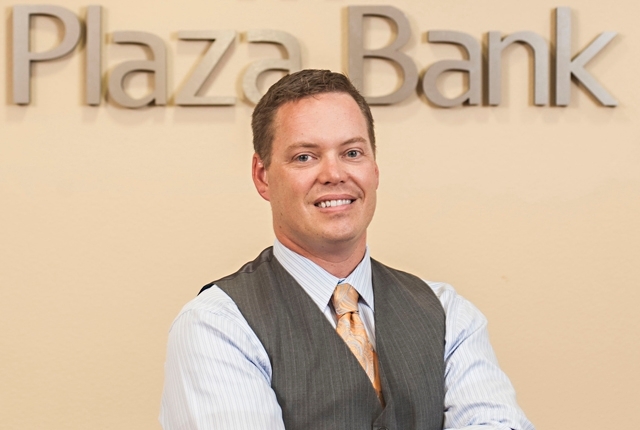
J.B. HOSSLER, SENIOR VICE PRESIDENT AND SOUTHERN NEVADA MARKET MANAGER, PLAZA BANK
When will we stop using the word “struggling” to describe the Las Vegas economy?
Most folks I talk with have already begun to use “stabilized” to describe our economy. Many of our clients are experiencing stability and growth, which is very exciting for them and for the broader economy. The more optimistic our business owners are – in particular small business owners – the more likely they are to hire additional staff. It just takes consistency in the demand to get business owners to that point and I think we are nearing a tipping point for many.
What role can banks play in helping diversify the local economy?
Plaza Bank, as a community business bank, should be doing everything we can to support small businesses and professionals. One example would be a small business education seminar series we are sponsoring with SCORE of Southern Nevada and the Better Business Bureau. Another is by sponsoring the Nevada Industry Excellence Import Export program that helps local businesses become competitive in the global marketplace.
Lending has picked up nationwide. How does Las Vegas compare?
We are experiencing strong loan demand this year. In the first quarter alone, we generated over $50 million in new loans bankwide. Lending in Southern Nevada has been robust.
What is the one industry trend that will have the biggest impact on your business this year?
I think the continuing shift away from branch service to alternative channels will continue to impact banks this year. To provide the best overall service to our clients, we offer services such as remote deposit capture, allowing clients to make deposits from their offices, and online bill pay. These products are both designed with the convenience and security of our clients in mind.
Have consumers’ or businesses’ balance sheets recovered?
Consumers are still in recovery mode; the data continue to trend positively overall, but we still see bumps in the data. Here in Las Vegas we’re seeing improvements in the service and retail sectors, with manufacturers generally continuing to experience growth and overall improvement in their financial position. Our clients are telling us, in general, they view the near term very favorably.
— TIM O’REILEY


