



BUNNYFiSH studio’s name reflects its philosophy, green objectives
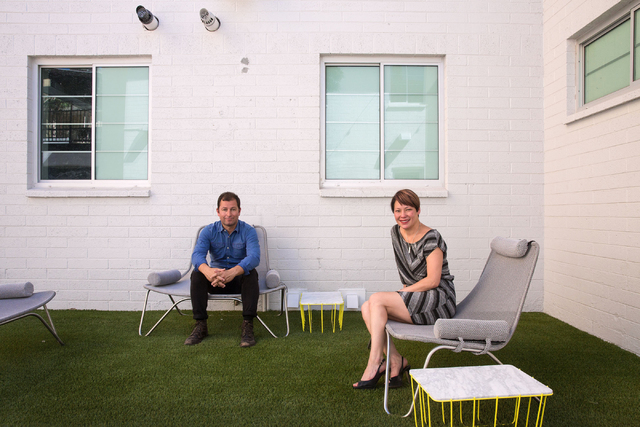
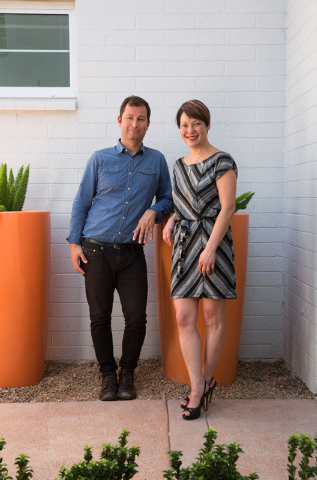
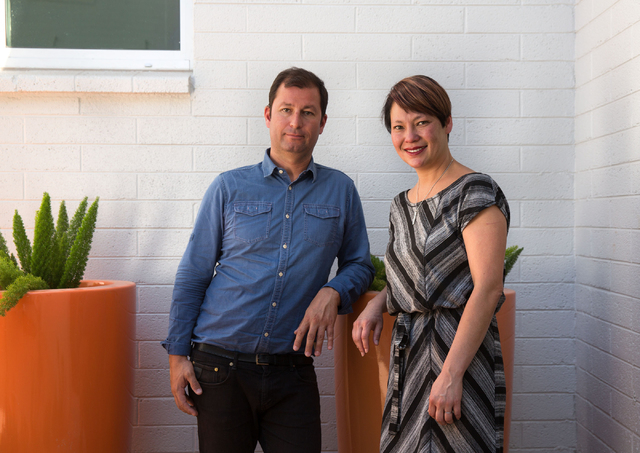


Green practice is woven in the name of the downtown architecture and design firm, BUNNYFiSH studio.
“The idea behind BUNNYFiSH is it’s sort of an amalgam of two very different things, and when they’re put together they form their own unique, singular element that you can’t take anything away from it at that point, and we feel like our architecture is the same way,” said Tina Wichmann, architect of BUNNYFiSH studio.
They integrate the old heritage with modern practices to create something new, she said.
According to Wichmann, adaptive reuse, to them, is the green practice that is “the most valuable as a singular approach.” Take for instance Inspire Theater, in which a three-story building was built inside of the existing single-story building.
Craig Sean Palacios, BUNNYFiSH studio architect, said that it’s about “being sustainable with natural resources and sustainable in keeping communities.” He said that they try to source things locally as much as they can.
Another project for BUNNYFiSH studio is the adaptive reuse of the John E. Carson Hotel.
Why is being green important?
“For our generation and where we are today, everyone has a responsibility to the planet to be green, to maintain practices that help support the growing populations throughout the world, and I think we appreciate and embody that both on a personal level and as a professional practice — it’s just a basic, fundamental responsibility,” Wichmann said.
How can going green improve productivity?
“It’s a lot about doing more with less; we have a very small footprint,” Palacios said. “We don’t have executive offices and an administrative office. We all sit in an bullpen together in 200 and some square feet, and we’re able to be very productive,” Wichmann said.
What influenced your decision to pursue green practices?
“When we started working downtown about three years ago, really it was important to us as members of this community — and Craig’s lived downtown for a decade or so — to preserve the buildings and the heritage that we have — and that doesn’t happen all that often. So we were very excited to pair up with a client group who also shared those same values, and together we’ve been able to keep and sort of rehabilitate a lot of these buildings and repurpose them into spaces that now contribute very strongly to the community, whether it’s creating places for people to eat and socialize or places for businesses to start up and start to build their own economy and community, and these buildings are housing all of those activities, but we also get to keep the fun heritage of the fact that they’re 50 or so years old and they’re well-built. It’s a shame to knock them down,” Wichmann said.
How has being green reshaped your company’s public perception?
“It’s not something we market as our first line in our PR toolkit, if you will. It’s something that we hope that people will come to learn and appreciate about us and value the adaptive reuse work that we do, and we feel that that’s a lot stronger if somebody experiences a space and realizes on their own the green value of what we’re doing as opposed to using it as a marketing tool,” Wichmann said.
— Andrea Corral/Las Vegas Business Press


