



Dancing despite the downturn

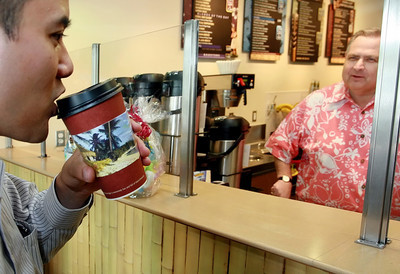



For most of last month before realizing his life's dream, Errol LeBlanc had grown so tense that he became physically ill.
Preparations had fallen weeks behind schedule and run tens of thousands of dollars over budget, the bank account drifted dangerously close to "E" and the economy had deteriorated from the time he started planning his R.E. Tapas Kitchen & Lounge in December 2006. His mother, who backed him in everything from financing to sewing curtains, was ready to pull the plug rather than see the project destroy his health.
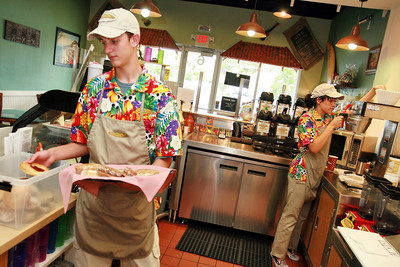
Yet when he started serving on March 4, diners showed up in numbers far larger than his most optimistic projections. Today, he said, the restaurant generates enough cash flow that he can comfortably pay his bills without delaying food or liquor deliveries just to get a later payment cycle.
While he has gotten off to a good start opening a business in a down economy, LeBlanc's experience is hardly universal. Some are holding their own and expect better times, but others are grimly calculating their exit strategies.
Either way, the margin for error in starting a small business has tightened markedly in the past couple of years.
"Before, you could get seven out of 10 things right and still prosper," added Larry Vierra, the interim director of the Nevada Small Business Development Center. "Now, you need to do 10 out of 10. This kind of economy is the big leagues."
Fewer people are willing to step up to the plate, however. Clark County's Department of Business License recorded 9,531 new licenses during its fiscal year ended June 30, down 15 percent from last year.
Nationwide, however, several studies have concluded that new business formation does not fluctuate significantly with the economic cycle.
"The new businesses are slightly fewer and smaller, but you don't see the huge, pronounced effects that you might expect," said Brian Headd, an economist with the U.S. Small Business Administration.
Perhaps more important than raw numbers, the mindset has changed.
"I think the key ingredient that's different from three years ago is that you have to be a great deal more careful to understand who you market to," said Ross Lagattuta, chairman of the local chapter of Service Corps of Retired Executives.
"You can't shotgun it like you used to in the boom times and not pay attention to the kind of people you are trying to attract as customers."
Operations in general must also be executed with greater precision and discipline.
"In better times when there were significant bottom-line opportunities, you could have a hiccup or two and still be competitive," Vierra said. "Now, you have to be adamant about the P&L (profit and loss) statement being as trim and tight as possible."
In keeping with the changed environment, the center has adjusted its seminars to place more emphasis on nuts-and-bolts topics such as human resources and leadership techniques, subjects rushed over in the past to make more time for marketing and finance.
Dennis Wengert, deputy Nevada district director of the U.S. Small Business Administration, ticked off several other factors that carry greater weight in a slow economy burdened by record-high energy prices, such as reducing the estimated number of customers willing to travel more than five miles, working around tighter lending standards by banks and watching cash flow vigilantly.
Perhaps most critical, he said, "A consumer's perception of value shifts to give price a larger weight. ... New businesses now need to pay even more attention to their costs, since pricing restraints will limit the company's ability to cover rising costs."
However, he added, finding qualified help could be easier as unemployment rises. Vendors and landlords may accept lower prices or easier terms on fixtures and leases.
Vierra said this is now a strong economy for people who hoarded cash in recent years in anticipation of swooping in on distress sales.
But Lagattuta cautions that some of the apparent bright spots may have dark sides. For example, a landlord may discount a lease because of tighter spending and created vacancies.
"I don't think there is a particular advantage to opening in this type of economy," he said.
Contact reporter Tim O'Reiley at toreiley @lvbusinesspress.com or 702-387-5290.


