



Stadium costs key, but subsidies also a factor, board member says
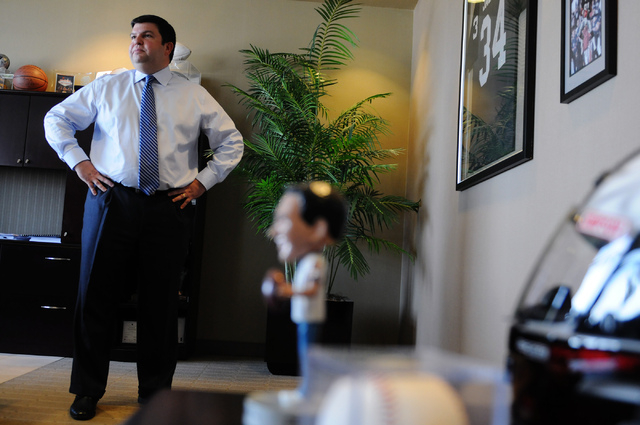
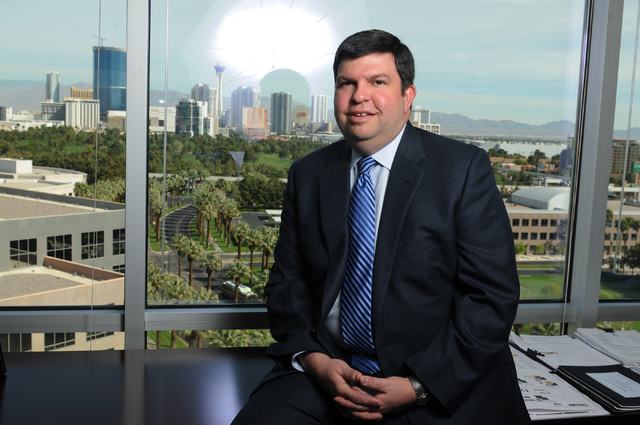


A stadium board consultant is crunching numbers this month to suggest building costs for four different types of possible on-campus venues for the University of Nevada, Las Vegas — stadiums with a retractable roof, a dome, shaded open-air and open-air.
Several board members think a little-known expense should be factored into the proposed building expenses — public-funded subsidies and sponsorships that are paid to event promoters to bring their events to venues in Las Vegas.
“The events probably won’t happen if you don’t keep that in consideration,” said Paul Chakmak, Boyd Gaming chief operating officer who serves as vice chairman of the 11-member UNLV stadium board.
“Promoters just don’t see a new stadium and say, ‘Gee, can I rent your stadium?’ They expect a subsidy,” Chakmak said.
Chakmak also is a member of the Las Vegas Convention and Visitors Authority board, so he’s well-versed on the authority’s nonprofit events arm — Las Vegas Events — doling out millions of dollars each year to attract events ranging from the National Finals Rodeo and Mountain West Conference Tournament to the NBA Summer League, USA Sevens Rugby and motor sports events.
“The point is, we need to factor that in,” Chakmak said.
The authority reported that sponsorships used for events staged in Southern Nevada ranged from $6.7 million to $8.4 million annually from 2011-2014.
At a meeting last month, the stadium board consultant — Plano, Texas-based Conventions Sports &Leisure — served up an array of potential events that a new UNLV stadium potentially could host.
CSL said that besides UNLV football games, a new on-campus stadium could be home to soccer matches, concerts, neutral-site college football games, mixed martial arts and boxing matches and rugby games.
Bill Rhoda, president of Legends Global Planning, which oversees CSL, said his company is looking at events that are not necessarily the type that require subsidies.
“The difference is the new stadium would enable promoters and the building itself to make more money due to the features of the stadium,” Rhoda said. “However, we will be working through these types of issues as we progress through the study. This is important and would impact the viability of the stadium.”
Stadium board member Rick Arpin of MGM Resorts International, who is overseeing a separate MGM arena project behind New York-New York on the Strip, believed the expense analysis should include numbers on what it would cost to subsidize events that are staged at a potential on-campus stadium.
“It can be a big number when getting new events to locate here, or events to relocate from elsewhere,” Arpin said.
He noted the most extreme subsidy: Las Vegas Events spending millions of dollars to keep the National Finals Rodeo in Las Vegas and not losing the coveted event to Florida or Texas after high-stakes negotiations with the Professional Rodeo Cowboy Association in January.
“Most aren’t nearly that large, of course,” Arpin observed.
Pat Christenson, president of Las Vegas Events, attended the UNLV stadium board meeting last week when CSL consultant Adam Kerns outlined the events he projected could be staged at an on-campus stadium. The notion that event subsidy costs be part of a stadium expense report sounded reasonable to Christenson.
“It’s judicious that they look at the whole process of securing events for a destination regardless if it’s for a stadium or an event on the Strip,” Christenson said.
He didn’t know whether a consultant could accurately predict the exact dollar amount for event subsidies that would be paid for events coming to a new UNLV stadium. But the topic should be included in a stadium report, he noted.
“I don’t know whether you dial down to the dollar” for event subsidies, Christenson said.
Estimated stadium building costs are scheduled to be presented at the next meeting of the UNLV stadium board on April 24.
Contact Alan Snel at asnel@reviewjournal.com or 702-387-5273. Follow @BicycleManSnel on Twitter.


