What’s better than Tinkerbell? A guide to Never Ever Ever Land

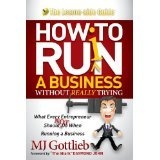





“How to Ruin a Business Without Really Trying: What Every Entrepreneur Should NOT Do When Running a Business” by MJ Gottlieb (Morgan James, $17.95).
Gottlieb introduces business owners to Never Ever Ever Land, which he discovered more by error than trial in over 50 cases in his entrepreneurial ventures and corporate life.
Learning from his financial and personal pain will help you build your business. Here are some highlights:
■ Never Ever Ever spend money you don’t have. Borrowing against forecast profits and running up credit cards mortgages the future. Your accountants and financial advisors aren’t just there to tell you where the money went. Use their expertise to figure out what debt load your company can afford to take on.
■ Never Ever Ever make a decision while in a negative emotional state. When it comes to business relationships, it takes only one match to burn a bridge. Negative emotions worsen, rather than solve, problems. When something goes awry (and it will), think about ways to correct the situation and how to approach those involved.
■ Never Ever Ever start your business without an administrative assistant. Businesses receive numerous phone calls every day; if you’re the owner, you get most of the calls. Gottlieb got to the stage where 80 percent of his time dealt with incoming calls.
That left him little time to run the business. When he hired an assistant, he gave her a list of people whose calls would be important to the business. Those not on the list weren’t diverted to his voice mail; messages were taken so he could choose to return or ignore calls.
■ Never Ever Ever confuse working hard with working smart. You have to identify daily, weekly and monthly priorities and make sure they get done. Review a day’s agenda items and tackle them first. Take care that your agenda isn’t the equivalent of “5 pounds in a 3-pound bag”.
When it comes to regrets, Gottlieb has more than his share. All revolve around ignoring family and friends while obsessing about his businesses. By heeding his advice, entrepreneurs will have fewer such regrets.
● ● ●
“Creativity and Problem Solving” by Brian Tracy (AMACOM, $9.95).
Creativity is like sugar in the bottom of a cup. You need to stir it so it flavors all the coffee. Tracy identifies three factors that stir creativity:
■ Clarity about your goals. “The more you want something, the more likely it is you’ll find creative ways to accomplish it.” Write down goals; review them daily; develop action steps; follow through.
■ Pressing problems. They present opportunities to turn obstacles into progress. Although nothing ever goes as planned, there’s a huge difference between a detour and a dead-end. Overcoming obstacles requires persistence.
■ Focused questions. Tracy offers four thought-provoking questions: “What are we trying to do?” “How are we trying to do it?” “What result or outcome is desired?” “Are there other ways to achieve or goals or desired outcomes?” If you can’t articulate each answer in 25 words or fewer, you run the risk of losing focus.
He also advises you to continually test your assumptions; situations and issues change. Some changes are within your control; some aren’t. By constantly testing assumptions, you begin to think about what may change and develop anticipatory responses.
He identifies two types of thinking that play into the ability to test assumptions. Mechanical thinking tends to see black or white. It looks for reasons why things won’t work. Adaptive thinking sees gray with an open mind. It’s flexible, which allows for changing approaches to obstacles.
Key creativity-boosting question: “What could happen if you would take a completely opposite approach to how you’re doing what you’re doing?”
Jim Pawlak is a nationally syndicated reviewer of business books.