



Couples weigh pluses, minuses of wedded bliss
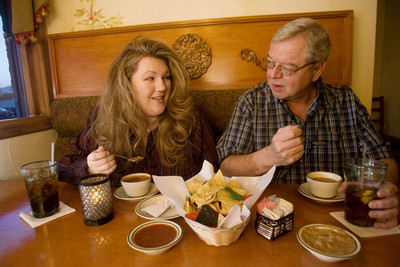


Kristen Knight's friends don't ask when she's going to marry her boyfriend.
"They don't give a crap," the 37-year-old music publicist says. "People consider us married anyway."
Knight and comedian Bruce "Big John" Mickelson, who is 61, have lived together for 11 years.
"That's longer than most marriages," Knight points out.
Knight and Mickelson are among the growing number of Las Vegans who share a bedroom but not a last name. According to the U.S. Census, between 2005 and 2006 (the last year for which statistics are available), the total number of cohabitating households in Las Vegas proper grew by 22.8 percent (from 10,509 to 12,902). The vast majority of this expansion cannot be explained by population growth, which during the same period was 2 percent.
"I'm definitely seeing more couples who cohabitate," says Renee Khan, couples therapist for Pathways Therapy and Wellness Center, who says five of the 10 couples she currently sees live together with neither a wedding nor an engagement ring.
Most couples cohabitate either as a test of their compatibility, Khan says, or as a way to save money before getting married and starting a family.
"It's like a trial to see if it's going to work," she says.
Jeff Celentano, 30, and his girlfriend, 31-year-old Talana Bell, moved in together three years ago. They met when he was a gondolier at The Venetian and she was his supervisor.
"It certainly feels like a trial marriage," says Celentano, currently a musician with a Beach Boys cover band. "I think we're both kind of waiting to establish ourselves a little more before we consider getting married."
Bell recently entered a new profession -- insurance.
"She's really involved with her career right now," he says, "so she devotes a lot of time to it."
Marriage probably never will be on the horizon for Knight and Mickelson.
"I don't need a piece of paper from the government to tell me who I love and who I'm committed to," Knight says. "I think it's a governmental racket that harkens back to the olden days when women were property and men got a bill of ownership."
When they first met, Knight says, she briefly entertained the idea.
"I was 22 and I felt differently about a lot of things back then," she says.
The uptick in cohabitation owes much to its diminishing social consequences.
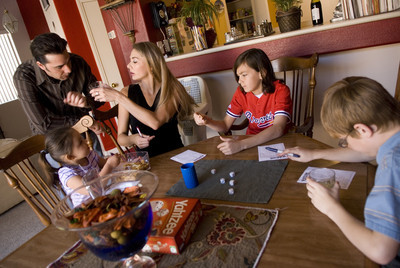
"Our families are fine with it," says Celentano, which may surprise people when they learn that he and Bell are raising a 2-year-old daughter together -- as well as her two sons from a previous marriage.
"I think everybody realizes that it's more important for kids to see a happy couple in a happy relationship," he says, "especially considering all the broken families and abusive relationships in Vegas."
Mickelson's family still lets him hear it, however, according to Knight.
"They were just out here last week, and there was tons of pressure," Knight reports. "In his generation, that's what people did."
Aside from the flak it gets from religious devotees who consider it a sin, cohabitation is attacked most often because, unlike in marriage, both partners can walk away easily.
"Things change drastically once you get married," Khan says. "Expectations change, roles change, and there are certain rules and ideas that we have that we don't realize until we get married.
"I'm a husband, I'm a wife, I can't just pack my bags and leave."
Knight argues that this is precisely what makes cohabitation even more special than marriage as a commitment, however.
"I'm together with you because I love you," she says. "I choose to be with you -- not because I think I have to, not because we forked out $50,000 for this wedding and our parents are gonna be (angry)."
According to Khan, relationships can survive, and even thrive, without wedding bells -- but only if the perfect storm of prerequisites is in place.
"They have to match up on the necessary things," she says, describing those things as "communications, good problem-solving, similar goals in life and extremely similar values."
Contact reporter Corey Levitan at clevitan@reviewjournal.com or 702-383-0456.


