Insurance subsidies likely to expire, spiking costs for thousands in Nevada
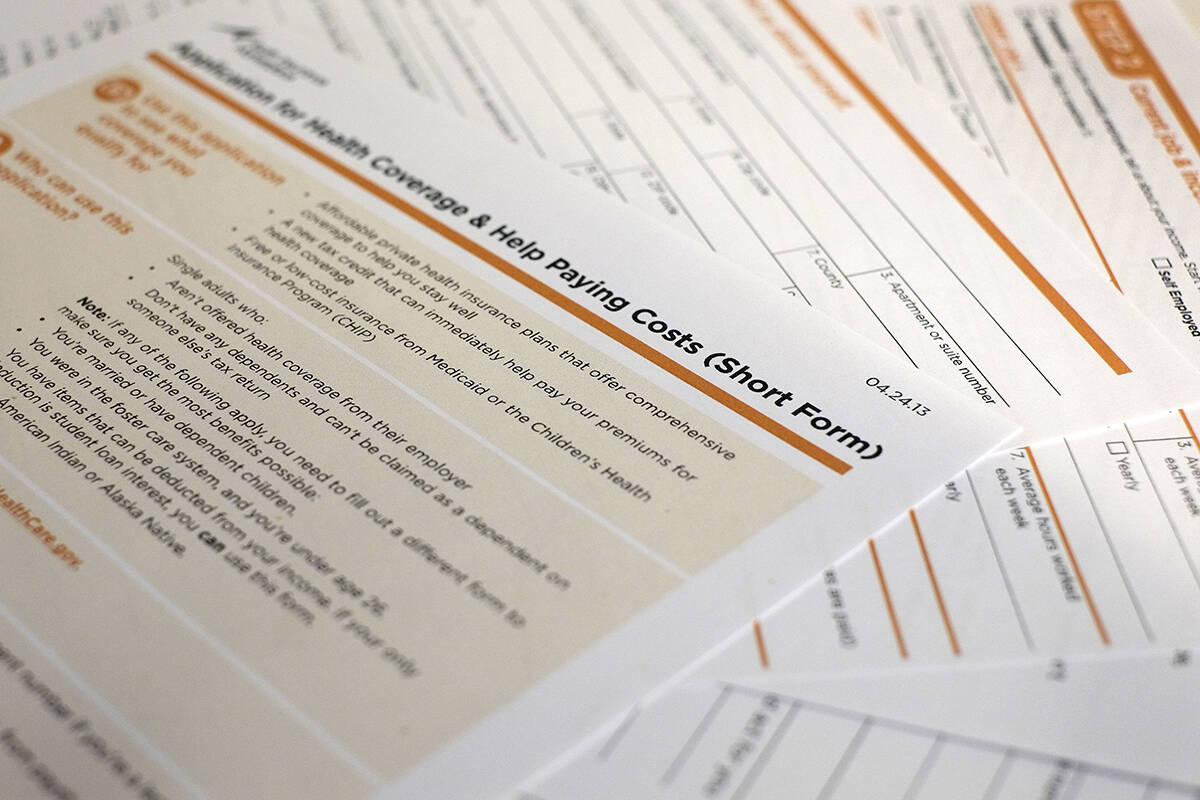






Thousands of middle-income Nevada residents are likely to lose subsidies easing the cost of health insurance purchased through public marketplaces despite steps from both parties to address the issue.
Even with the lengthy back-and-forth over whether to extend the subsidies, Washington, D.C., observers say they’re expecting them to expire by the end of the year, just as private and public health insurance plans prepare to raise premiums by an average of 26 percent, according to the Nevada Division of Insurance.
While the premium increases will hit everyone who buys health insurance, middle-income residents who benefited from the pandemic-era subsidy would see their costs more than double because of increased premiums and a loss of the subsidy, according to the nonpartisan health policy organization KFF.
There are 112,000 insurance marketplace participants in Nevada. About 6 percent of them would be affected by both rising premiums and expiring subsidy, according to Nevada Health Link.
A KFF survey of 2025 marketplace participants released Thursday said 1 in 3 surveyed nationally said they were very likely to shop for a lower-premium plan, and 1 in 4 said they would be very likely to go uninsured.
Party-line debate continues
Democrats forced a federal government shutdown to get the subsidies renewed, but a small coalition of Democrats — including both of Nevada’s senators — agreed to reopen the government in exchange for a guaranteed vote on an extension bill of their choosing.
Both Democrats and Republicans in Congress say they are working on extension bills, but time is running short before an expected Dec. 19 date for lawmakers’ winter recess.
Sen. Jacky Rosen, D-Nev., said in an interview with the Las Vegas Review-Journal on Wednesday that the Democratic bill, expected to be put up for a vote this week, would be a “clean extension” of the existing enhanced premium tax credit.
“This way our colleagues on the other side, who should be worried about this for their constituents, they can’t say, ‘Well, the Democrats added this or that or some wish list up or down,’” she said. “There are many things that we worry about and that we care about, but we wanted to keep it as simple as possible to the task at hand.”
Rosen said that larger reform — such as fraud and other system abuses often elevated by Republicans — should come after the extensions because “time is of the essence.” The bill would need 60 votes to avoid a filibuster and pass the Senate, and leading Republicans in the chamber have signaled it does not have that support.
Meanwhile in the House of Representatives, Republicans are working on a health care bill of their own to be considered before Congress adjourns for its winter recess.
Rep. Mark Amodei, R-Nev., said he understood that health insurance costs are one of the stickier parts of affordability. But he said he did not expect to support a bill that would extend COVID-era subsidies for multiple years, which he called a “deal phenomenally bloated with federal money.”
“Is it way past high time to do something? Yes,” Amodei said in a Thursday interview. “Is it going to be one big, beautiful fix in two weeks? No, but there’s all sorts of opportunity to take some significant steps.”
What are we talking about?
The debate in Congress over one subsidy has loomed over the open enrollment period, which ends Jan. 15. That’s largely because the debate in Congress centers on the enhanced premium tax credit, which extended subsidies on the public marketplace to people with incomes over 400 percent of the federal poverty level.
Janel Davis, CEO of Nevada Health Link, said the enhanced premium tax credit made public insurance options more affordable for middle-income households and helped boost the rate of those insured in Nevada. In 2010, the rate of uninsured residents was 22.6 percent. In 2023, it was 10.8 percent, according to America’s Health Rankings by the United Health Foundation.
Changing federal policy and rising premiums — the fixed amount users pay for their insurance — have made affordability more of a challenge, threatening those gains.
“A consumer’s actual monthly premium depends on several individual factors, including household size, coverage needs, plan selection, and eligibility for federal subsidies available under the Affordable Care Act,” insurance division spokesperson Drew Pearson said in an email Thursday. “Because the scope of those federal subsidies beyond this year remains uncertain, the potential effect on out-of-pocket costs will vary from person to person.”
Other tax credits and subsidies remain for those under that household income benchmark. For instance, a family of four making up to $128,600 annually would still be eligible for other tax credits on Nevada Health Link, Davis said.
Navigating open enrollment
Rosa Alejandre, navigator program manager for Nevada Health Link, said the advising groups that offer enrollment support have been dealing with people’s reaction to the sticker-shock and uncertainty of their choices given the political conversation in D.C.
Alejandre said navigators have been coaching insurance shoppers through “the worst-case scenario” of increased premiums and the subsidy loss.
She said they acknowledge the higher premiums do not include any expiring tax credits, but that any extensions or new subsidies passed in the future would count as a “qualifying life event” that would allow them to change their insurance plan.
Rosen said the navigators and consumers she has spoken to are “trying to find creative ways” to keep premium costs down while maintaining coverage.
She said one parent in a family of four was advised to use their employee-sponsored plan, and then the other three family members go through the Marketplace to make their overall costs more affordable.
“It’s the ones that think, ‘Oh, the premium is too high right now, I’ll wait to see if something happens,’” Alejandre said. “If you go without health insurance and you pass the enrollment period, even if they were to change the subsidies, at this moment because you already had no insurance, you don’t have the (qualifying life event). Those are the people I’m afraid that we’ll lose — that think nothing will happen, and then they’ll be stuck until the next year.”
Contact McKenna Ross at mross@reviewjournal.com. Follow @mckenna_ross_ on X.
Enrollment on Nevada Health Link runs until Jan. 15 of next year. Coverage starts Jan. 1 for people who enroll before the end of 2025 and begins on Feb. 15 for those who enroll between Jan. 1 to Jan. 15.
Call the Nevada Health Link at 1-800-547-2927 or visit nevadahealthlink.com to find local and virtual enrollment assistance. The call center is open 9 a.m. to 6 p.m. Monday through Friday and 9 a.m. to 2 p.m. Saturday.