



Victim of the Internet Age
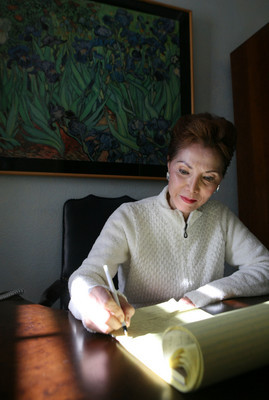
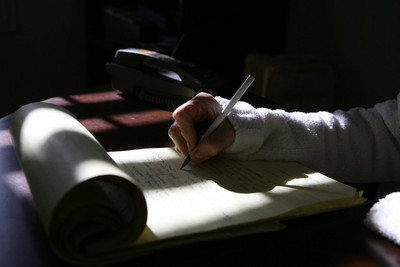


Ten years ago, Las Vegas resident Dorothy Robinson looked forward to her walk to the mailbox. Every day, at least one hand-addressed envelope would be waiting there, bursting with news from her daughter, her cousin or her husband's niece in Montana.
"She raised these little miniature horses and she'd tell me all about her ranching duties," Robinson said of the niece.
Now, the 81-year-old retired accountant gets three personal letters a week.
"If that," Robinson said, even though she still sends about eight weekly.
Waiting these days at the end of her walk are mostly unwanted utility bills, credit-card offers and insurance solicitations.
The pen might be mightier than the sword, but it's got nothing on electronic keyboards and keypads. The personal letter has largely succumbed to the convenience and low cost of e-mail and roam-free cell phone calls and text messages. Every day, more than 183 billion e-mails alone get sent, according to an Internet tracking organization called the Radicati Group.
Since snail mail is tracked only by class -- and both letters and bills go first class -- there's no way to tell exactly how many personal letters are sent in a given year. However, Postal Service Western Regional spokeswoman Teresa Rudkin estimates that about four times as many personal letters were processed 20 years ago than today.
"Everybody wants a personal letter," Rudkin said, "but there aren't many people who want to write one anymore."
Mourners of the personal letter include Flo Gray, president of the Protocol Etiquette School of Nevada.
"I know it's tough because we live in a fast, mobile world where everyone is on the go," she said. "But if you want to connect with a person, there is nothing like a letter. It lets the person know that you're taking your time to write them."
"Writing to a person in your handwriting, getting it to the postman and everything -- makes me feel closer to the person," added Henderson resident Gail Imazaki, who reports receiving about one personal letter per week, down from six 10 years ago.
"And it's usually from someone asking when I'm going to get e-mail (set up)," added the 72-year-old retired nurse, who doesn't own a computer and doesn't plan to. ("I don't want another thing to worry about," she said.)
"I think it's sad, because I like writing," echoed Robinson, who addresses most of her eight weekly letters to her grandchildren and friends, but also writes what she calls "memaw" letters.
"That's what my grandkids call me," she explained. "My daughter will say: 'I have a friend who needs a memaw letter. She's going through such-and-such a thing in her life and you've been through it.'
"So I write to these strange people and make friends that way."
Electronic messages are more impersonal, critics note, because they can be cut-and-pasted from messages written by, or sent to, others.
"And with all the abbreviated words and all, I don't like it," said Robinson. "We used to take penmanship in grammar school to learn how to write properly. Now I can't even read my grandkids' writing."
Although penmanship is no longer as heavily emphasized in Las Vegas public schools, letter-writing apparently is.
"Whenever we have a guest speaker, the kids always write thank-you letters," said Barbara Lindsay, language arts chairwoman at White Middle School.
However, she added, "I don't know that parents stress it enough."
A more niggling concern is how future generations might view ours. Historians rely on personal letters as sources of unfiltered truth.
"Official documents still get saved, but e-mails don't," said Andy Fry, history professor at the University of Nevada, Las Vegas. "What you may have fewer of are letters that are of a personal nature."
These are the letters that explain what public leaders were thinking that they couldn't publicly say.
"Or wouldn't say," Fry added. "I do think that it is clearly going to be more difficult to precisely determine people's motives and actual objectives."
Not everyone sees the personal letter's death as a scourge, however.
"Any way that we can conserve on our resources is a good thing," said Lisa Ortega, president of the Southern Nevada Arborist Group. "Especially now, e-mail is a good way to use fewer resources."
In addition to the trees that would have died so that Aunt Sally could have your eggplant recipe, as Ortega pointed out: "It would have taken gas and other resources to deliver that letter."
However, even Ortega breaks down when it comes to sending personal letters to her son, Wesley, who is stationed with the Nevada Army National Guard in Fort Jackson, S.C.
"Sometimes, it's worth it," she said.
Contact reporter Corey Levitan at clevitan@ reviewjournal.com or (702) 383-0456.


