This simple exercise builds strength faster than weightlifting





When you think of building strength, your mind might go to intricate gym equipment or, at the very least, some dumbbells. However, personal trainers say bodyweight exercises can be super effective, and some even rival weightlifting.
“Building strength is about progression — so for a beginner, or someone rehabbing an injury, bodyweight exercises can be a challenge,” says Nicole Davis, a certified personal trainer with Garage Gym Reviews. “Even for intermediate or advanced exercisers, there are bodyweight exercises — like pullups, for instance — that are difficult to master. Specific bodyweight exercises … require a lot of strength and mobility without the need for extra equipment.”
But there’s a simple exercise that can build strength faster than weightlifting, according to Davis and fellow fitness trainer Denise Chakoian.
“Planks can build strength quickly because they make your whole body work at once,” says Chakoian, the owner of Core Cycle and Fitness LaGree.
She notes that planks may look easy, but you’ll feel the burn fast. “Your core, shoulders, back, glutes and legs all fire together, which is a very efficient way to get stronger,” Chakoian adds. “They also train your body to stabilize and brace the way you do in real life, so the strength carries over sooner than isolated weightlifting moves.”
Plus, planks are accessible — nearly anyone can do them. “You don’t need any equipment, and there’s a variation for almost anyone,” Davis says.
How many planks per week?
Chakoian says the best number of planks to do per week depends on your experience level, explaining, “For beginners, holding a plank for 10 to 20 seconds at a time and repeating it three to five times is plenty. Do that three or four days a week, and you’ll feel your core getting stronger.”
However, you can also progress planks to avoid plateaus. “If you’re more comfortable with planks, aim for 30- to 45- second holds for three to five rounds, about four or five days a week,” Chakoian says. “Advanced clients might work up to 60 seconds or add variations, but you don’t need long marathon holds to see progress.”
What matters most is consistency and good form, she emphasizes: “A few focused rounds several days a week will build strength faster than doing one long plank once in a while.”
Three plank variations
Good form will ensure you get the most out of your plank. To help, trainers shared how to do a traditional plank, plus two variations.
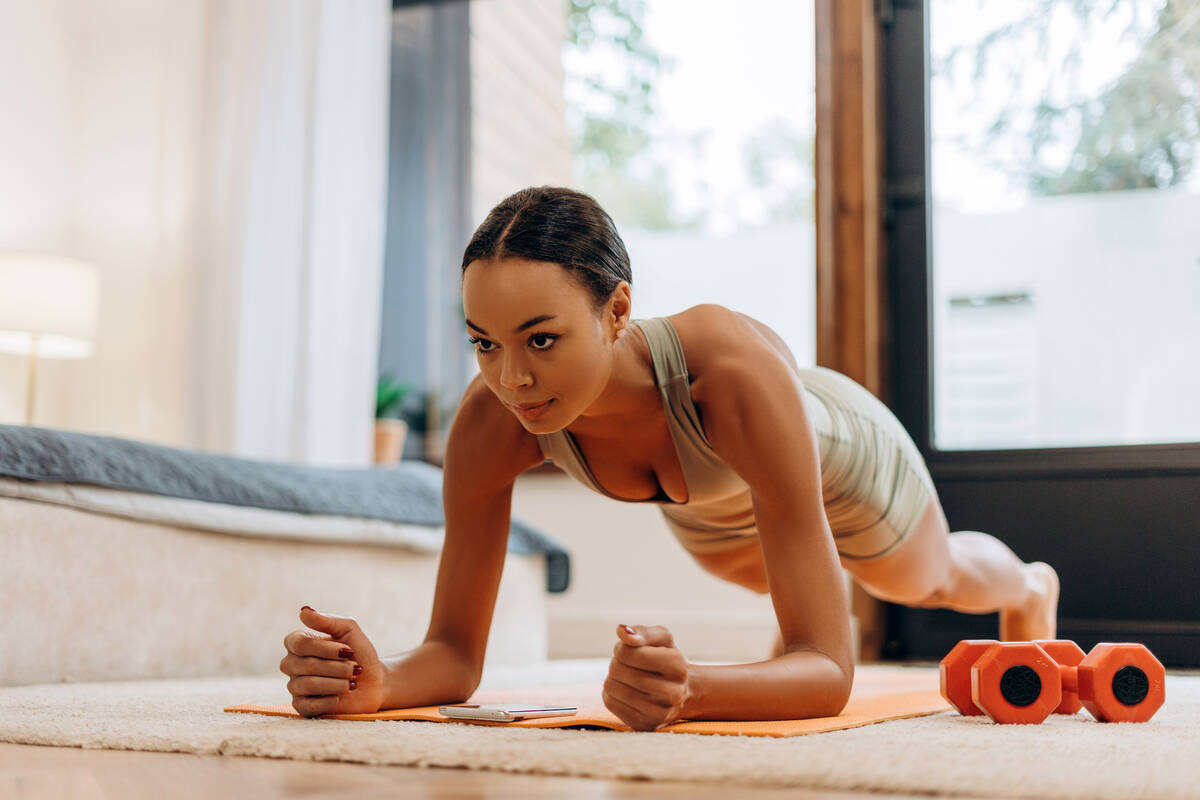
Traditional plank
* Start on the floor on your hands and knees.
* Lower down to your forearms so that your elbows are right under your shoulders.
* Step back with one foot at a time until your legs are straight.
* Tighten your core, squeeze your glutes and keep your body in a straight line from your shoulders to your heels.
* Keep your gaze slightly ahead of your hands and breathe steadily.
* Hold the position without letting your hips drop or lift.
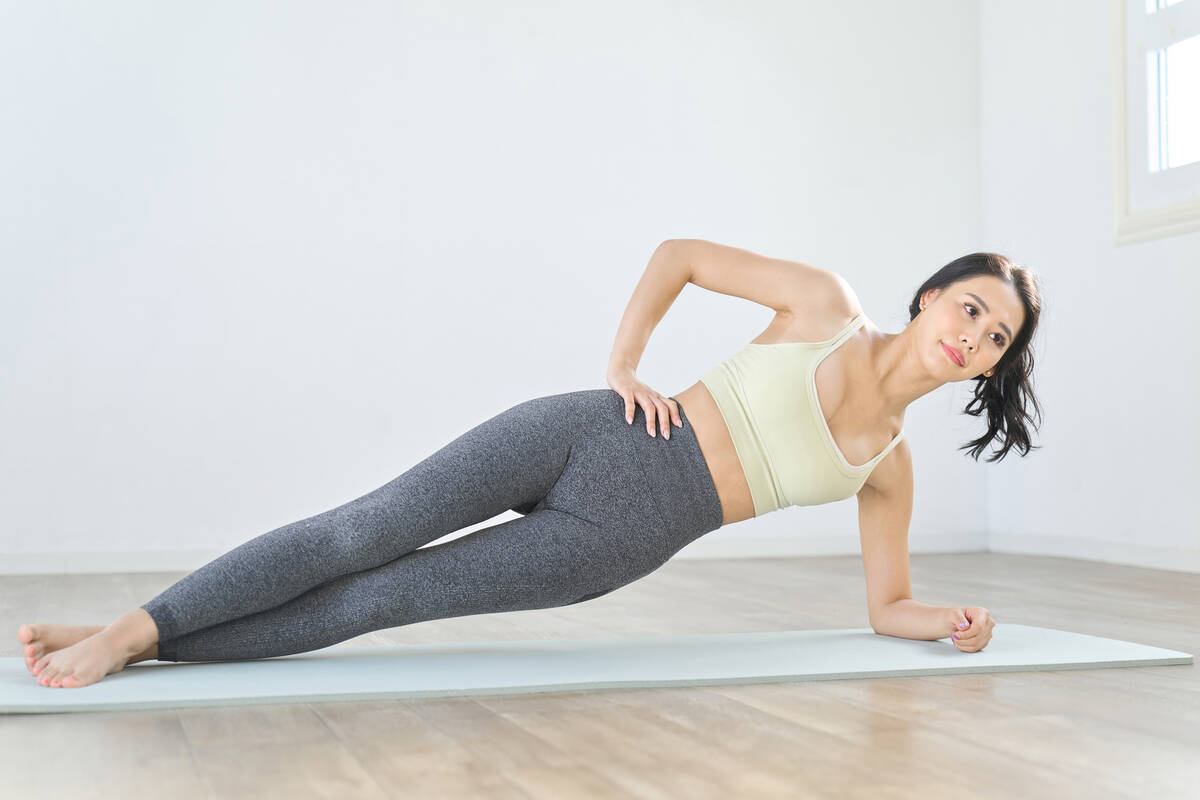
Side plank
* Lie on your side with your legs straight and your feet stacked.
* Place your forearm under your shoulder.
* Lift your hips so that your body forms a straight line from head to feet.
* Keep your top arm along your side or lifted toward the ceiling.
* Hold this position while keeping your core tight and your hips lifted.
Plank jack
* Start in a high plank position.
* Without dropping the hips, jump your feet out and then jump them back together.
* Modification: Tap out with the right foot, back to center, tap out with the left foot, back to center.
Mistakes to avoid
Poor form can make planks less effective and slow your progress toward your strength training goals. Doing planks incorrectly can also lead to an injury. Let’s avoid that.
Chakoian says the biggest mistakes she sees when people do planks are:
Letting the hips sag: Chakoian warns that this mistake puts pressure on the lower back. “To avoid it, tighten your core and glutes like you’re zipping up your midsection and lifting through the front of your body,” she says.
Lifting the hips too high: Chakoian says this mistake turns the move into an inverted V, taking away from core engagement. “Think of forming a straight line from shoulders to heels,” she says.
Shrugging the shoulders: Keep the shoulders away from the ears to avoid neck straining. Instead, Chakoian advises clients to press the floor away, widen their shoulder blades a bit and elongate their necks.
Letting the head drop: “When the chin sinks toward your chest, the upper back rounds,” Chakoian says. “Keep your gaze slightly ahead of your hands so your neck stays in line with your spine.”
When to skip planks
Planks hold their own in both beginner and advanced strength-training routines. However, there are times when you should avoid planks. Davis doesn’t recommend planks if:
You have any neck, back or shoulder pain: “Consult your doctor or physical therapist before incorporating planks into your routine — you wouldn’t want to aggravate an injury,” Davis advises.
You are in the second half of your pregnancy or are newly postpartum: “Full planks should be approached with care and attempted gradually, starting with a progression off the knees after your doctor — and ideally pelvic floor physical therapist — clears you,” Davis says.
Regardless of your age and life stage, working with a physical therapist can help you nail your plank form and build strength — even without a gym membership (or weights).