From cattle corralling to beekeeping, a look at unusual jobs in the Las Vegas Valley






Most people spend five days of every week at work. That’s 40 hours a week, or 2,080 hours a year, to pay the bills, raise a family and provide an income.
The beauty about living in Las Vegas is that there are all types of unique jobs in this 24-hour city, and not all of them are centered on the Strip.
North Las Vegas Cowboy
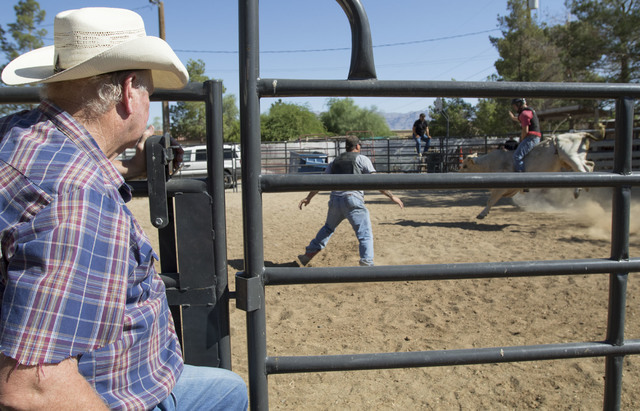
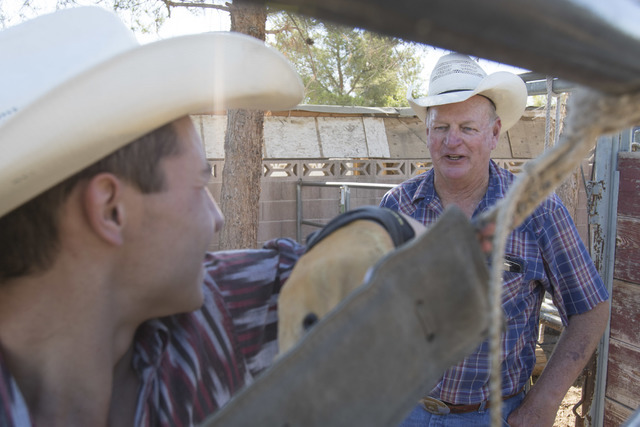
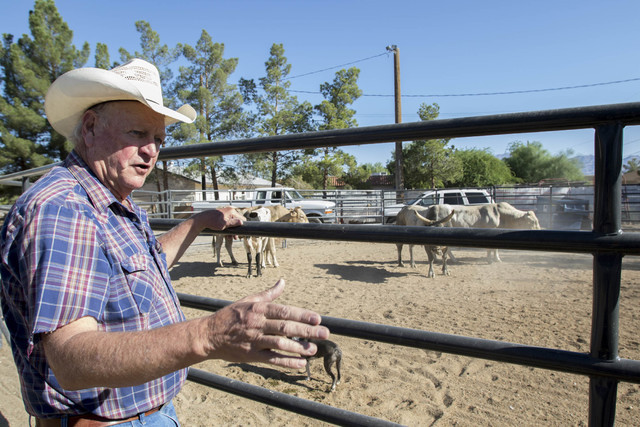
What has former Clark County Commissioner Tom Collins been up to since leaving his position? He’s been busy raising livestock for rodeo purposes in his North Las Vegas home.
By 5 a.m., Collins is outside feeding the calves who are making a lot of noise because they were just taken away from their mothers and they’re learning to wean off milk.
“There used to be a lot of cowboys around this town, and even though there are only a few now, it’s still a cowboy town,” Collins said.
He has two fully grown bulls and one calf and other livestock that he’s holding for friends.
Collins is no stranger to the industry. The once-dubbed “cowboy commissioner” began his rodeo career in the National Little Britches Rodeo Association and then moved to the Las Vegas High School Rodeo Association, where he was a national qualifier in bull riding.
After he graduated from Western High School, he received a rodeo scholarship at Midwestern University and later at Texas Tech, competing in the National Intercollegiate Rodeo Association.
In 2014, Collins was inducted to the National Senior Pro Rodeo Association Hall of Fame.
Even though it’s been years since he’s done rodeo, he still considers himself a cowboy and focuses on getting things done — whether as a politician or livestock raiser.
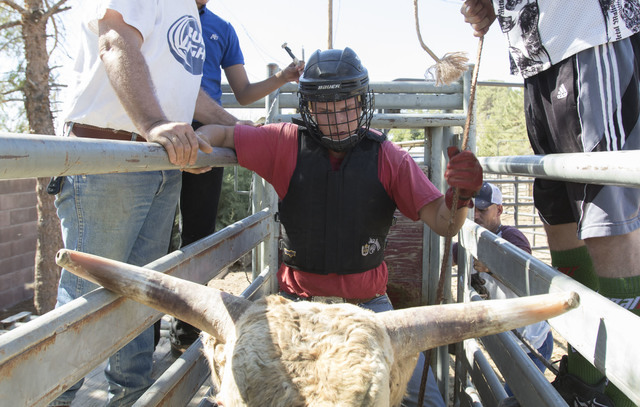
Collins dabbled in raising beef cattle but found that he did financially better in raising bulls for the rodeo.
“I work at the level where I try to get more than slaughterhouse prices,” Collins said. “Contractors look for the flash or the show of an animal. A good bucking bull might buck 10 to 15 times a year on average.”
His cattle are branded, tagged, vaccinated and checked regularly by a veterinarian to make sure they are healthy. They go between his home and Logandale, where they are transported for two weeks and are free to roam.
Although he has three dogs and a horse that he loves, he said livestock are different.
“Yes, I have a connection with these animals. If I don’t feed the bulls well or take care of them, then they won’t perform well. If they don’t perform well, then I’m just wasting my time taking them to competition,” Collins said. “Still, I know the difference between pets and livestock. Bulls just eat and (expletive). That’s what they live for.”
He said over the years his animal rights friends have assisted him in holding their hands over the calves’ eyes while they are getting branded to comfort them.
Collins has also had his fair share of misfortunes. A few years ago, a couple of his bulls got loose and went roaming around the neighborhood.
“One of them lifted the fence just enough to go under, then the second one got out,” Collins said. “They were standing in front of my house eating grass when three police cars come screaming with their sirens and one took off.”
Despite the hardships, both physical and financial, he said he’s enjoying his work while he can before running for mayor of North Las Vegas.
“This is almost a hobby or part-time thing, but I enjoy it for the opportunity,” Collins said. “I raise cattle for the rodeo kids. If we didn’t have the National Junior or High School Rodeo Associations, we wouldn’t have the professional championships. I’m just doing my part to keep this sport alive. People have to remember that bulls that buck live a long time. Bulls that don’t buck become a hamburger.”
The Keeper of Bees
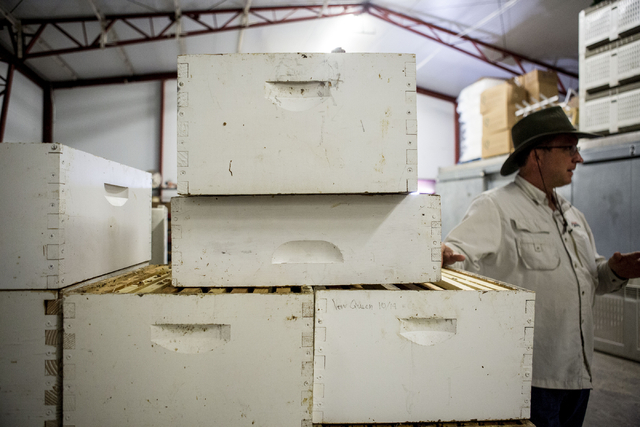
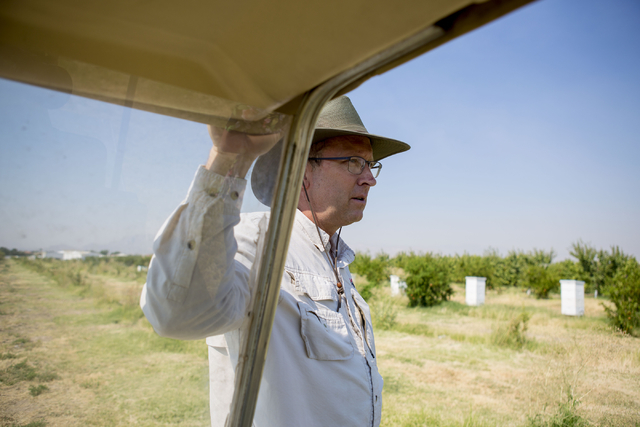
Mark Ruben started beekeeping five years ago. The director at Gilcrease Orchard, he decided to bring bees there to satisfy the sweet tooth of customers who kept asking if the orchard sold local honey.
He said the hardest part about beekeeping was learning how to trust the beekeeping suit.
“The bees are flying all around you, and you don’t want to get stung,” he said. “I’ve been stung a dozen times. It feels just like getting a shot at the doctor’s office but worse.”
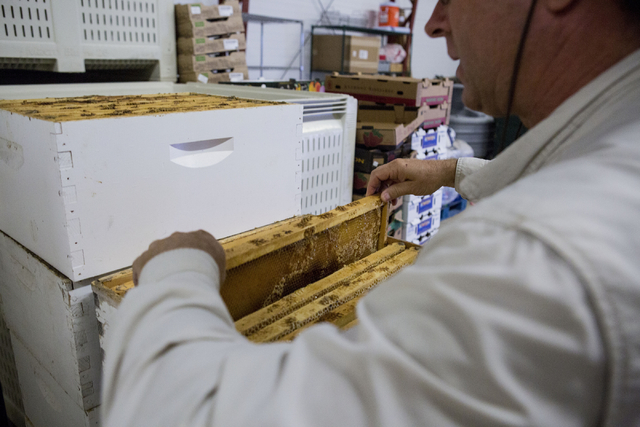
Ruben checks the colonies every two weeks to make sure each fleet is alive and doing well. He also checks to see if the bees have enough room.
“If they run out of room, they will split up,” Ruben said. “It’s like a family living in a condo. Eventually some of them will leave and find their own place to live.”
The orchard, 7800 N. Tenaya Way, has 12 colonies, each with its own queen bee. Ruben said one of the challenges of his work is having to requeen the colonies every year.
“The queens here only last about a year or two before they get naturally replaced by a new queen, which eventually go out to mate,” Ruben said. “Since we have African bees here, she’ll typically mate with one of them. What we want to do is ensure that these bees don’t become Africanized, because they are very aggressive.”
In order to requeen the colony, Ruben must capture the current queen and kill her by squishing her, then he rubs her body parts over the new queen’s cage. This is usually done in November or December, he said.
Introducing a new queen to the colony is a slow process that requires Ruben to introduce the new queen with her six helpers and constantly check on them to see if the colony is accepting her.
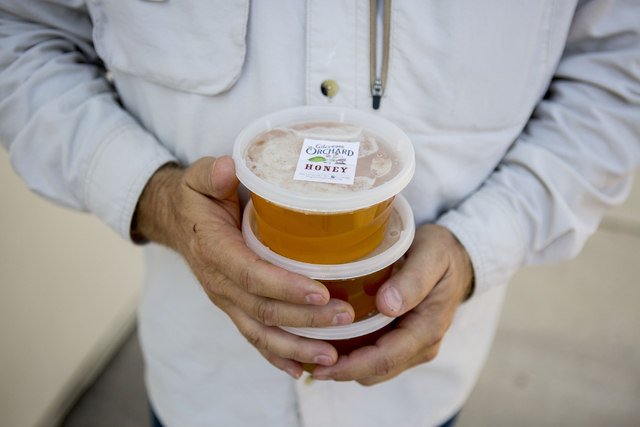
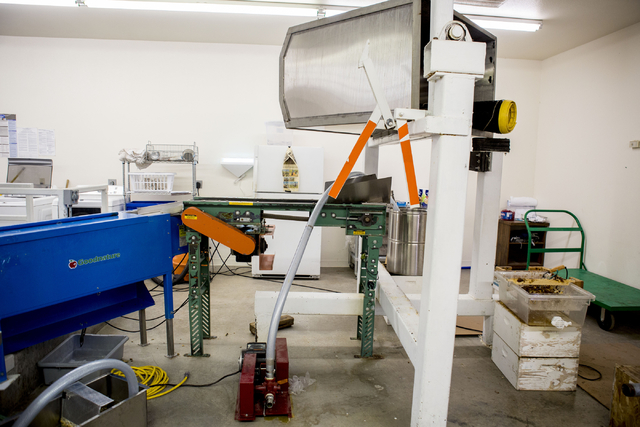
To extract the honey, Ruben must remove each frame of capped honey from the super and then use an electric uncapping knife to remove the wax cappings and expose the cells. The orchard sells honey only five or six times a year beginning in May to leave enough honey for the bees to consume.
Honey is $10 for 1 pound and $25 for 3 pounds. It usually sells out in a day.
Learning about bees is Ruben’s favorite part. “They are fascinating insects,” he added.
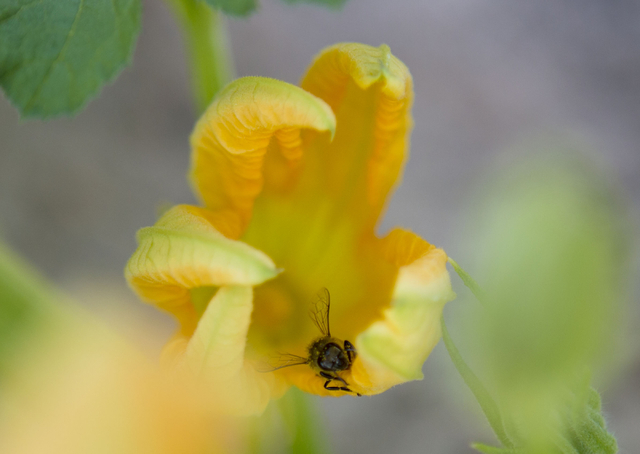
For example, in a typical hive, the queen bee will lay at least 1,000 eggs a day and the average worker bee (all females) will live six weeks in the summer. The males, called drones, have the duty of staying inside and mating with the queen.
Ruben said the orchard will have honey available in mid-September.
“The beauty of this is that each batch of honey tastes differently depending on the season,” he said. “The summer batch is by far the most unique with the strongest-tasting flavor.”
Visit thegilcreaseorchard.org.
To reach North View reporter Sandy Lopez, email slopez@viewnews.com or call 702-383-4686. Find her on Twitter:@JournalismSandy.