Five Vietnam War veterans to be honored during NFR



If you watch sports on TV, it’s just a matter of time until you hear the expression: “Discretion is the better part of valor.”
The axiom dates to William Shakespeare’s play Henry IV, Part I. It was spoken by the character Sir John Falstaff, an overweight and boastful knight. Its meaning: It is sometimes smarter to be cautious and avoid unnecessary risk than to act on blind bravery and reckless courage.
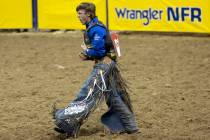
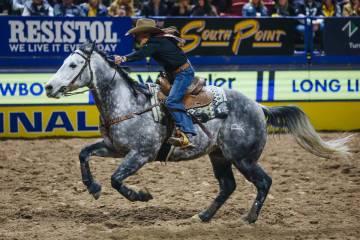
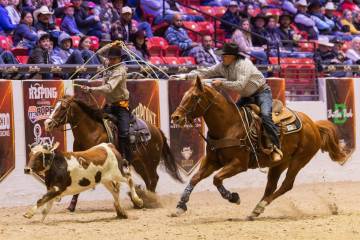
The argument is rarely used in conjunction with rodeo cowboys, especially the ones who ride bulls at the Wrangler National Finals Rodeo.
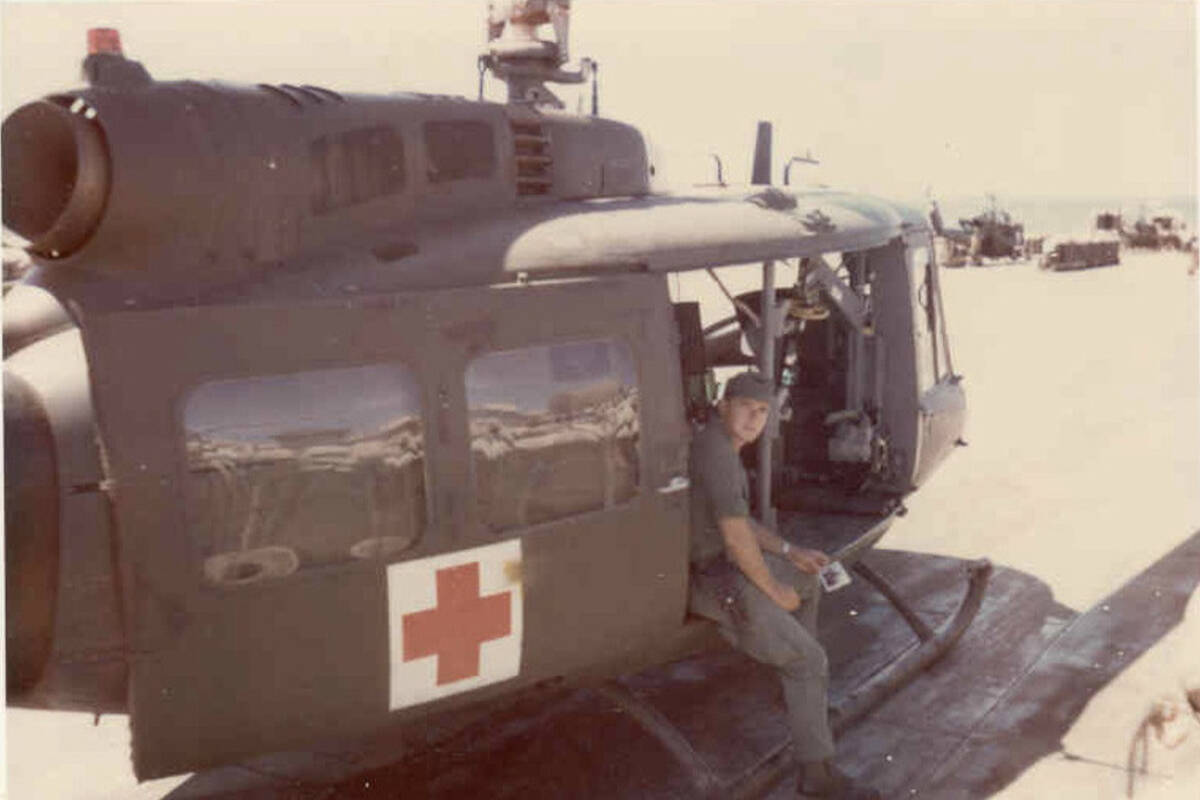
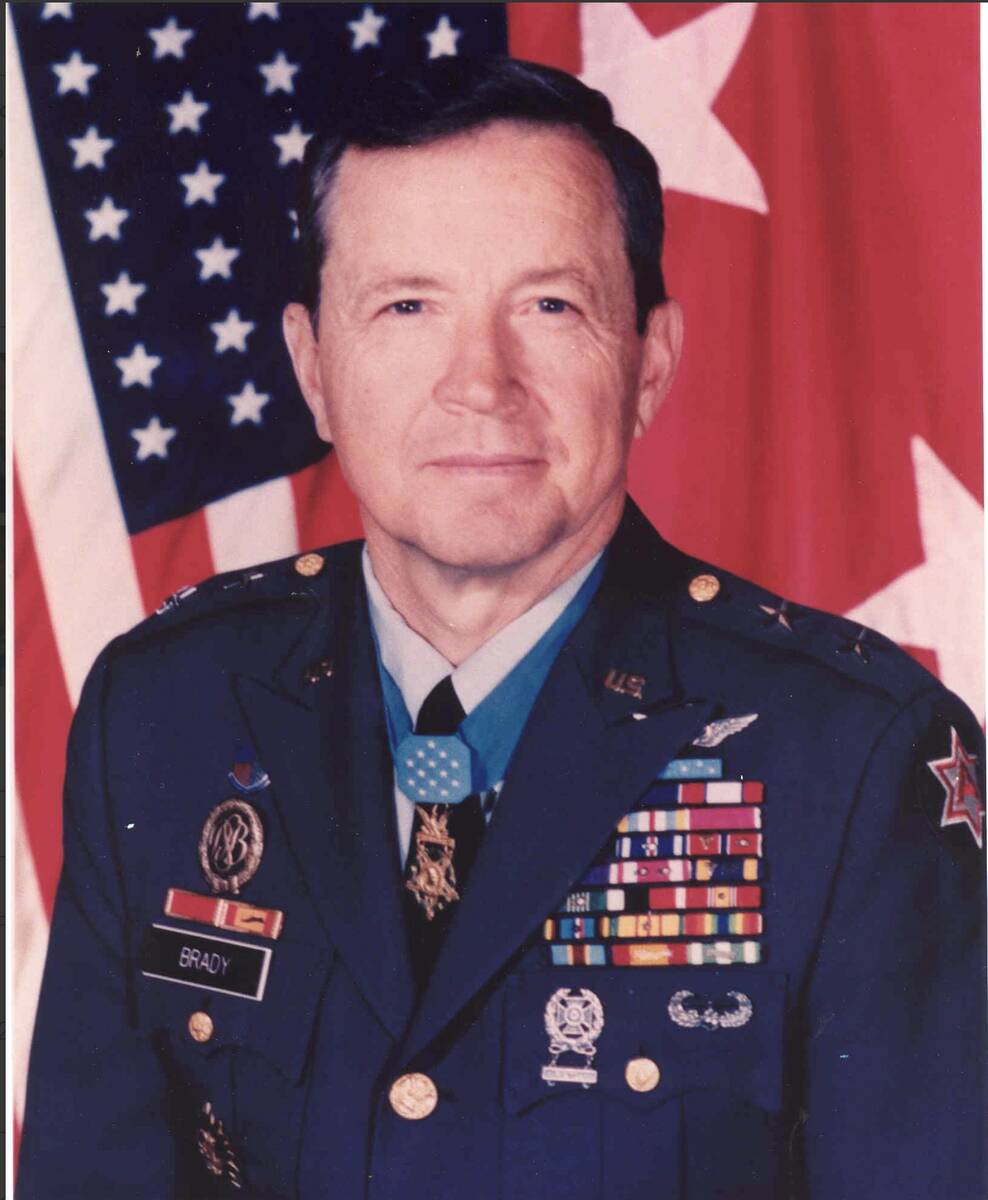
Or fighting men such as Patrick Henry Brady, who piloted helicopter ambulances with absolute skill and aplomb during the Vietnam War.
The retired Army major general flew more than 2,000 missions and is credited with evacuating more than 5,000 wounded during his two tours of duty in Southeast Asia.
Most of those missions required a substantial dose of bravery and courage, rather than the blind and reckless kind — none more so than the ones of Jan. 6, 1968, when Brady piloted three different helicopters into heavy enemy fire and dense fog.
Despite being shot down, he evacuated 51 soldiers, many of whom would have died had he not fearlessly answered the call of duty.
For his skill and valor, Brady was awarded the Medal of Honor and the Distinguished Service Cross, the top two U.S. military service awards.
On Monday, he will be honored at the Thomas & Mack Center, as part of the NFR’s salute to military heroes.
Staying alive
“In combat, our job every day was to save lives, and so you were excited to do that,” said the 89-year old Brady, one of the most decorated soldiers in U.S. history.
In Vietnam, the life expectancy of a Huey pilot was sometimes only a matter of days or weeks. But Brady said there is no time for grim arithmetic or to be frightened when one answers the call of duty.
“Now you may have been apprehensive, but you were so focused on the details — how to get in there, how to get the (injured) guys out without ruining your helicopter and killing a bunch of people,” he said.
“I was so focused on the tactical approach and stuff within the aircraft, and with the (wounded), that had I gotten killed, I might not have noticed.”
Brady is one of five Vietnam veterans who will be honored during this year’s NFR.
Army Special Forces and Bronze Star recipient Maj. Heath Patrick was recognized during Thursday’s opening go-round.
Bronze Star and Purple Heart winner Air Force Lt. Col. Ted McAdam will be honored during Saturday’s third go-round at the Thomas & Mack.
Bronze Star and Purple Heart recipient Navy Petty Officer 1st Class Dick Hermann will be saluted during the ninth go-round, on Dec. 12. Army Staff Sgt. Drew Dix, a Medal of Honor recipient, will be recognized during the 10th and final round, on Dec. 13.
Reluctant heroes
Patrick is the only one of the five still active, helping traumatized combat veterans and first responders through the War Horses for Veterans organization.
“They got the wrong guy,” he said about taking a bow at the NFR, deferring to his fellow service members.
McAdam flew 384 combat missions during the Vietnam War and said the thrill of being a fighter pilot still gives him goosebumps. But like the others, he deflects any praise.
“I was privileged to work with incredible men and women as a pilot and squadron commander,” said the retired F-4 Phantom and F-15 Eagle aviator.
Hermann was the only survivor of an attack on his Mekong River patrol boat, when he was 18. He often asks why he was spared.
“There is not a day in the last 50-something years that I don’t think about it,” said the rodeo enthusiast, who began driving NFR stock to Las Vegas for various contractors after his military career.
During a chaotic three-day period in 1968, Dix was wounded while rescuing 14 civilians, including a nurse trapped near enemy lines. He captured 20 prisoners and eliminated 14 enemy combatants.
“Looking back on those 56 hours, almost every footstep, every smell and every sound is still pretty clear in my mind,” he said.
Flying with a purpose
Like Hermann, Brady said he has always been a rodeo fan, although it was one of the few sports he didn’t pursue in high school.
After being feted in Las Vegas, he will jump on a plane to attend the Army-Navy football game in Baltimore, where his money will be squarely on the underdog Cadets.
Brady and world champion bareback rider Casey Tibbs were born in South Dakota. The two-star general said Tibbs, along with Hall of Fame bucking horse Midnight and Jim Thorpe, the legendary Native American athlete, were his sports heroes growing up.
“I played football, basketball, baseball, boxed, and later on, handball and golf. I was never really good at any of them,” Brady said of trying to emulate Thorpe’s multisport prowess.
As hard as it may be to believe, given his Medal of Honor, Distinguished Service Cross, six Distinguished Flying Crosses and 52 Air Medals for meritorious achievement or heroism, Brady wasn’t exactly a model soldier at first.
He was even kicked out of the Reserve Officers Training Corps while a student at Seattle University.
But Brady eventually learned to respect authority.
Combined with his faith, those traits served him well when he started flying helicopters into enemy territory during a protracted conflict that so many back home failed to understand.
He tells a story about approaching the hospital in Saigon with a full payload of casualties in his helicopter, while youngsters were cavorting in a swimming pool on his flight path, hoping to find a bit of normalcy as bullets and anti-aircraft fire swirled around them.
“Our job there was to help those who were helpless to be free,” said the retired major general, adding nuance to the discretion and valor argument that might have given Sir John Falstaff something to think about.