NFR move to Vegas the ‘best thing that could happen to the rodeo’


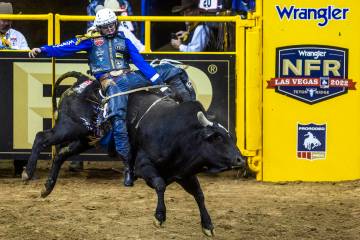

Contrary to what its overwhelming success over the past four decades would suggest, it wasn’t always unanimous that the Wrangler National Finals Rodeo and Las Vegas would become a match made in cowboy heaven.
Despite the city’s best efforts to lure the NFR away from Oklahoma City, the Professional Rodeo Cowboys Association’s board of directors was deadlocked at 5-5 when the proposed relocation was put to a vote 40 years ago.
A high-stakes tug of war ensued, forcing PRCA President Shawn Davis to cast the deciding vote. That vote resulted in the NFR loading up its wagons after a successful 20-year run on the Oklahoma plains.
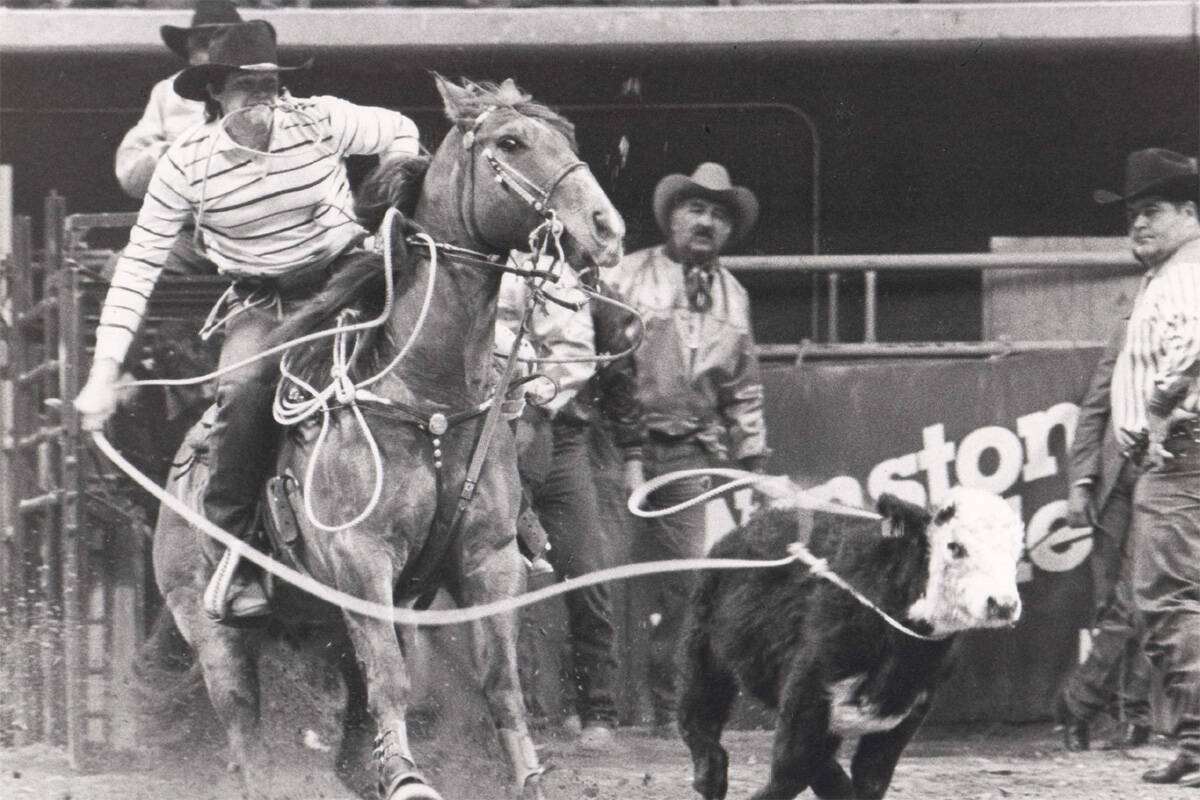
But Joe Beaver, who became the first major star of the Las Vegas NFR by winning the first of his eight world titles as a 20-year-old rookie, said there never was any doubt that pro rodeo’s Super Bowl would strike paydirt in its new home.
“A reporter asked me when we first got here: What about the venue, what do you think about the Thomas & Mack, it’s a basketball (arena),” said the former tie-down roper, who in 2002 was inducted into the ProRodeo Hall of Fame.
“I said, ‘Mister, I’ll be honest with you: I’ll rope in that parking lot out there, because that’s more money than I’ve ever seen in my life.’”
Bonanza benefits all
The move to Nevada was akin to striking gold in a state better known for its boarded-up silver mines. Prize money increased to $1.8 million in 1985 — about double what was paid to competitors during the NFR’s last go-round in Oklahoma City.
“It was my first year, so it didn’t matter where I was going to go,” Beaver said about the Thomas & Mack Center becoming the “House That Joe Built,” based on his immediate success here and 21 additional NFR qualifications.
“But to go to Las Vegas — we were going to make three times or two times more or whatever. To us back then, that was a lot of money.”
California cowboy Ted Nuce won the 1985 bull riding world championship in Las Vegas. He agreed that the extra greenbacks made the bright lights associated with the city seem ever more luminous.
“The move from Oklahoma City was very exciting, because we went from $4,000 go-rounds to $8,000 go-rounds,” Nuce said of nightly payouts in the seven NFR events: bareback riding, steer wrestling, team roping, saddle bronc riding, tie-down roping, bull riding and barrel racing.
“That first year, I won $62,000 here; I won the most money at the NFR. I probably wouldn’t have been able to win the world championship without that Las Vegas money.”
Cash cow revived
Unlike Beaver, Nuce had an additional point of reference, having also competed in Oklahoma City. Nuce said he understood why OKC officials were so determined to hang onto the cash cow.
“It generated so much money for the city,” he said. “But at the same time, it was the best move. It was the best thing that could happen to the rodeo, with the money that keeps increasing every year.”
A total of $16.2 million — $12.5 million to the cowboys and cowgirls, and $3.75 million to the stock contractors — was awarded in 2024. This year, the purse will climb to more than $17.5 million. A new contract starts with the 2026 NFR, going through 2035. The total payout over the length of that deal is expected to exceed $264.3 million.
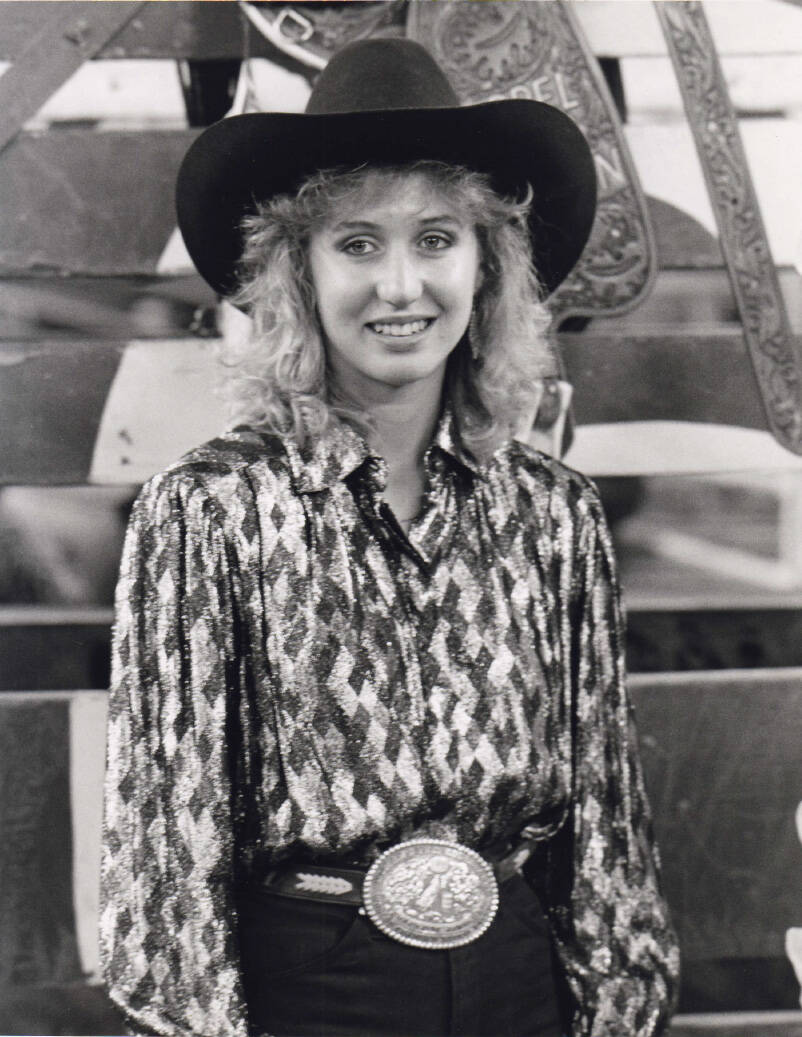
Charmayne James, who won 11 barrel racing world championships in becoming a Las Vegas NFR Icon, also rode in Oklahoma City when she was still a teenager. She concurred that the change of scenery was a game-changer for rodeo fans, and ultimately Las Vegas, as the demand for tickets began to grow.
“It really was a perfect fit, because of the time of year in Vegas, with not so many things going on,” said James, whose husband, Tony, also has ties to the city.
Tony Garritano is the brother of longtime College of Southern Nevada baseball coach and former UNLV place-kicker Nick Garritano. Tyler Garritano — Tony and Charmayne’s son — was the Coyotes’ third baseman the past two seasons.
So Long Waffle House
“More exposure. Bigger audience,” James said about tapping into fame and fortune in Las Vegas. “(Our fans) can come in and see shows, and they can eat good food after the rodeo. Eating in Oklahoma City, Waffle House was the first stop.”
The move to Las Vegas also resulted in a more streamlined NFR. Companion events designed to entertain spectators, but were not part of the competition, were eliminated.
That made for a concise TV window, and also appealed to the local casinos, which wanted rodeo fans back at their blackjack tables without unnecessary delays.
“It was a new format,” Beaver said. “I liked it. I liked the venue and the lights and the fun. I thought there was a lot more to do, even for a kid.”
Indeed, in 1985, Beaver was 20 years old, not yet old enough to gamble.
Like many of the other 1985 champions, Beaver said he was mostly unfamiliar with Las Vegas when he saw it glow on the horizon for the first time. But 40 years later, he now considers the city his home away from home.
“In the old days, you used to come in over the top of the hill through Henderson,” he said. “I remember seeing all the lights and thinking, man, this is where I belong.”