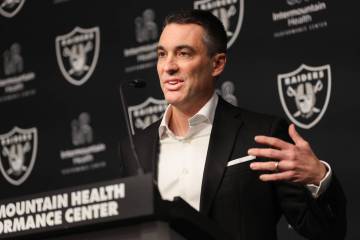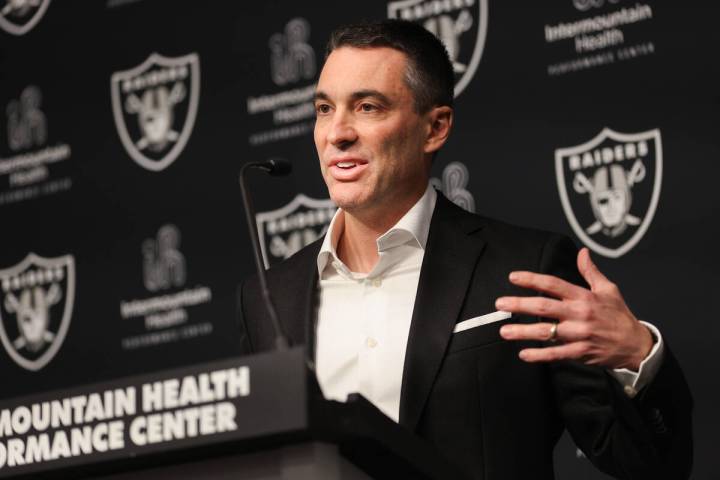
The Raiders should be able to address some of their needs in the second and third rounds of the NFL draft after selecting tight end Brock Bowers with their first pick.




The Raiders should be able to address some of their needs in the second and third rounds of the NFL draft after selecting tight end Brock Bowers with their first pick.

The Raiders drafted what could be a generational tight end in Georgia’s Brock Bowers, but they had other needs they should have addressed in the first round.
The Clark County School District is looking to make it easier to hire retired employees to fill “critical” vacant teaching, other jobs.
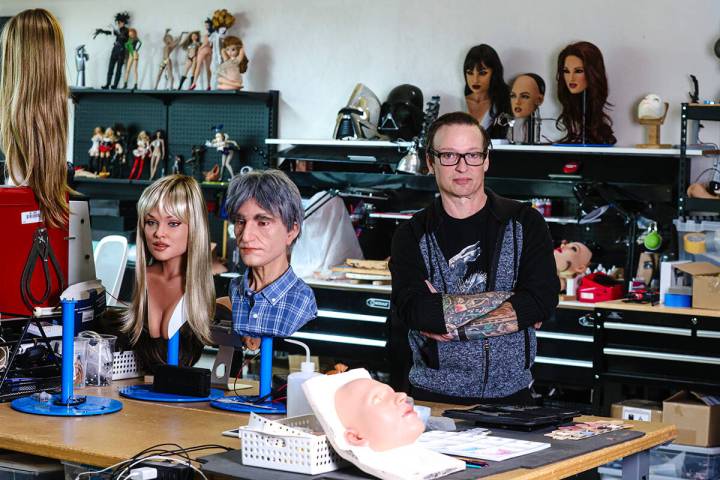
Matt McMullen has been at it for decades. His most realistic creation yet is a supermodel-esque woman with blonde-brown hair who speaks with a mild Scottish accent.

Clark County School District police arrested a man connected to a student-teacher fight.

Sick New World, Holo Holo and the Water Lantern Festival lead this week’s Las Vegas entertainment lineup.

Rain will be a possibility in the morning with the greatest chances in the afternoon. It is expected to be widespread across the valley.

In-N-Out’s “secret menu” includes items ranging from pimped-out cheeseburgers to something called a whole grilled onion.

The crash occurred near Galleria Drive and Dave Wood Circle, north of East Lake Mead Parkway.

The 6:25 p.m. incident occurred in an apartment complex near West Tropicana Avenue and South Jones Boulevard.

Former Bishop Gorman standout Rome Odunze was selected ninth by the Chicago Bears, and former Liberty athlete Troy Fautanu went 20th overall to the Steelers.

The Hylo Park and Gateway Village are two mixed-use projects in North Las Vegas. Though they started at different points, both projects could finish at similar times.

The first incident was reported to have happened about 2:45 p.m. Wednesday and a second incident about 3:10 p.m., both near Paradise Hills Drive and Greenway Road.

The class-action lawsuit estimates more than 1,000 Las Vegas restaurants may have been affected by “false identities” on the Uber Eats website.

A former Henderson resident has been sentenced in federal court for his role in producing videos in which animals were tortured and killed.

April is World Wish Month! It is a time when the world comes together to make dreams come true for children facing critical illnesses. As long as these brave kids need hope and strength, wish makers like you are essential to their fight. Speaking of wish-making, here’s an exciting opportunity: Walk For Wishes® 2024! Presented […]







Tropicana owner Bally’s Corp. filed for a commercial demolition permit with Clark County as preparations continue to build a ballpark for the Oakland Athletics.

Alex Honnold joined Democratic Rep. Susie Lee in a panel discussion with outdoor recreation small businesses to talk about ways to support outdoor recreation.

The March gaming win was strong — but not as strong as a year ago when casinos had all-time-record slot machine revenue due to a stellar lineup of special events.

Neal Schon of Journey says the Sphere was made for jam bands, but his band would crush it, too.