Home Subscribe
Jobs Cars Homes Shopping Travel Weddings Golf Best of Las Vegas Photo
.
Member Center

Recent Editions
SuMTWThFS
>> Search the site
.
.
.
.
NEWS
.
.
.
.
.
.
.
Nov. 12, 2006
Copyright © Las Vegas Review-Journal


Smoking ban a sign of the times for changing state

Analysts: Nevada no longer the Wild West

By SANDRA CHEREB
THE ASSOCIATED PRESS

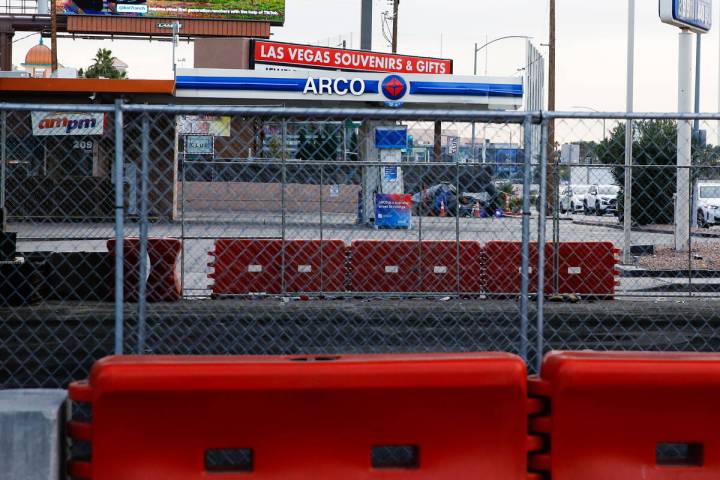
RENO -- Nevada's passage of a ballot measure that will chase smokers out of slot machine sections at supermarkets, gas stations and convenience stores, and from bars that serve food is part of an evolution from a frontier state in which anything goes into an urbanized society, analysts say.

Eric Herzik, a political science professor at the University of Nevada, Reno, also offered a simple explanation for last week's surprising victory for strict regulations on smoking.

Advertisement


"People just don't like it anymore," he said.

"When you're this frontier state of 200,000 people, that live-and-let-live attitude -- no problem," Herzik said.

But Nevada is no longer the Wild West.

"It's a far more urban and thus regulated environment, and smoking is part of that," Herzik said.

In a state where the flow of booze is perpetual, gambling fuels the economic engine and undertones of sex are flaunted, the outcome of Tuesday's election caught many by surprise. Organizers didn't target smokers in casinos, but they did impose government regulations in a state that prides itself on independence.

"Nevada has had a libertarian reputation, and has tried to uphold it, but that has been slipping away for quite a while," said Michael Green, a history professor at the Community College of Southern Nevada.

"While we encourage people to come here and do things that are bad for them, we also have a growing baby boomer population," Green said. "And that population is probably a bit more health conscious and might not want to be exposed to secondhand smoke."

The state, now with a population of about 2.5 million, has the nation's highest rate of smoking-related deaths and one of the lowest rates of smoke-free workplaces, according to the Centers for Disease Control and Prevention.

But Nevada also has a unique, almost-anything-goes economic relationship with tourists, and smoking has been regarded as what you do with your other hand while gambling.

Geno Hill, who owns five Rum Runner bars offering food and slots in Las Vegas and who is the president of the Nevada Tavern Owners Association, said he thought the independent leanings of Nevada's rural counties would snuff Question 5.

"We were pretty comfortable the rural counties wouldn't let California come in here any more than they are," Hill said. "By golly, they did."

Hill's organization backed Question 4, a competing, less restrictive anti-smoking measure, which voters rejected, 52 percent to 48 percent.

Instead voters in Nevada's most populated counties -- Clark, Washoe, Douglas, and Carson City -- as well as rural Churchill and Lincoln counties, approved Question 5. The remaining 11 rural counties turned it down.

Herzik was among many who projected Nevada voters would favor the less-restrictive measure, but he said he realizes his oversight.

"First and foremost, this was just straight anti-smoking," Herzik said. "The majority of people do not smoke, the majority of people do not like smoking."

Green said voters may have been confused between the competing measures, and he offered another theory.

"Nevadans are contrary cusses," he said.

"There were a lot of advertisements saying vote yes on 4, vote no on 5," he said, speculating many people voted just the opposite, just because.

Question 4, an industry-backed initiative, would have imposed minimal restrictions on smoking in areas of bars and restaurants that allow children. Instead, voters approved the Clean Indoor Air Act backed by public health groups, 54 percent to 46 percent. It bans smoking in any bars that serve meals, as well as in slot machine sections of grocery and convenience stores, and at video arcades, shopping malls, school grounds and day care centers.

With the law taking effect Dec. 8, many small bar and restaurant owners are struggling to figure out what it means for them.

"They've told us either people can smoke and gamble and drink, or people can eat and gamble and drink," Hill said. "There's not much choice there."

He fears that if his patrons can't smoke while they drink and gamble, they will go to the exempt larger casinos.

Michael Hackett, spokesman for Question 5 proponents, said complying with the law won't be as ominous as some think.

"As we've looked at these laws in other states, how they've been carried out ... it's not that difficult," Hackett said.

Lee Haney, spokeswoman for the group that pushed Question 4, said clarifications are needed about who will enforce the law and whether the ban includes hotel and motel rooms.

Harry York, chief executive of the Reno-Sparks Chamber of Commerce, said his organization is trying to clarify the law's provisions for its members. "We're trying to get a one-pager that makes sense," he said.

The transition, he said, will be hard for small bars that serve food, and he hopes for a "reasonable" enforcement approach as businesses adjust.

While some customers may gravitate to the big casinos to smoke and wager at the same time, York said neighborhood bars attract their own clientele.

"It's a different atmosphere," he said of the small clubs. "I personally think people will adjust because it's not like they can go next door.

"The competition's all under the same rules."


Advertisement


Contact the R-J | Subscribe | Report a delivery problem | Put the paper on hold | Advertise with us
Report a news tip/press release | Send a letter to the editor | Print the announcement forms | Jobs at the R-J

Copyright © Las Vegas Review-Journal, 1997 -
Stephens Media   Privacy Statement