



American Airlines’ recovery runs into turbulence
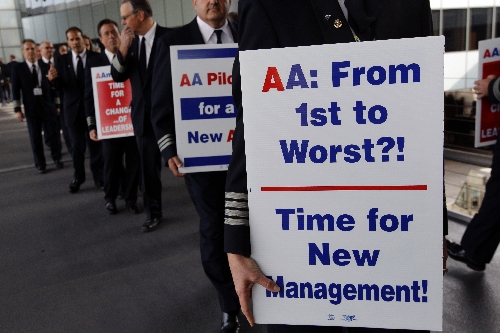


DALLAS - Just weeks ago, American Airlines was working its way through bankruptcy court, on schedule for one of the fastest turnarounds in aviation history. Planes were full. Revenue was pouring in. Then seemingly overnight, American became the butt of jokes from Facebook to late-night TV.
A slowdown that American blamed on pilots caused massive delays and cancellations. Then rows of seats came loose on a few planes. Passengers wondered whether they would get where they were going on time and in one piece.
American's on-time record fell well below its competitors, and its cancellations were the highest of any airline. There are signs that the trouble, which began in September when American threw out the union contract of its pilots, is causing passengers to switch. Domestic traffic fell by 7.1 percent in September from the same month a year earlier. No other major airline experienced a drop like that.
Thomas Horton, CEO of American and parent AMR Corp., acknowledges that a few weeks in September were "very difficult on our customers." American has said little else to ease concerns.
Horton and other executives instead steer conversations toward the airline's recent financial performance, which by many measures has led the industry. For six straight months, American, the nation's third-largest airline and the fourth-busiest carrier at McCarran International Airport, has reported larger gains in a key revenue-per-mile statistic than rivals United Airlines, Delta Air Lines, Southwest Airlines and US Airways. But its profit margin continues to lag.
AMR, which filed for Chapter 11 in November, could emerge from bankruptcy protection early in 2013. That would mark a quicker turnaround than the 38 months for United or the 19 months for Delta.
American has offered passengers a refund if their flight is delayed more than two hours and they choose not to fly. They also can switch to another American flight at no charge or fly on another airline, if seats are available. Only 59 percent of American's flights arrived on time in September, according to flight-tracking service FlightStats.com.
Robert Mittelstaedt, an aviation expert and dean of the business school at Arizona State University, says it's critical that American show more empathy for passengers.
"The biggest problem they have right now is the potential to lose their most-frequent fliers," he says.


