



Bent, battered, broken and bankrupt
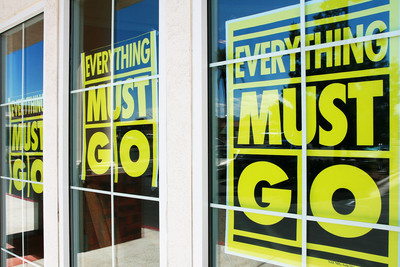



Two years ago, while most of Las Vegas was still bingeing on real estate, Joseph Hules had already started to feel the hangover.
Hules, the president of Sun-West Lifestyle, which owned two Thomasville Home Furnishings stores in Las Vegas, had strong years in 2004 and 2005. But he ran into a slowdown in 2006 that he attacked from several angles. He boosted the sales staff, remodeled the Sunset Road location and ran promotions that had stimulated traffic in the past.
His efforts reaped only meager results.
As his losses mounted earlier this year, Hules decided his only way out was to file a Chapter 11 bankruptcy in January.
"We had just gotten behind the eight-ball and were going further and further down," he said, interviewed while overseeing a going-out-of business sale. "Being a retailer, you are always hoping things will get better, but it just didn't seem to happen."
Hules was hardly an oddity in turning to U.S. Bankruptcy Court as his last resort. At a rapidly escalating rate, a diverse cast of businesses and individuals have followed the same path, including the Ritz-Carlton, Lake Las Vegas; Minxx Gentlemen's Club; Exotic Cars at Caesars Palace; developer Steven Molasky; and several real estate partnerships.
"I think we're seeing the fallout from the credit crisis," said Anne Loraditch, an associate with the law firm Lewis and Roca, citing a national survey that showed rapidly rising corporate defaults. "More and more consumers can't afford to keep spending the way they did in the past, and companies are feeling it."
By the end of April, more debtors had filed cases in the Las Vegas division of the District of Nevada than in all of 2006. The four-month total of 4,503 filings ran 78 percent ahead of the same period last year and 348 percent higher than in the same period in 2006.
Although the vast majority of the cases involved individuals, the number of Chapter 11 corporate cases vaulted to 38 in the first four months of 2008, up from just nine during the same period in 2006.
Set against a broader backdrop, the numbers look just as bleak. Filings rose 37.8 percent nationwide last year, but the District of Nevada ran ahead of all 94 federal judicial districts at 98.5 percent; only five others even had increases topping 70 percent.
"It's just crazy out there," bankruptcy attorney Matthew Aaron said. "And it looks like it's going to get a lot worse before it gets better. I think the bankruptcy filings will stay high at least until the first quarter of '09."
Other observers believe it could take another three to five years for all the wreckage created by the easy availability of subprime mortgages to wash through the system.
"The market seems to be getting softer and softer and softer," attorney Randolph Goldberg said. "It's good for bankruptcy lawyers but bad for the economy."
In the past, individual bankruptcy cases have generally involved people who spent their way into large unsecured debts, typically with credit cards, then found themselves financially drowning if they suffered a sudden jolt such as a layoff or reduced hours or a major medical bill. Typically, bankruptcy would wipe out that debt or pare it substantially, allowing people to stay in their homes.
Now, attorneys say, they have seen a large influx of clients who have been financially responsible in their daily habits but bought numerous houses to try to cash in on the mid-decade housing boom. When the market turned into a riptide that swept property values out to sea, the owners were left drowning in mortgages for houses worth less than what they owed and no tenants or buyers to rescue them.
"I've never seen anything like it," attorney David Krieger said. "We are getting people with virtually no credit card debt but three, four, five houses. It seems like everyone has second homes these days."
Aaron said: "The most shocking thing to me is all the people wanting to file (Chapter) 7s (debt liquidations) instead of (Chapter) 13s (repayment plans). They just turn in the keys and surrender. They don't even want to try to save the homes because they are so upside down," the term referring to a mortgage balance exceeding the home value.
Typical of this type of debtor is the case of Benigno and Mariquita Eusebio of Henderson. Between his job on an airline ground crew and hers as a nurse, plus interest on a loan they gave when they sold a piece of land a year ago, the couple pulled down an average income of just more than $6,000 a month. Yet, they filed for Chapter 13 bankruptcy last November.
Shortly before filing, they surrendered four of their five houses rather than continue to shoulder the unspecified mortgage payments. As a result, the repayment plan now before the court covers all of their $90,000 in debts over five years.
However, Krieger, their attorney, concedes that this outcome hinges on whether the lenders on the four foreclosed homes accept the property as payment in full. Should they pursue a deficiency claim -- the shortfall between the mortgage balance and the homes' value -- that debt could be added into the Eusebios' plan and reduce the payout to everyone else.
One bright spot in plunging real estate values has been opening up a legal avenue to strip off second mortgages.
Normally, only companies can use bankruptcy to rewrite mortgages; individuals must honor the original terms and make up any missed payments to the lender over time. But, once a home's value sinks so much that it is less than the amount owed on the first mortgage, it leaves the second mortgage with no collateral to back it. Attorneys can reduce this mortgage balance substantially or eliminate it entirely.
To do that involves pitting a debtor's appraisal against the lender's so a judge can set the value. But Krieger said that in several cases in which he stripped off second mortgages, lenders did not bother to contest the value.
Loraditch suspects the continuing real estate slump may help to slow corporate bankruptcy filings.
"What you are going to be seeing are more and more workouts with lenders as they realize the market is not coming back as they expected," she said.
A workout is essentially an out-of-court bankruptcy, in which the lender recognizes that the borrower cannot meet loan terms and voluntarily rewrites them.
But such a new attitude came too late for HDB, an affiliate of Highland Development Co., which was building the 113-unit Mira Villa condo project in Summerlin. Repeated delays -- the first units were supposed to be finished in late 2005, according to court documents -- dragged the project into the real estate slump. Then HDB filed a Chapter 11 after amassing $108.9 million in debt, including a thicket of mortgages totaling $91.9 million.
Several months of negotiations last year to restructure the debt proved fruitless. Lenders insisted they would not agree to do anything outside of bankruptcy.
With attorney Timothy Cory now installed as the trustee in charge of the project, lenders have agreed to advance as much as $46 million more to complete the project rather than walk away from a collection of partially-finished buildings.
For Hules, the endgame will involve locking the doors at the Rainbow Boulevard store at the end of July and winding up all the loose ends by the start of autumn.
He had ridden out other rough spells since opening in 1998, notably the recession in the early part of this decade. He survived dogged competition from less expensive furniture made in China. But the current housing market did him in.
With the consent of Thomasville Furniture Industries, for which he was an independent dealer but not a franchise, Hules filed for Chapter 11 in January. Financing new inventory had become impossible; Hules said he and Thomasville wanted to ensure that people who ordered and paid for furniture received it.
Hules used the bankruptcy filing to shed the lease at the Sunset Road location, and the slimmed-down operations at the Rainbow store alone were generating operating profits. But much of the revenue flowed from furniture ordered before the bankruptcy, Hules said; new bookings weren't enough to sustain operations. This led to his decision to shut down completely.
Profits from May's liquidation will go to Thomasville, which was owed $979,000 secured by the business when the case started but has been paid $262,000 since. It is highly unlikely that anything will be left to pay the $972,000 owed to unsecured creditors, including $79,000 to Hules and his wife, Mary Louisa, who had loaned the company as the majority shareholders.
Hules said he plans to return soon to retailing, but gives few details.
"The first thing we have to do is take care of this," he said.
Contact reporter Tim O'Reiley at toreiley@ lvbusinesspress.com or 702-387-5290.
head, heart and help Although many financial factors can drive a business into bankruptcy, psychology can often turn out to be the most critical. Owners’ emotional investments in their companies, sometimes referred to as “founderitis,” can blind them to the hard choices they must make to correct problems early rather than continue to pump in money while hoping for the economy to turn. “A bankruptcy can be avoided through rigorous discipline,” said Robert Atkinson, an attorney with the Kupperlin Law Group in Henderson. “Unfortunately, that means giving up a lot of one’s dreams. They view the business as their baby and refuse to let go of the dream until it’s too late.” Experts working with small- and midsize businesses tick off several ways to detect trouble early on, including: Set up the books. Arrange your accounting so that certain benchmarks are easy to track, such as how quickly inventory is sold, how accounts receivable compare to payables, and whether prices are set at the right level. Then, an owner must match those against industry averages. “What we try to teach here is how to understand business ratios in relation to the particular industry,” said Larry Vierra, director of the Nevada Small Business Development Center. “Then you relate this to your core processes. It’s not difficult, but nine out of 10 people we see don’t understand ratios.” Write a realistic business plan. Build it around realistic monthly targets, then compare actual performance against those targets weekly or even daily. If you veer off course, take corrective steps quickly. “If you are not on track this month, what makes you think you will be next month?” said Anna Siefert, director of the Women’s Center Business Project. Too often, she added, owners take the attitude that “everybody is in the same boat, so you just sit tight and wait. But your competitors are going after your customers because they are losing business, so your business could go down the drain while you sit back and wait.” Watch the numbers. Keep tabs on revenues and cut expenses as much as necessary, including personal compensation, employee pay and fixed overhead. Also shed liabilities such as personal guarantees for leases if possible, if they begin slumping, Atkinson said. Further, look for assets that could be sold to pay down debt, even if they are intangibles such as customer lists. Despite potential alarms, some owners still max out credit cards, tap home equity lines of credit and hit up family and friends for loans until they become hopelessly mired in debt. Some ways to avoid a potentially expensive bankruptcy that will blot a credit rating include: Evaluate your business carefully to see what can be sold. Sometimes, a person with stronger management or marketing skills will take on the entire business and its liabilities; in other instances, selling it off in pieces might generate a better return. Work with lenders. Try to get them to accept interest-only or delayed payments. However, Atkinson said, this involves striking a tricky balance in convincing a lender that bankruptcy is a serious, but not too serious, alternative. On the one hand, he said, a lender may bend repayment terms for someone in serious distress who is trying to stay out of court. But an aggressive threat of bankruptcy could be grounds for a lender to declare a default and call in loans immediately, putting a business owner in a no-win bind. “Owning a business is very similar to a personal relationship,” Vierra said. “There are so many intangibles involved that you want to keep it going and give it your best shot and not walk away. But sometimes giving it your best shot just puts you in deeper trouble.” TIM O’REILEY/BUSINESS PRESS �


