Can you hear me now? Nevada sees mobile phones grow, landlines decline

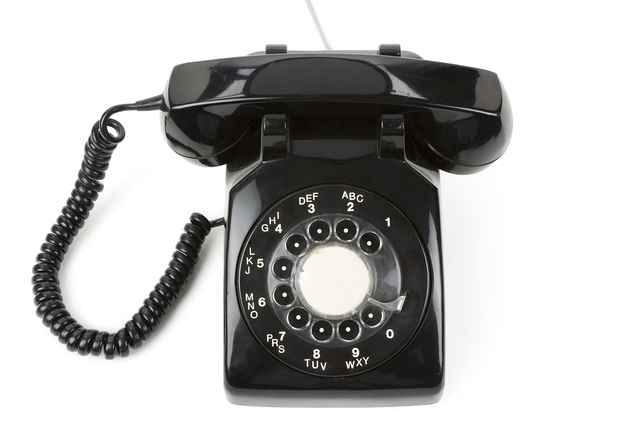





Jo Anne Jones knows she doesn’t need a landline. But she won’t be dropping hers anytime soon.
The 73-year-old Summerlin resident got her first cellphone about five years ago to use when she’s not at home. She’s now using it to make long-distance calls to family and friends because it’s cheaper than paying a long-distance bill on a landline.
But like many of her generation, Jones can’t cut the phone cord fully yet. She keeps a home landline to make local appointments and reservations and to talk to local friends.
“My daughter keeps asking me if I need the landline, and I question myself why I don’t get rid of it, but I guess it’s just being old-fashioned,” Jones said. “The bill’s only $25, and I like having it around. It just gives me a sense of security.”
In Nevada, like the rest of the nation, residential landline service has dropped while mobile phone service has risen.
In the United States, the number of residential landlines with phone carriers was at 142.8 million in 2001 but dropped to 44.5 million by the end of 2012, the Federal Communications Commission reported.
Nevada had 360,000 phone landlines in residences by the end of 2012, the FCC stated, down from 591,000 at the end of 2008.
Nevada’s decline in landlines contrasts with its tripling of cellphone subscribers from 2001 to 2012. There were 2.6 million cellphone subscribers in Nevada at the end of 2012 — almost one for each of the 2.7 million people in the state’s estimated population then, FCC statistics show.
The FCC reports that Nevada had 842,155 cellphone subscribers in 2001, but that more than doubled to 1.7 million by the end of 2005 and surpassed 2 million in 2007.
Nationwide, there were more than 300 million cellphone subscribers at the end of 2012, up from 124 million subscribers at the end of 2001.
Cindy Barfield, a 55-year-old Las Vegan, got rid of her home landline a few years back. She said she was once intimidated about using a cellphone and concerned by the cost. But she has no regrets over dumping her landline.
“I just like that you can take a cellphone anywhere,” she said. “I was a dinosaur for a long time, but I will never go back. I don’t have to worry about long-distance and I can text.”
Sixty percent of adult renters ditch landlines for cellphones compared with 27 percent of adult homeowners, a Centers for Disease and Control and Prevention study shows.
The CDC reported the number of Nevada adults with only a wireless phone in their households was 39 percent in 2012. By contrast, 32.6 percent of California adults had wireless-only households.
In Utah, however, 46.6 percent of adults had wireless-only households at the end of 2012. The Beehive State has higher education levels and higher household income, which may explain its cellphone use gap compared with Nevada.
Cellphones have grown popular with the younger generation. Nearly two-thirds of adults 25 to 29 had wireless phone-only households and nearly 30 percent of those age 45 to 64 were wireless-only households at the end of 2012, the CDC said. By contrast, 12.6 percent of people 65 and older had wireless-only households.
THE LANDLINE AS BACKUP
Many households keep landlines if they use home security systems that are tied in with them. Others use them for their fax machines or as backup if cellphone batteries fail, said Jason Chan, market development manager with Century Link, which provides landline service in Las Vegas and partners with Verizon for cellphone.
“Obviously the uptick in mobile lines has been the big thing that allows you or me whether we are working or driving around to take advantage of communications,” Chan said. “But landlines still have their place because they have a crystal-clear connection. There are consumers that like the reliability of home phones. … Landlines are still a strong business for us.”
Basic landline service starts at $17 a month for unlimited local calling compared with $45 a month for cellphone service, Chan said.
As cellphone use has grown, so has voice over Internet protocol service and video calling though Skype. About 255,000 residential users in Nevada have VoIP, primarily bundled with their Internet service.
Nationwide, 34 million residential customers have VoIP as part of the online package, up from 19.6 million in 2008, the FCC reported.
Landlines are now the domain of business, although their numbers are declining.
Businesses landlines surpassed residential landlines in 2011 and by the end of 2012 accounted for 51.5 million of the landlines in the U.S. — a number that has fallen nearly 11 million since 2008. About 7.6 million businesses have VoIP, up from 2 million in 2008.
Although landline use continues to decline, no one is predicting it will vanish.
For one thing, landlines are harder to misplace. Jones quips that the one problem with having a cellphone is she never remembers where she put it.
What might make her get rid of her landline would be enduring what she did as a child growing up in California in the early 1950s.
“We had party lines back then,” Jones said. “There might be eight parties (sharing one phone line). You would pick it up and someone would be talking on it. I wasn’t allowed to listen, but I couldn’t help it.”