‘We’re on schedule and that’s a good sign’ A’s break down Las Vegas ballpark construction milestone timeline
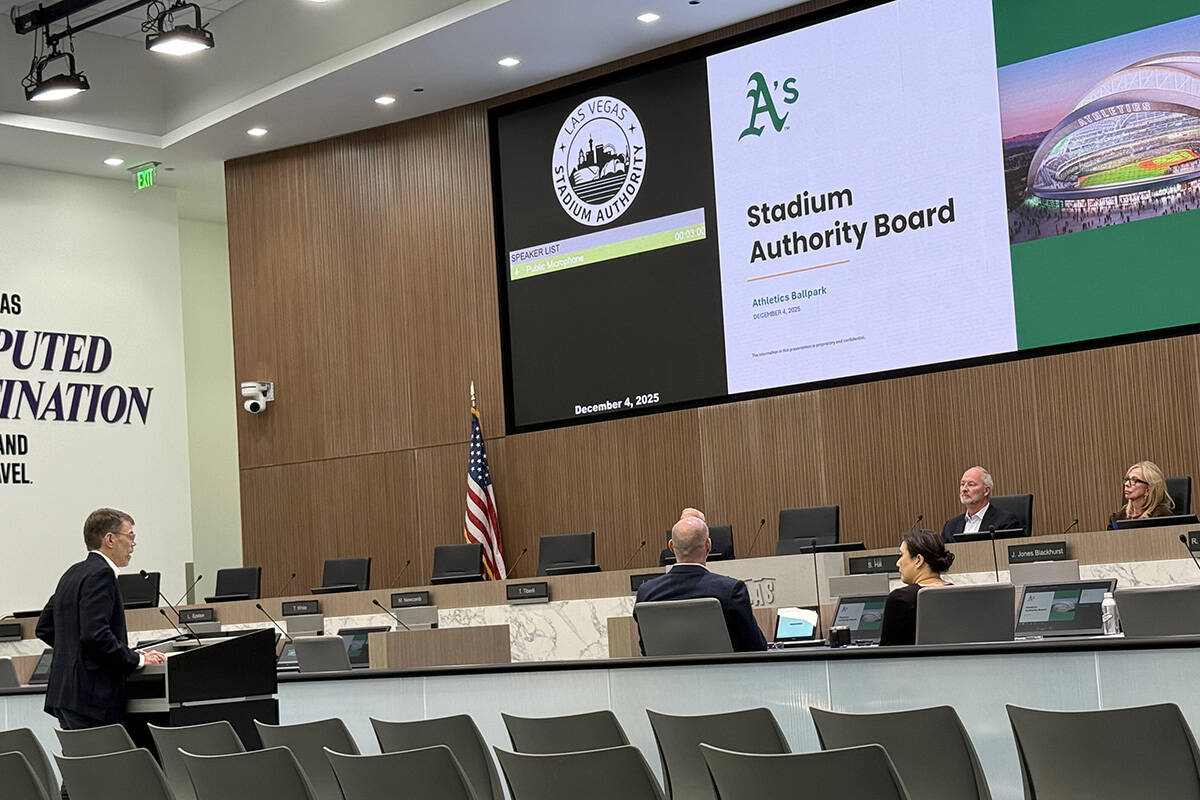
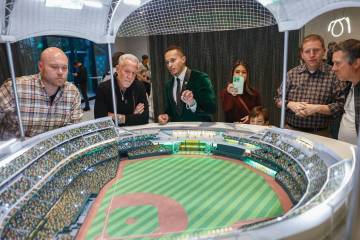

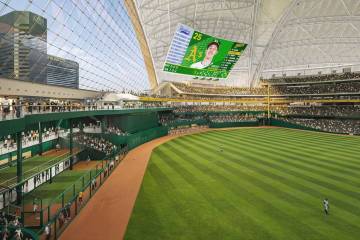



The Athletics gave a rundown Thursday of what to expect as their Las Vegas ballpark progress moves into the new year and beyond.
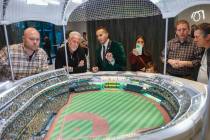
Using an animated 3D computer model, the A’s showed the Las Vegas Stadium Authority a detailed presentation of how the stadium will begin to come together over time, as the project remains on track for its early 2028 completion date.
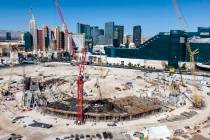
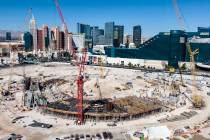
The majority of the work over the next several months will be concrete-related, with the pouring of the various stadium concourse decks. The first of those has already been poured, with the initial portions of the lower concourse coming into form.
Some interior steel work will begin in the spring, with installation of the steel that will support the roof of the structure to kick off in the summer, according to A’s chairman Sandy Dean.
“The current schedule is for a lot of work to occur on the seating stands between now and early summer of 2026,” Dean said. “I think the next really significant thing that we’ll see will be steel going up for the roof structure. … Essentially they’ll build some supports inside the stadium to support the arches, so the arches can be completed and support themselves.”
All the foundation work with the stadium is essentially done, after over 1,000 pilings driven into the ground to support the stadium as its built, Dean said.
“We’re on schedule, and that’s a good sign,” Dean said.
The stadium’s projected build price still sits around the $2 billion mark, with the bulk of the design work completed.
“Our strong goal is to keep it to that, and we’ll be updating people to that in time,” Dean said.
The A’s have been working around tariffs put in place around imports by President Donald Trump as the team approaches steel work on the site beginning next year. The team has an idea of what it will cost to secure the materials, but the tariff situation is ever-changing, and the price can change on a day-by-day basis, Dean said.
“We are carrying some reserves for the effects of tariffs,” Dean said. “That’s just something that we’ll have to see how it unfolds.”
Stadium Authority chairman Steve Hill said he doesn’t expect the A’s to tap into the up to $380 million in public funding available for the project until next year, at the earliest.
“At this point, the A’s have not asked for public funding, and they don’t have yet a guaranteed maximum price contract with Mortenson-McCarthy (stadium contractor),” Hill said. “It will probably be sometime next year (when they ask for the public funding).”
After taking a tour of the stadium site on Monday, Hill said officials got an idea of what the view from inside the 33,000-fan capacity stadium out toward the Strip would look like.
“Great to see the progress that the A’s are making on the stadium,” Hill said. “It’s going to be a pretty spectacular place like we talked about.”
A’s brass have been working with Clark County on a series of permits, to keep things moving along on time, Dean said. There are six main permitting packages for the A’s ballpark, with the team having three of those in hand.
A’s president Marc Badain, who has already helped lead a team through relocation and stadium building process in Las Vegas with the Raiders, said he’s pleased with the progress Mortenson-McCarthy, the same contractor who built Allegiant Stadium, has made this year on the ballpark.
“It’s a great team of people, it’s a great workforce, its the same crew that built Allegiant,” Badain said. “It’s certainly not surprising and its nice to see it and I’m enjoying it a little more this time.”
Contact Mick Akers at makers@reviewjournal.com or 702-387-2920. Follow @mickakers on X.