Metro’s juvenile task force, court program respond to rising violent youth crime






When a teenage former gang member told Sgt. Jasper Washington that he wanted to remove the ink of his past and start over, Washington heard more than a request for tattoo removal.
He heard proof his unit’s work was starting to stick.
Washington, who previously worked in crisis negotiation and SWAT, now heads the Juvenile Task Force at the Metropolitan Police Department. The task force was established in 2024 in response to a rise in violent crimes committed by children, police have said.
In August 2023, Jesus Ayala, who was 18, and Jzamir Keys, who was 16, intentionally hit and killed 66-year-old cyclist Andreas Probst, a retired California police chief, and later received life sentences.
That same year, in a separate case, a group of teenagers fatally assaulted 17-year-old Rancho High School student Jonathan Lewis; four pleaded guilty to manslaughter and were sentenced to juvenile detention for an indefinite period.
Preventing and reducing crimes like these are at the core of the Juvenile Task Force’s mission. The unit focuses on reaching young people before or at their first contact with the justice system, steering them toward alternatives, and reducing the likelihood that they remain in that system long term.
Washington did not provide statistics on the unit’s effectiveness, emphasizing that it is still relatively new. However, Metro’s annual report showed that 2,385 juveniles were arrested in 2023 and 2,461 in 2024, a roughly 4 percent increase.
In 2021, about 1,972 juveniles were arrested, and in 2022, that number increased by six.
“Behind every number is a life,” Washington said. “Success for us is getting ahead of the action, showing them that they have someone who cares for them, and changing their lives.”
Washington said his team has four main functions — proactive investigations, intervention, intelligence gathering, and information sharing — and typically works in plainclothes, visiting homes and offering mentorship.
For the child who told Washington he wanted his gang tattoos removed, the task force connected him with the ACE Program. Washington, who did not identify the boy because juvenile records are confidential, said the boy recently had a tattoo removed and is expected to start a new job in a couple of months.
‘Need all hands on deck’
The rise in violent juvenile crime is also driving changes in the court system.
This year, 15-year-old Eric Flores, 17-year-old Jose Juarez, and another minor were indicted in the fatal September shooting of a teenage boy at East Las Vegas Family Park. In another case, 17-year-old Henrry Norberto faces felony DUI charges in connection with a wrong-way crash in which a 10-year-old was killed.
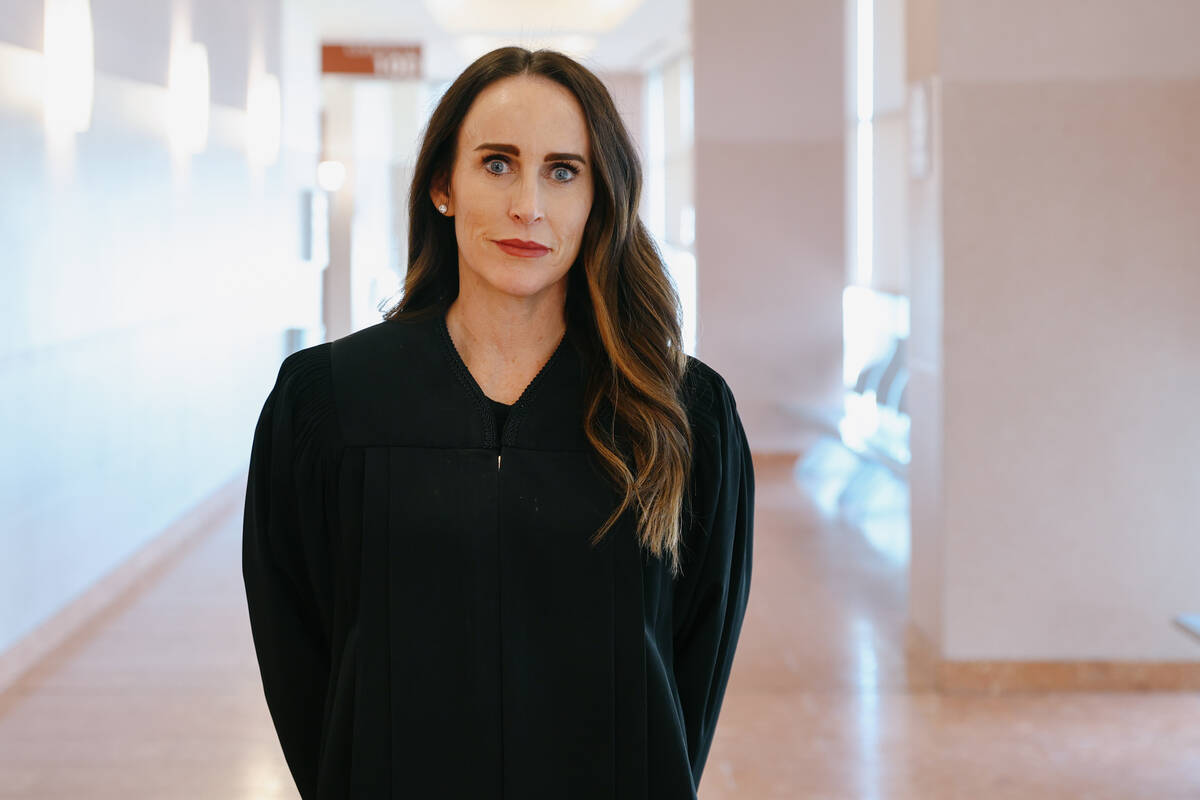
District Judge Jacqueline Bluth, who regularly presides over homicide cases, launched the CERT program in January as an alternative to incarceration for 14- to 17-year-olds tried as adults. CERT, short for Creating Engagement through Resources and Treatment, excludes youths convicted of sex offenses, arson-related crimes, or Category A felonies such as murder.
Bluth said the program is essentially a “last chance court” for children who have exhausted all resources available at the Family Court level. The grant that funds the program also extends to members of the juvenile’s household, potentially providing counseling services to parents and siblings of justice-involved children.
Before the program, Bluth said youth certified into the adult system had only two sentencing options: adult probation or prison. She and Judge Jennifer Schwartz visited dozens of youths at Northern Nevada Correctional Center in Carson City, surveying them about their upbringing, trauma, and past experiences with parole and probation officers.
Bluth recalled that when she was a prosecutor years ago, there were only one or two children held at the prison, which is the only one in Nevada that houses minors.
Bluth said many youths at the prison told her they had always expected to end up there and never imagined a different future for themselves. One boy, she added, wasn’t even afraid of being there because his friends and some family members were incarcerated too, so it “didn’t feel like a real consequence to him.”
“If you lock a kid up and send them to prison, who are they going to be when they come out? Will they be fully institutionalized? Will they have picked up other bad behaviors?” Bluth asked.
Bluth said adult court judges often found themselves in a tough predicament with these cases.
“We have to protect the community, and we don’t feel comfortable putting these kids on regular probation, because they need to be watched,” Bluth added. “They need all hands on deck.”
Bluth, who sentenced Ayala and Keys, said she recognizes that some youths who commit especially serious crimes must be incarcerated. But she argued that courts should take a “full picture” look at the lives and circumstances of children who are tried as adults, most of whom she said, for robbery-related offenses.
Since the program’s inception earlier this year, two youths have been accepted, Bluth said. One was removed from consideration after he shot another child in the face, nearly killing him, and the other cut off his ankle monitor just before starting the program.
“We’ve had a hard time getting the program off its feet,” Bluth said. “These kids are so impulsive.”
Contact Akiya Dillon at adillon@reviewjournal.com.