



Kitten city: Las Vegas Valley is home to at least 200,000 stray cats
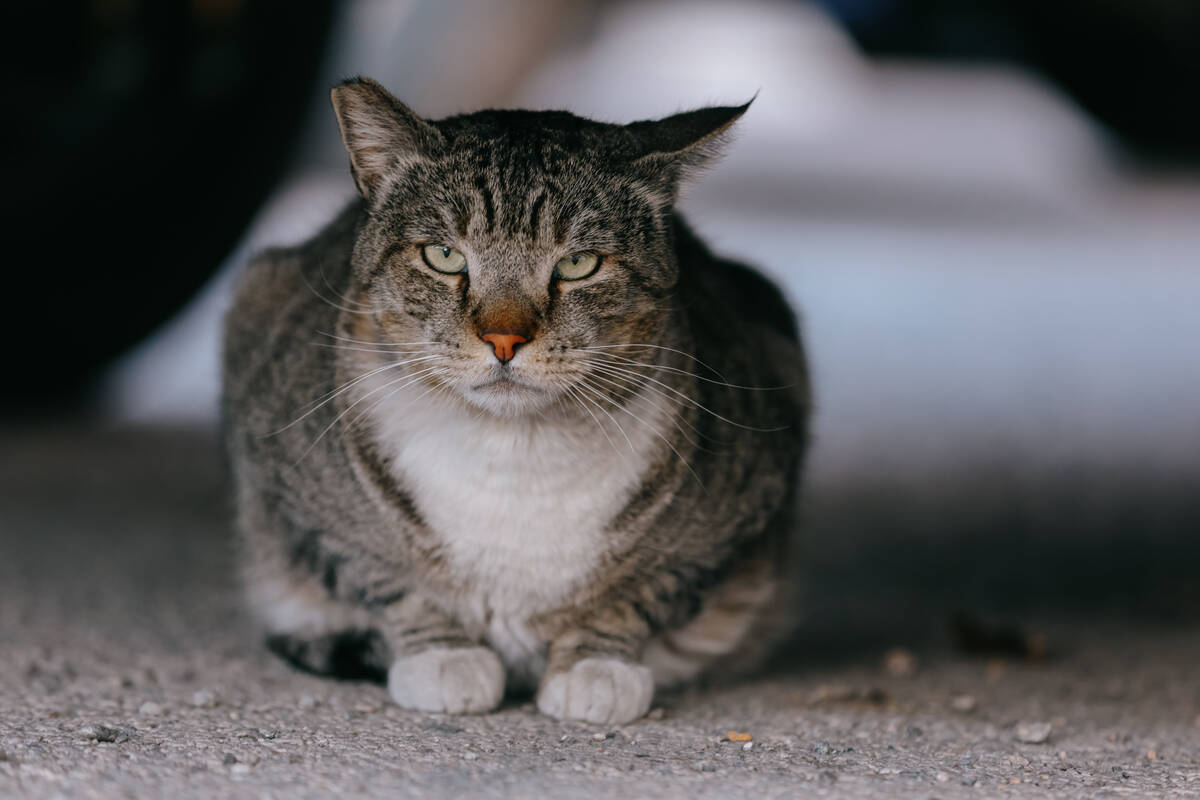
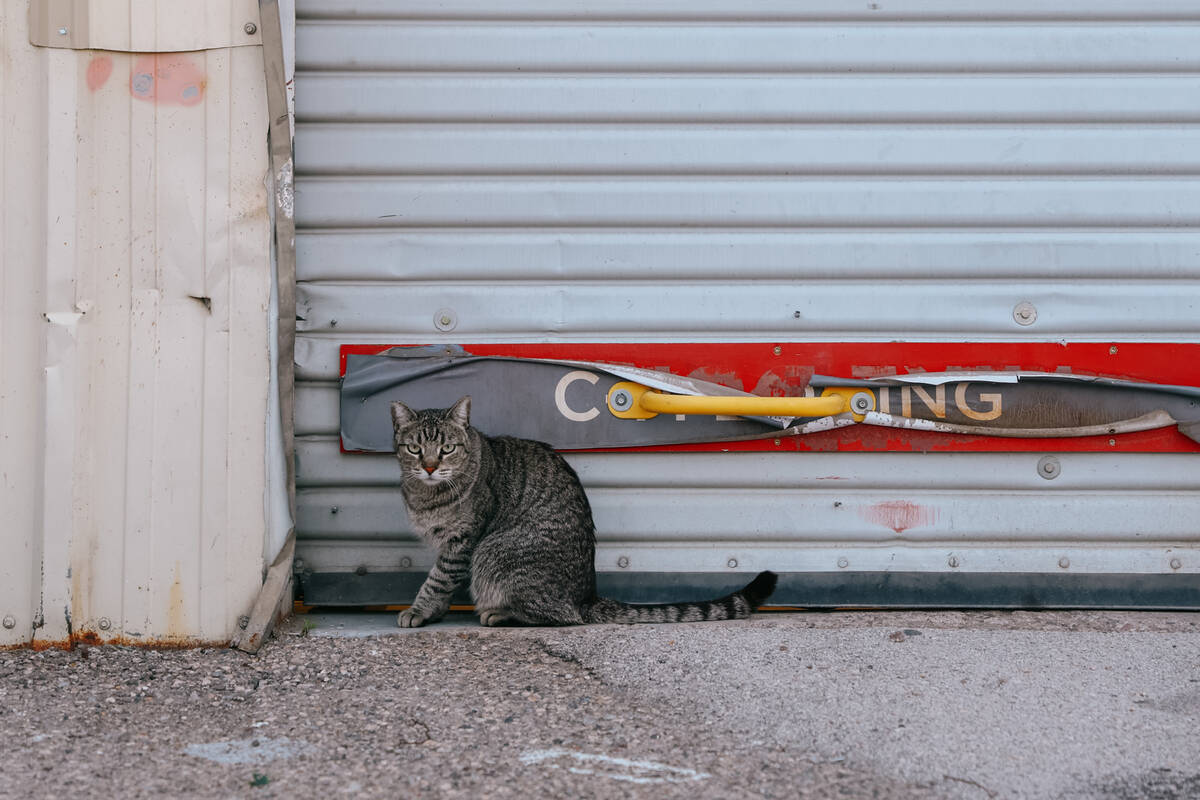

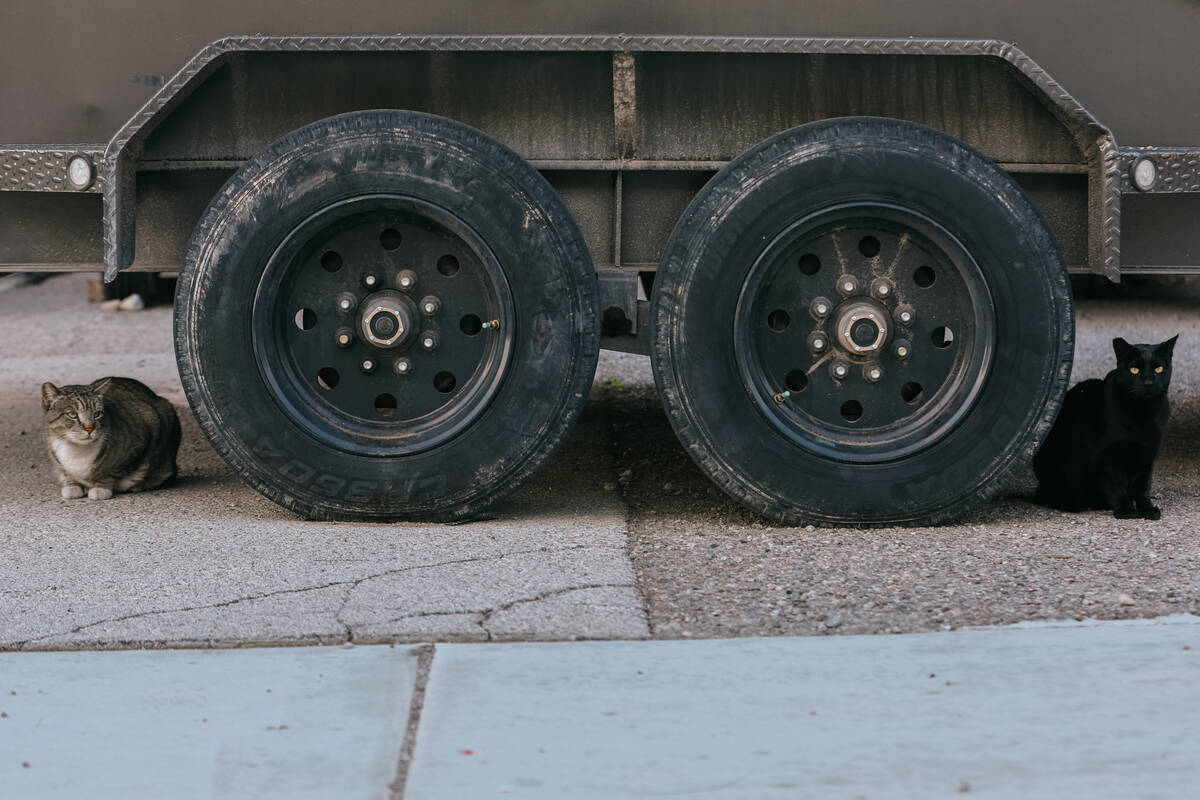
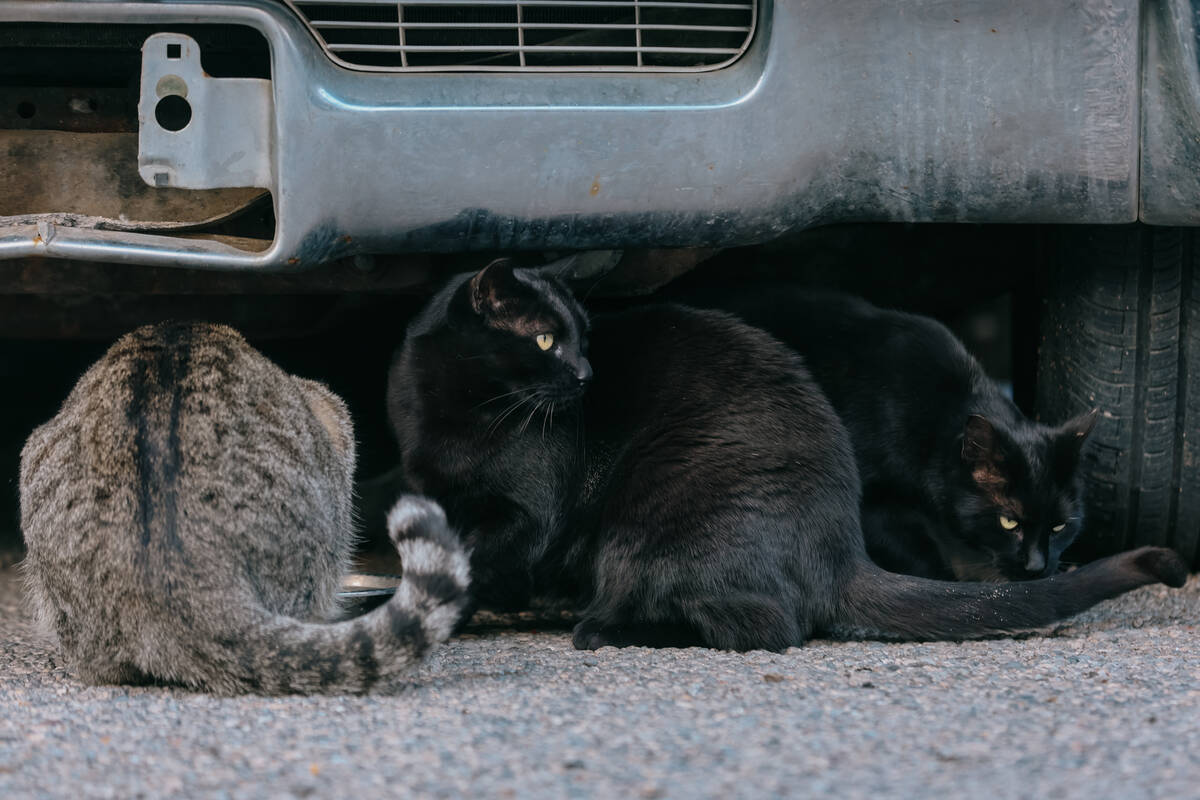






Inside a long-abandoned 1964 Chevy II Gasser in an industrial lot just north of the Strip, a grey tabby cat named Spice sat in the back seat, looking content on a cold January afternoon.
Spice, who received her name because she has a tendency to get animated when she’s hungry, is one of at least 200,000 — and possibly as many as 400,000 — stray cats in the Las Vegas Valley, experts say.
Some might call them “community cats” or “free-roaming cats,” but observers agree the population has grown significantly since the pandemic, and animal welfare advocates are now trying to get word out about how best to deal with the flood of felines in Southern Nevada.
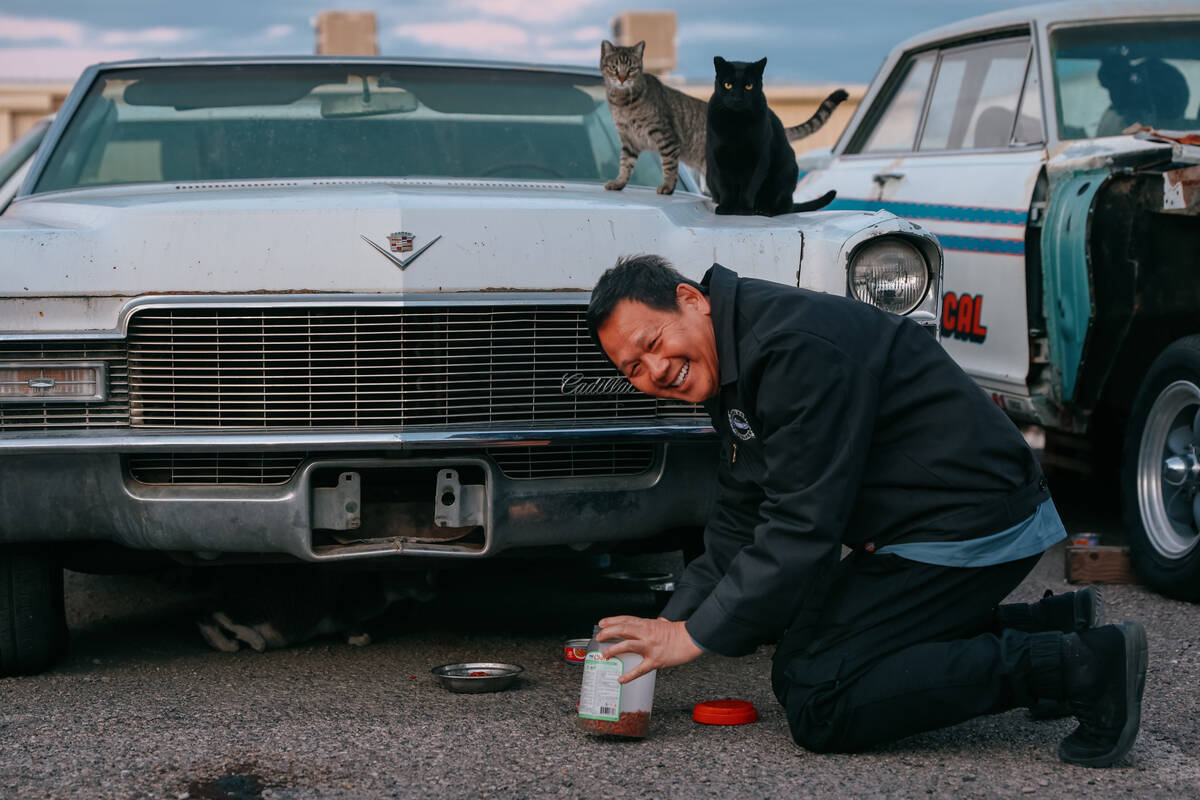
“They’re intelligent animals,” said James Mah, who owns the just over 1-acre lot that Spice and several other strays call home. “It’s important to try to educate people about these cats. Some people feed them, but they don’t do anything to get them fixed. Feeding the strays is a short-term fix, but it does nothing long-term.”
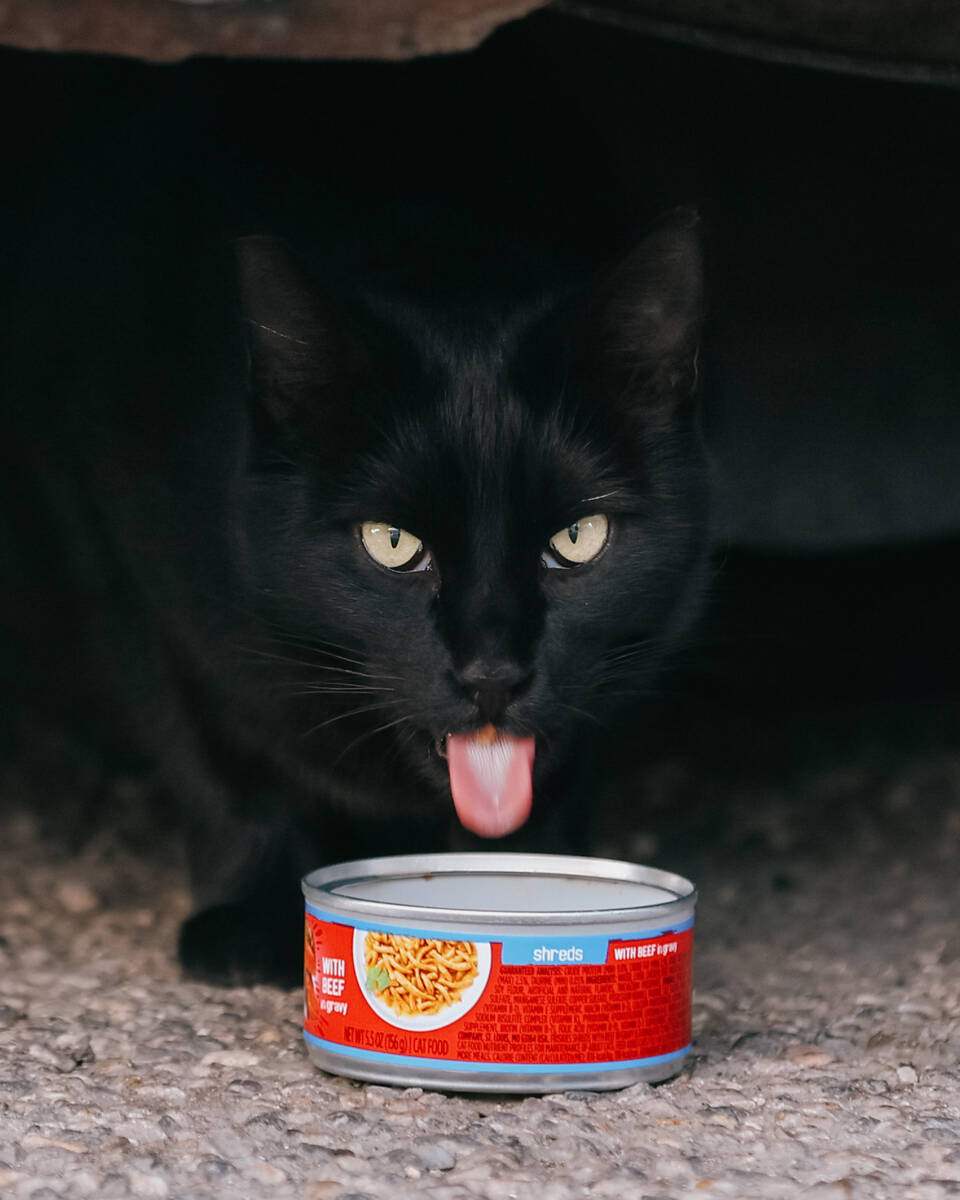
Luckily for Spice and the other cats, Mah provides food twice per day. When Mah, 61, who is also a professor at UNLV’s School of Dental Medicine, placed cat treats under the car, Spice perked up.
“I’ll have to stand back a little now so she’ll come to get them,” he said.
Sure enough, Spice stretched and started to make her way out of the car and over to the treats on the ground. She and the others know the drill.
The lot is home to Imperial Transmission and a few other buildings. It sits in the shadow of The Strat, which towers above.
Mah, who said he wasn’t interested in cats until a few years ago, became aware of the stray problem on his lot and decided to do something about it.
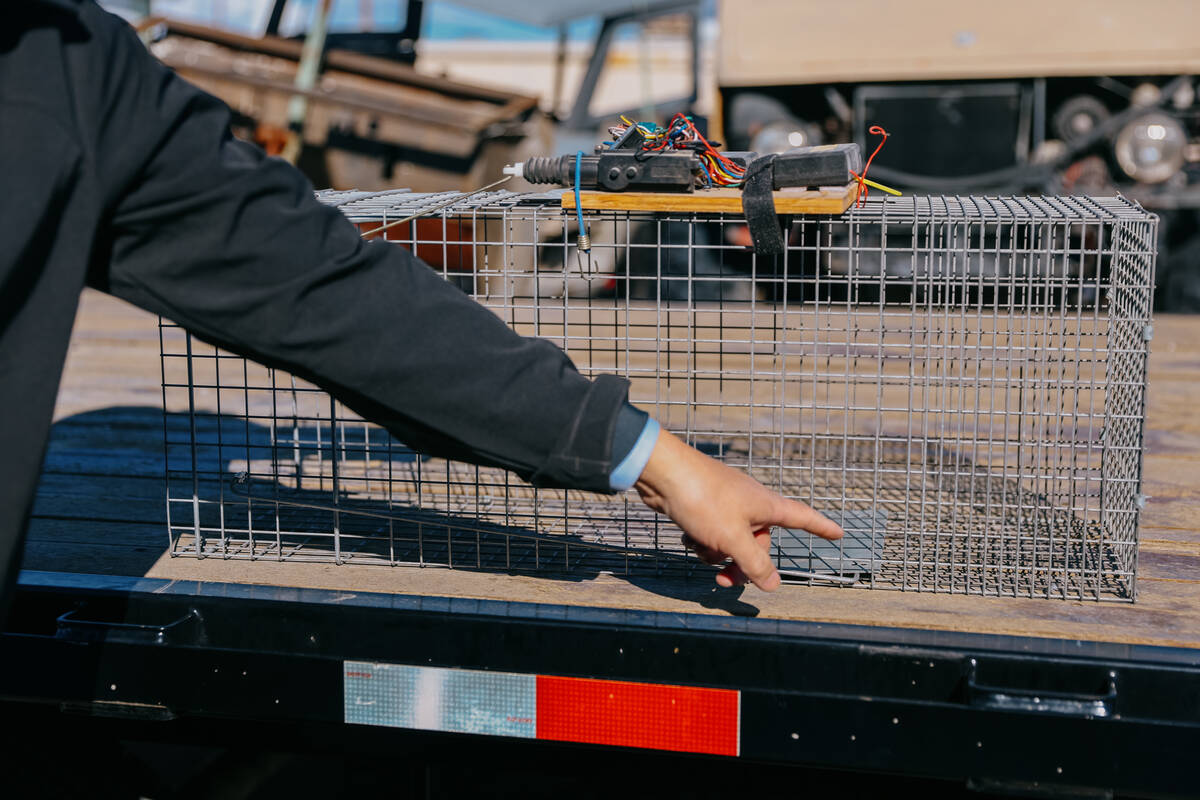
He began to trap some of the cats so they could be spayed and neutered. Since he started, Mah said he’s helped get several dozen cats fixed. The overpopulation was so bad at one point that he trapped 14 in one day.
Sterilization is key
Keith Williams, one of the founders of C5, or the Community Cat Coalition of Clark County, a volunteer organization that focuses on spay and neuter efforts for free-roaming cats, said sterilization is the key to managing the cat population.
“There’s about 400,000 kittens being born every year in the valley, so you can’t possibly find homes for enough of them,” Williams said. “The answer is to sterilize everything you can get your hands on. The answer is to work on the supply side to get the shelters and the rescues a little help.”
Before the COVID-19 pandemic, Williams said the stray cat population was being handled reasonably well, though the tide has turned over the course of the past few years. During the pandemic, many businesses and organizations closed their doors, which meant there would be a lot of catching up to do.
Spay and neuter numbers have started to recover in recent years, but more needs to be done, Williams said.
“We lost a significant amount of spay/neuter surgery resources and we lost a lot of focus on the importance of spay/neuter,” Williams said. “The progress we were making before the pandemic stopped, and we’re actually going the wrong way now. The surgery needs far outweigh the supply.”
Trap, neuter and release
One of the providers for trap, neuter and release — typically referred to by the acronym TNR — services in Las Vegas, North Las Vegas and other parts of Clark County is the Animal Foundation, the region’s publicly funded shelter. The foundation performs surgeries through the nonprofit Heaven Can Wait Animal Society.
The foundation does not serve Henderson, but that city started a pilot program for a TNR service in 2024.
Brenda Arceo of the Animal Foundation said anyone interested in trapping stray cats can get a trap from the foundation for a refundable $50 deposit. There is no cost to the resident to get a cat fixed, Arceo said.
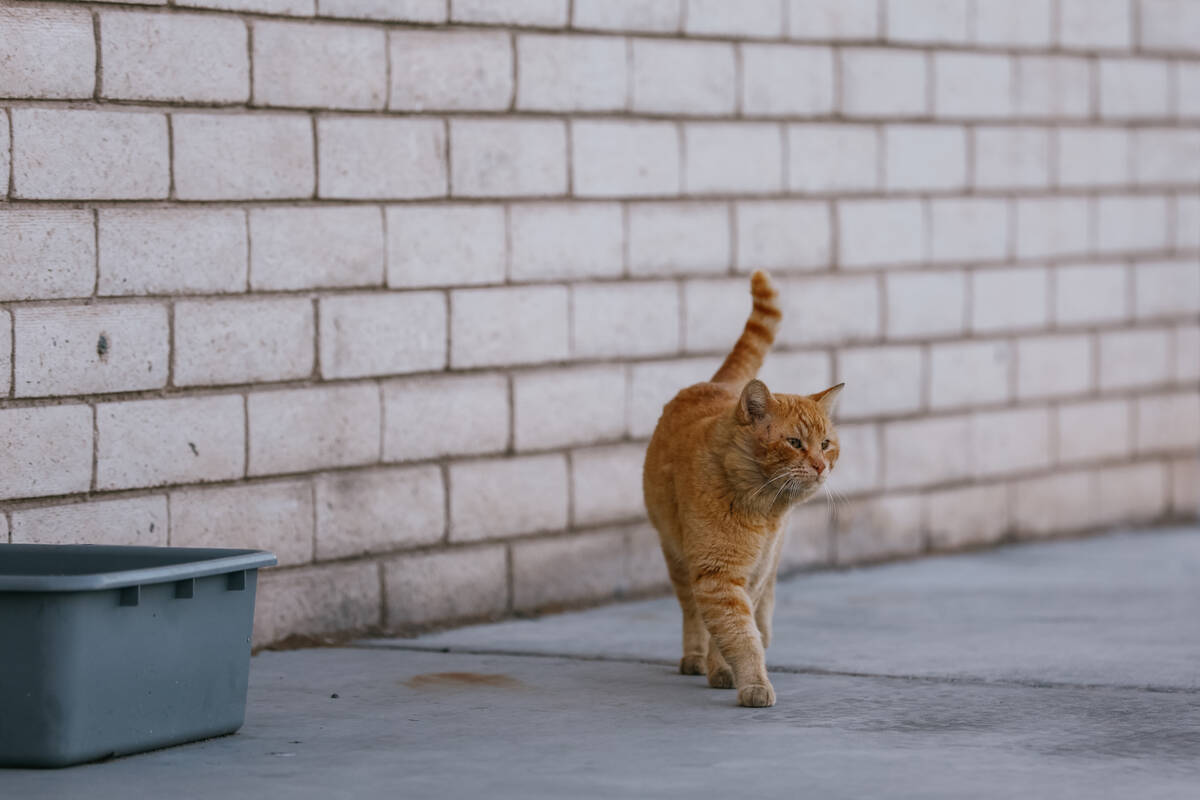
When a cat is fixed, Arceo said, one ear is clipped, which is recognized as the universal sign for sterilization.
Through its cat TNR program, the Animal Foundation paid for over 4,600 surgeries and vaccinations for stray cats last year, according to organization spokeswoman Kelsey Pizzi. In 2024, the number was just under 2,800 surgeries while it was only about 1,500 in 2023.
At Heaven Can Wait, just under 10,000 surgeries were performed in 2025, about a 35 percent increase from 2021, according to the organization’s communications and development manager, Kelly Sheehan.
Resources put into TNR programs remain short, Williams said. That’s partly because the Animal Foundation does fewer in-house sterilizations today that it did a few years ago, Williams said.
Pizzi said the foundation started partnering with Heaven Can Wait in 2021 because of staffing issues. Williams argues that because the foundation does fewer in-house surgeries, it means there’s less availability for the general public, though Arceo said there are plans for another surgery facility to come online.
“In order to make progress, there needs to be at least 4 to 5 percent of the free-roaming cats sterilized per year,” Williams said. “That is about 8,000 to 10,000 cats per year. Until that surgery capacity is rebuilt, the free-roaming cat problem will only increase.”
Cat colonies
Arceo said individual cat colonies — small communities of territorial cats that are usually centered around at least one human feeder — are all over the valley. Hundreds, if not thousands, in fact.
Some cats, she said, belong to multiple colonies, roaming from territory to territory, and can travel as far as 5 miles for food.
“These cats aren’t bad,” Arceo said. “They have the right to be out there because this is their home, too. They’re entitled to live outdoors. We know they also help keep the rodent problem under control, so they’re good for the community in a lot of ways.”
Despite that net positive, stray cats also can be a threat to the bird population.
“Cats are one of the top causes of bird deaths in the United States,” said Dave Anderson, vice president of the Red Rock Audubon Society, a local organization that works to maintain wild habitats in the Mojave desert. “Unfortunately, domestic and feral cats are incredibly efficient predators and kill many of birds, especially young birds before they can fly, and ground-nesting species. If the cats are not spayed/neutered, the feral cat population can multiply quickly, increasing bird predation.”
Williams said many cat feeders do so in secrecy because neighbors, homeowner’s associations, and others might not approve. Williams and Arceo call such people “undercover feeders.”
“There are a lot of them out there,” Williams said. “Trying to stop people from caring about these cats and putting food out for them is a futile exercise. It never works. Our view is if you care about them and you start feeding them, then you need to make an effort to get them sterilized. Once they’re sterilized, they’re no longer a part of the problem.”
Arceo agrees with Williams: The best solution is always to help get cats fixed.
“A responsible cat community, with a responsible feeder, can be a good outlet for some of these free-roaming cats,” Arceo said. “Some of them are not very well socialized, but they’re not aggressive. They’re not going to attack people.”
Tens of millions across the U.S.
Jean Panaccione, a board member with the Las Vegas Valley Humane Society, said the organization has been tracking stray cats in the valley for over three decades.
She said the stray cat issue is not unique to Las Vegas.
“The problem across the country is immense,” Panaccione said. “From my research, the number is anywhere from 60 million up to 100 million homeless cats in the United States. That’s a staggering number.”
In the cat community, people like Mah are called independent trappers. One trapper who works with the Animal Foundation a lot traps as many as 100 cats per month for sterilization, Pizzi said.
“Those are really, I think, the heroes in this situation,” Panaccione said. “People are outside at night in all sorts of weather trapping these cats. You can’t just set a trap and go back the next morning, you have to wait around, so it’s really involved.”
The Animal Foundation has six people on its staff trained to trap cats, Pizzi said. The C5 organization used to have dozens of trappers, but that figure has dwindled, Williams said. Panaccione said the Humane Society works with independent trappers but doesn’t have any on staff.
“When we talk to people who reach to us about stray cats, we always tell them that whatever they’re seeing as far as stray cats, there’s probably triple that actually there,” Panaccione said. “If they say they’re seeing eight cats in their backyard or at their apartment complex, there’s probably at least 20. Here in the valley, we’re at a point where it’s overwhelming.”
‘Cats are a part of that balance’
Back at Mah’s lot, which is a short walk from the Strat, he talked about some of the stray cats he looks after. Sometimes, when he pulls up to the lot, excited cats will greet him by rushing to prance all over his 1998 Toyota Tacoma.
There’s an orange cat name Boy George, a male tabby with white paws named Big Boy, and, of course, Spice.
One of the people who rents space at Mah’s lot is the owner of the Fresh Off the Boat mobile seafood trailer. On a good day, the cats might get to enjoy some sushi scraps, which is a special perk of living at the lot.
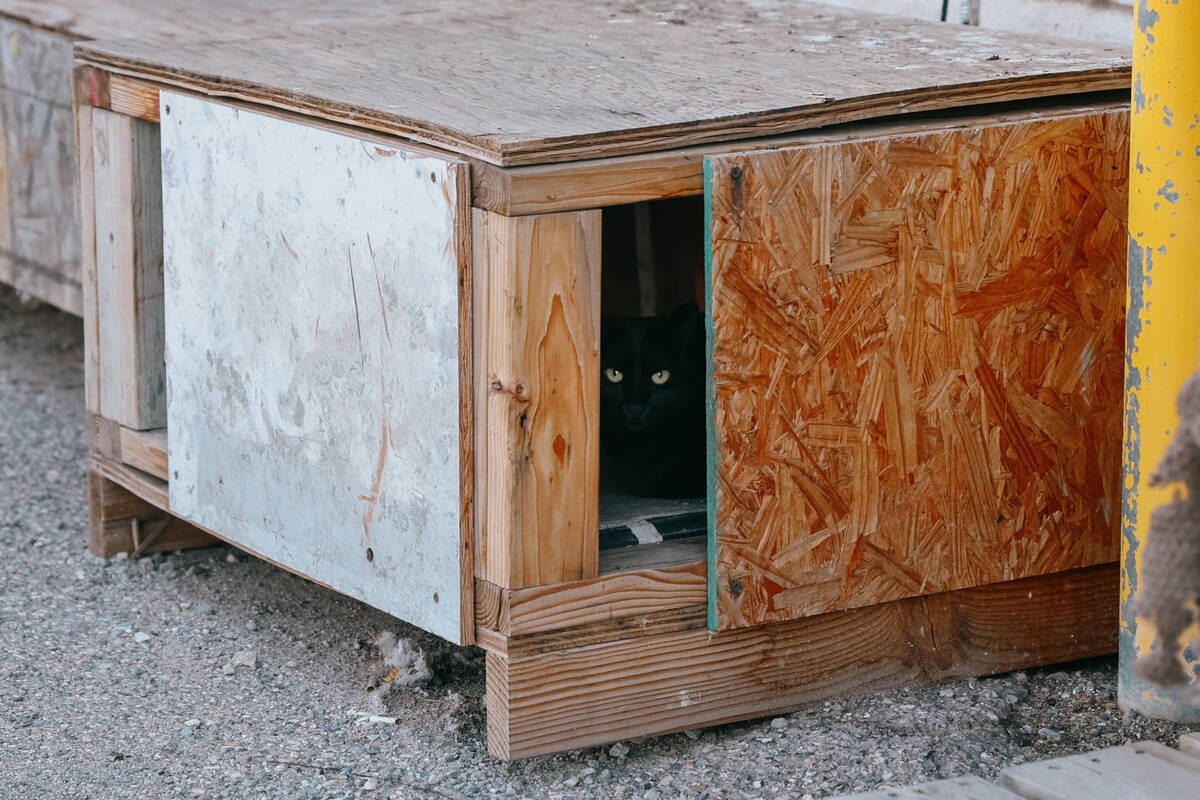
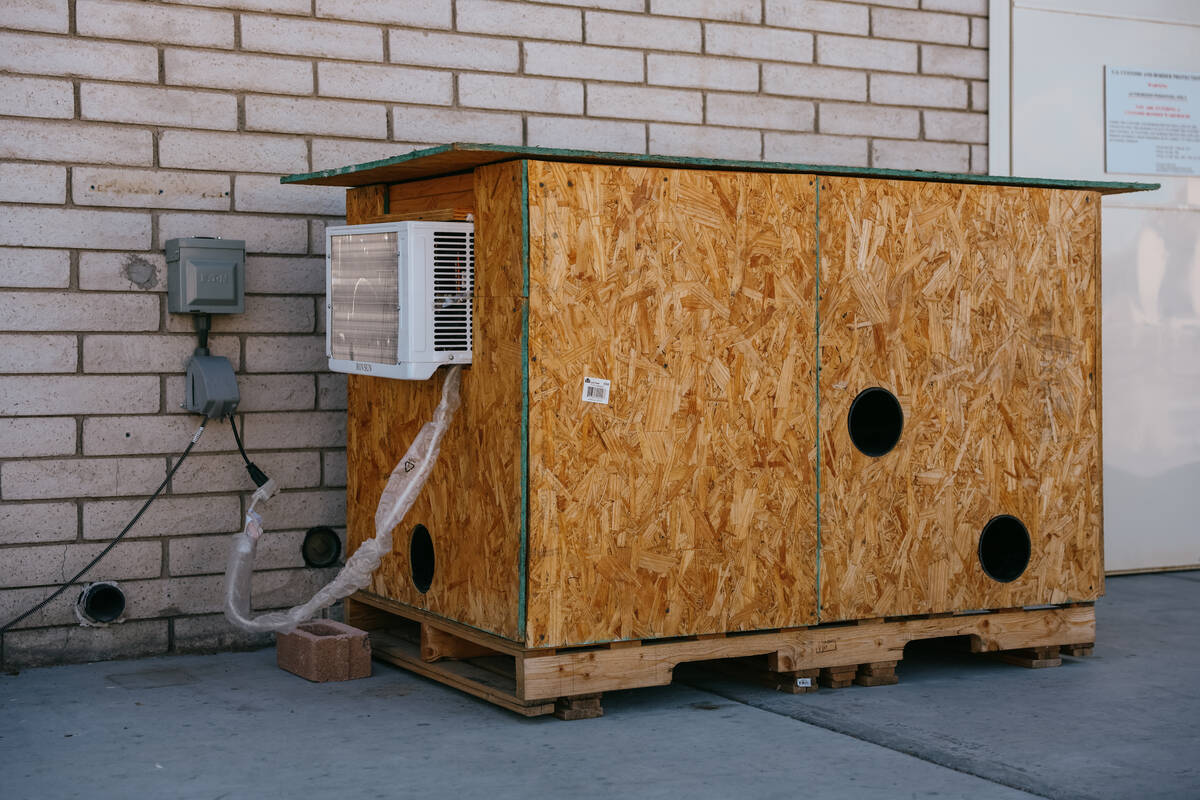
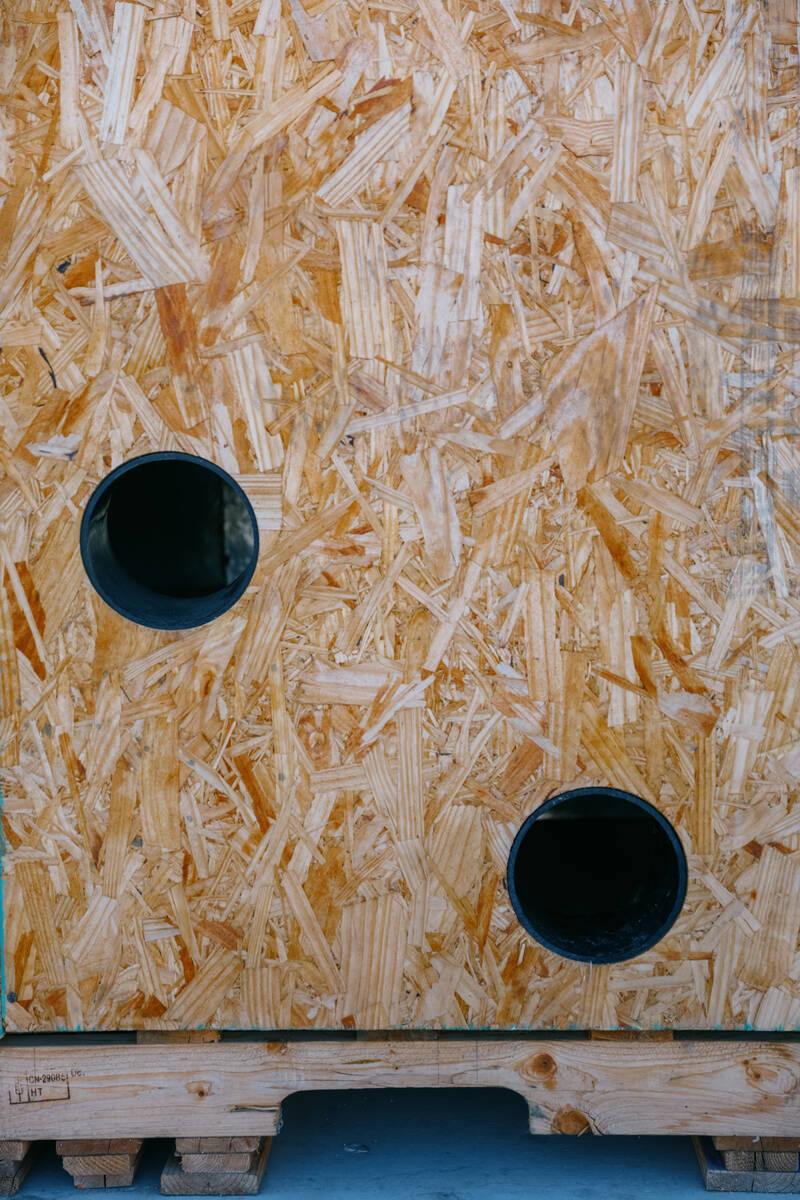
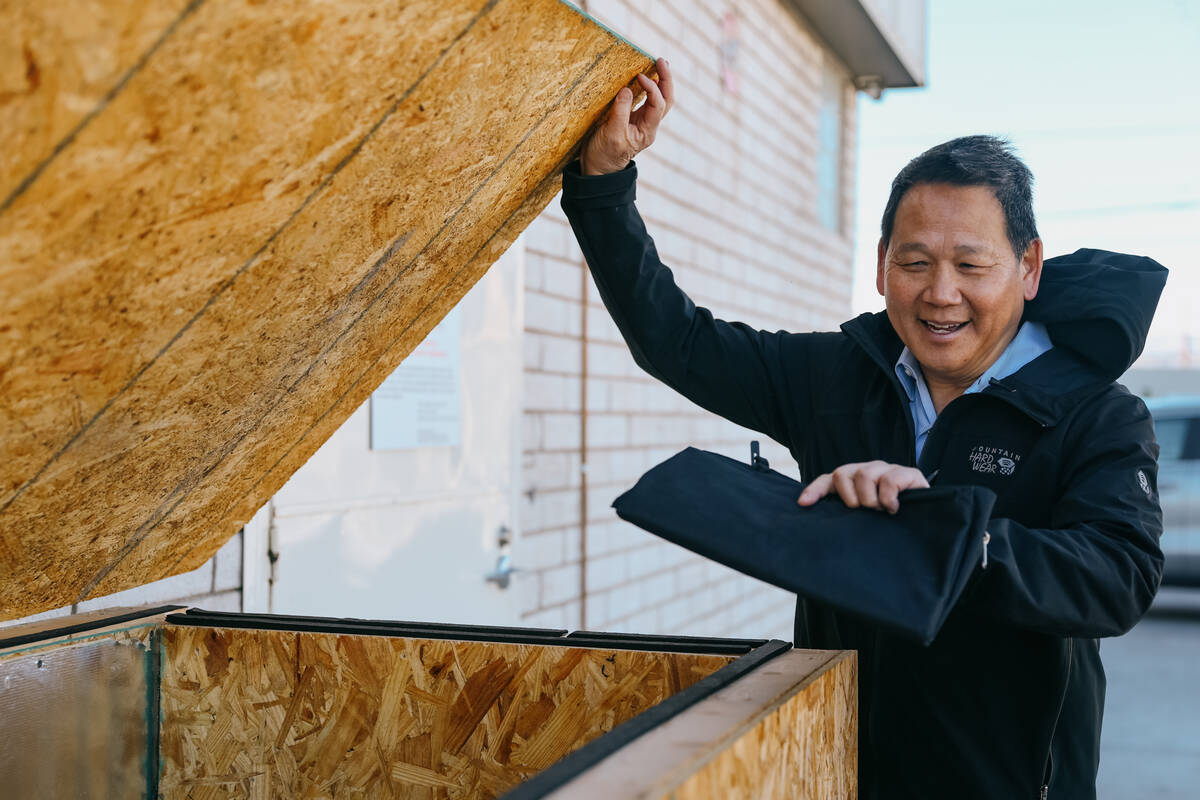
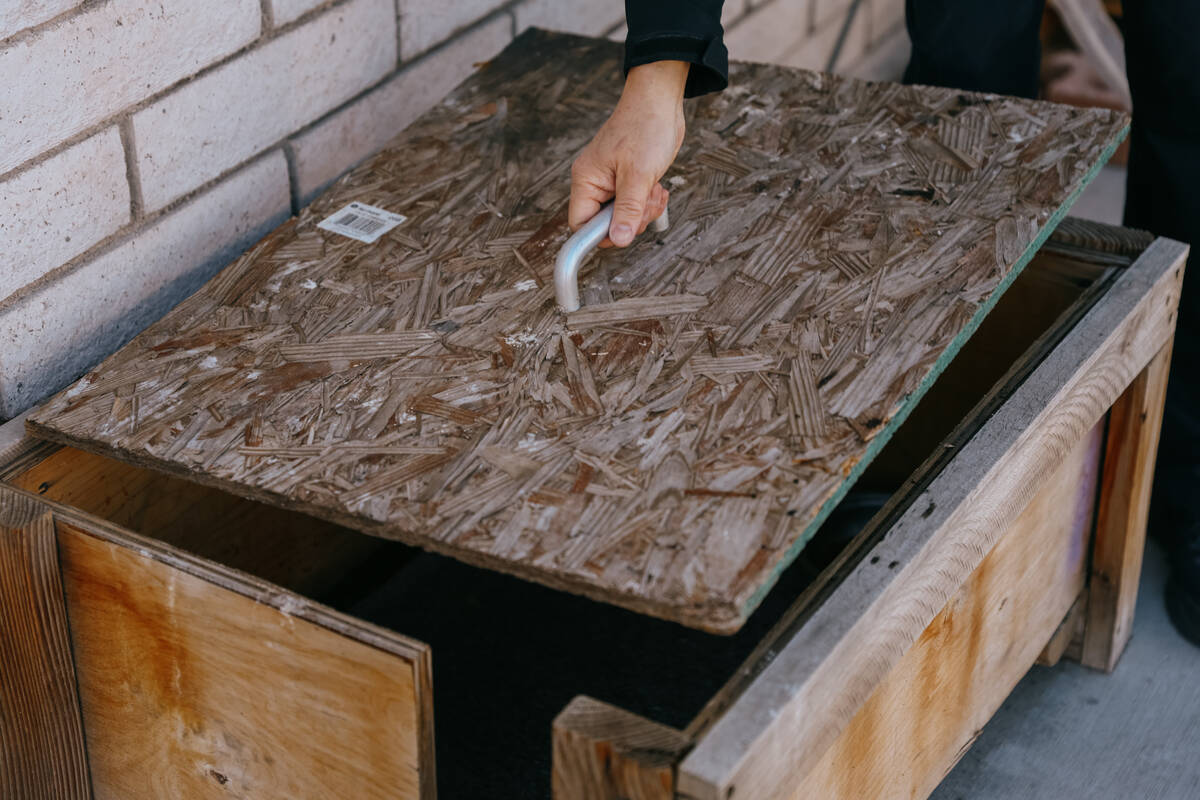
Mah’s handiwork is all over the lot. On one side, there’s a plywood box that he made into a “cat condominium.” There’s also a shelter for the hot summer months, which is complete with a window air conditioning unit.
When asked why he expends so much energy on the cats, Mah talked about his Buddhist-based belief system.
“You believe everything has a soul,” Mah said. “You believe in karma and what comes around and you treat everything in your environment well — the birds, the cats, the other animals, everything in your environment. We have an ecosystem, and that’s how it’s supposed to work. There’s a reason why there’s nature and grass, and you have to have that balance. I think cats are a part of that balance.”
Contact Bryan Horwath at bhorwath@reviewjournal.com. Follow @BryanHorwath on X.


