



‘The Bookie’ started prop bet craze, dishes real reason Tyson lost to Douglas
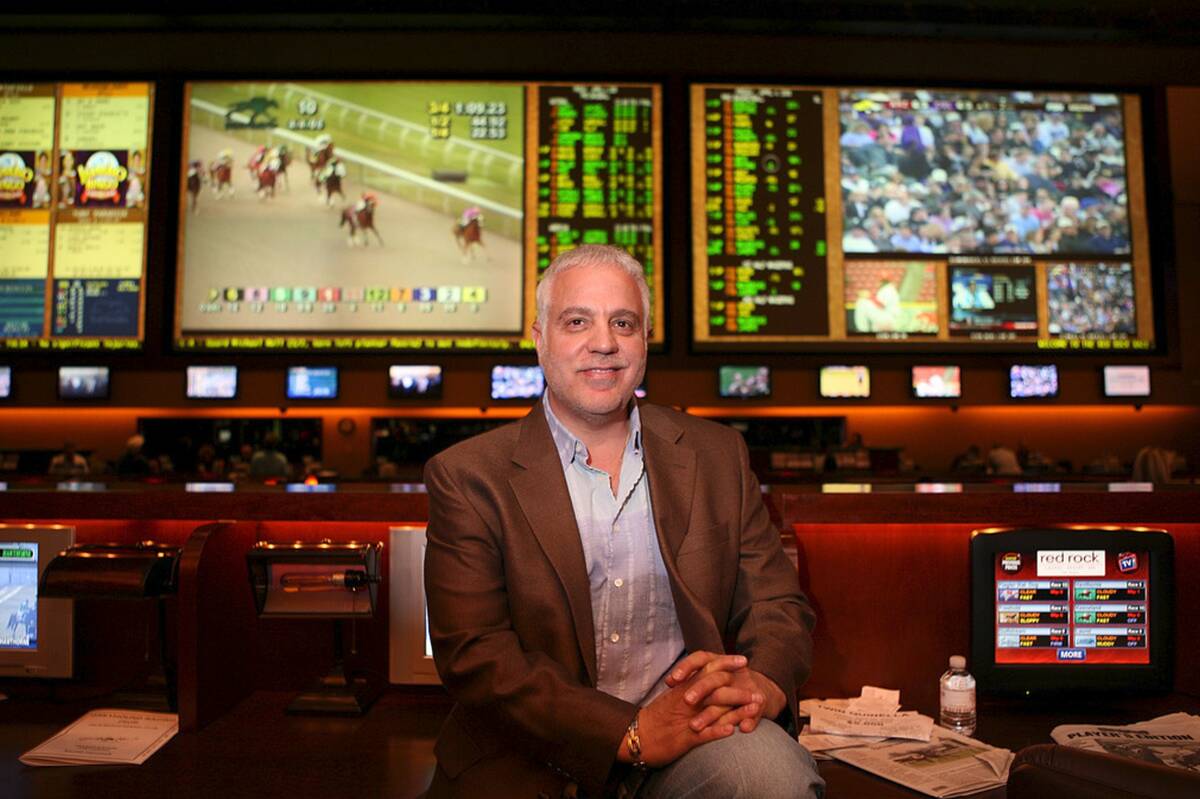




The wild popularity of Super Bowl prop bets was ignited 40 years ago at Caesars Palace, where bookmaker Art Manteris posted a compelling proposition.
Will Chicago Bears massive defensive tackle William “The Refrigerator” Perry score a touchdown in Super Bowl 20 against the New England Patriots?
Perry scored one touchdown in the regular season but hadn’t touched the ball in the playoffs.
“Coach Mike Ditka said publicly that Perry would never carry the ball again. The media loved this team, and as bookies we were trying to come up with new betting angles,” Manteris writes in his new book, “The Bookie: How I Bet It All on Sports Gambling and Watched an Industry Explode.”
Red Rock Resort sportsbook director Chuck Esposito, then a young ticket writer at Caesars, came up with the idea of a prop bet on “The Fridge” scoring a touchdown in the Super Bowl. Bettors pounded the one-way prop, which opened at 20-1 and closed at 2-1. It won big when Perry plowed into the end zone late in the third quarter of the Bears’ 46-10 rout.
“We lost an astounding $250,000 on a single prop, a huge amount at that time, and I was sick over it. How could we come up with such a stupid idea?” Manteris wrote. “The next day I had a really bad feeling that I’d be fired over this.”
When he received a call from Caesars chairman Henry Gluck, he was certain his days were done at the company. But then Gluck congratulated him.
“No casino or sportsbook in Vegas has ever gotten this kind of worldwide, positive publicity over a single wager,” Gluck said. “We couldn’t buy the enormous national and international attention we received.”
Prop bets now account for the majority of the money wagered on the Super Bowl.
Manteris, who previously worked at the Stardust and Barbary Coast, went on to become vice president of the Las Vegas Hilton SuperBook, now the Westgate, and Station Casinos before retiring in 2021.
“It was such a fascinating ride, so much fun, that I wanted to share my story,” said Manteris, 69. “When I was a young manager at Caesars Palace and we had just hosted the Hagler-Hearns fight, I remember thinking to myself at the end of the night, ‘They actually pay me for this?’”
Among the other anecdotes from “The Bookie,” written by Manteris and Matt Birkbeck and available on Amazon, HarperCollins.com and at bookstores:
— Manteris sat near late comedian Rodney Dangerfield at the Marvin Hagler-Thomas Hearns middleweight title fight at Caesars in 1985 that is considered one of the best bouts in boxing history.
“I was seated next to Marvin Hagler’s wife, who was holding their little girl, and Dangerfield kept reaching across to pinch her cheek. ‘Oh, what a cute kid. Yeah, beautiful kid,’ he said while grabbing at her face, a tiny spoon dangling from a gold chain around his neck,” he wrote. “As the national anthem began to play I turned and saw Dangerfield dip the gold spoon into a tiny bottle, scoop out cocaine, and shove it up his nose, one side, then the other. Then he’d reach over and pinch the poor kid’s cheek again.
“I couldn’t believe what I was seeing.”
— Unbeaten heavyweight champion Mike Tyson was a 42-1 favorite (bet $42 to win $1) when he was knocked out by Buster Douglas in 1990 in arguably the biggest upset in boxing history. Boxing promoter Don King claimed Tyson’s shocking loss was due to poor preparation, but Manteris said “Iron Mike” was essentially knocked out by a sexually transmitted disease.
“Dr. Elias Ghanem, the chairman of the Nevada State Athletic Commission, who also happened to be my personal physician and friend, told me that Tyson was being treated for a severe bout of gonorrhea,” he writes. “He was secretly under the care of a physician who had given him heavy doses of prescription medication before he entered the ring, resulting in his lethargic performance and subsequent knockout.”
* Manteris also received a tip from a friend before the 2015 welterweight title fight between Floyd Mayweather Jr. and Manny Pacquiao that Pacquiao was not right.
“He’s not right, and he can’t win,” the friend said. “That’s all I can tell you.”
Manteris said he was faced with the greatest ethical quandary of his career: Protect his sportsbook, change the odds and say nothing, or say something publicly with the expectation that the fight would be postponed and bettors would get a fair shake. He protected his book.
“I had to reverse my position and needed more money on Pacquiao,” he writes. “So I raised Mayweather to minus 200.”
Mayweather cruised to a unanimous decision.
“We did well with the book that night, but without that information from my friend, we would have lost a significant amount of money. Very significant,” he wrote. “Immediately afterward, word got out from Bob Arum that Pacquiao had indeed been hurt before the fight.
“I especially felt sorry for those that bet on him. … I was also very angry with myself. I was part of it. … I had never before had inside information of that magnitude, and it changed my whole outlook. The hypocrisy of being involved in sports while simultaneously taking wagers on it just hit home for me.”
— A bevy of celebrities bet with Manteris, including MLB hit king Pete Rose, pro golfer Phil Mickelson and former NBA star Charles Barkley, who often put down six-figure bets on the NFL at Bally’s . Former Pittsburgh Penguins star Jaromir Jagr loved to bet parlays.
“But he always lost, sometimes in the hundreds of thousands of dollars. He’d bet them in bulk, dozens of them at a time. He never bet hockey, but everything else, mostly baseball,” he wrote.
When Manteris was asked to raise Jagr’s limits, he refused.
“Jagr was so bad at sports betting, we actually felt guilty, and had to put the brakes on him,” he wrote. “I didn’t do that a lot, but I did for Jagr.”
Contact reporter Todd Dewey at tdewey@reviewjournal.com. Follow @tdewey33 on X.



