



Mob Museum VP puts sports betting scandals into historical perspective






The rapid spread of legal sports betting has coincided with a recent rash of gambling scandals.
But the fix has been in on some major American professional and college sporting events for more than 100 years.
Look no further for a reminder than a ticket to the 1919 World Series on display at the Mob Museum in downtown Las Vegas.
Eight Chicago White Sox players were implicated in the Black Sox Scandal and banned from baseball for life for conspiring with gamblers — allegedly including New York crime boss Arnold Rothstein — to throw the 1919 World Series against the Cincinnati Reds in exchange for cash.
“Sports betting scandals are nothing new,” said Geoff Schumacher, vice president of exhibits and programs at the Mob Museum (the official name is National Museum of Organized Crime and Law Enforcement). “The World Series was probably the biggest one of all.
“There is a long history of organized crime being involved in sports — whether they’re fixing boxing matches or horse races or basketball — and it appears it’s not ending anytime soon.”
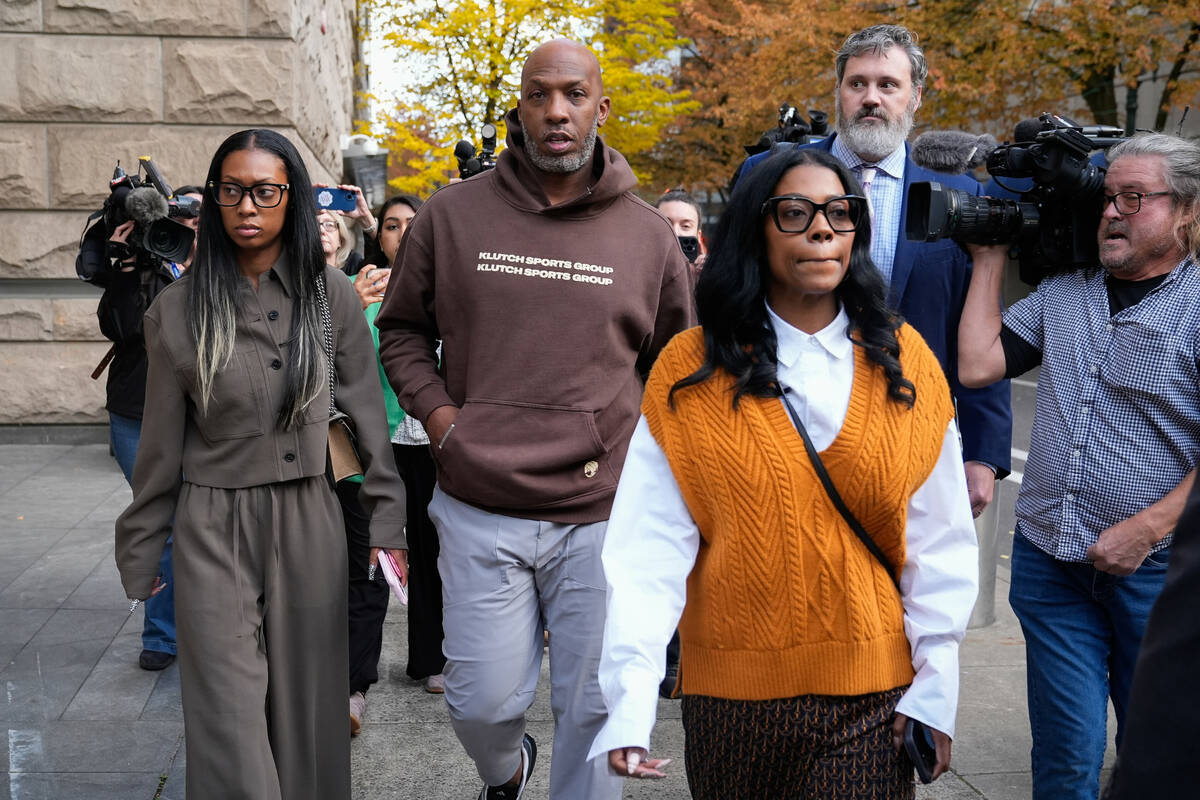
In October, former Portland Trail Blazers coach Chauncey Billups, Miami Heat guard Terry Rozier and former NBA player Damon Jones were among 34 people arrested in a takedown of two sprawling gambling operations related to illegal sports betting and rigged poker games backed by the Mafia.
In January, 26 people were charged in an extensive point-shaving scheme to fix college basketball and Chinese Basketball Association games. The operation involved at least 39 players on 17 NCAA Division I men’s basketball teams who rigged or attempted to rig more than 29 games.
At least two of the defendants — Las Vegas gambler “Sugar” Shane Hennen and Marves Fairley — were charged in both cases.
“My initial thoughts always turn to organized crime and the focus of our museum, which came into play in a big way with the sports betting scandal where the New York Mafia families were allegedly involved,” Schumacher said. “And now there’s this connection between the first set of indictments and the second set. These two common individuals who suggest this is clearly a conspiracy involving multiple people in an ongoing way. So this definitely fits the definition of organized crime.”
Losing proposition
Hennen allegedly placed more than $200,000 in bets on Rozier to finish under his individual prop bets on points, rebounds and assists based on inside information from the player that he would leave a 2023 game early with an injury.
In a similar scheme, Hennen also bet big on former Toronto Raptors player Jontay Porter to go under his props, including an $80,000 parlay that would have paid $1 million before it was canceled by a sportsbook. Porter, who left two 2024 games early with injuries to ensure the under wagers would win, was banned for life from the NBA.
“One reason scandals are popping up right now is the prop bets,” Schumacher said. “It’s just a little easier to manipulate a game if all you have to do is determine how many points one player gets.
“A lot of infamous people like Frank ‘Lefty’ Rosenthal and Richard ‘The Fixer’ Perry were involved in point-shaving scandals back in the ’60s, ’70s and ’80s. But in those days, all you could bet on was the outcome of the game.
“Now you can bet on whether the sixth man is going to score five points. It’s so easy for him to fake a knee injury and only score four points.”
Gotti and Lefty
Illegal gambling has long been a cornerstone and main source of revenue for organized crime, even though many mobsters personally suffered massive gambling losses, including former mob boss John Gotti, who reportedly lost up to $100,000 a week in the 1980s on sports bets.
“One of the reasons I think that mobsters got involved with trying to fix sporting events was a lot of them were bad gamblers,” Schumacher said. “They lost a lot of money on legit games. John Gotti was a horrible gambler. He lost so much money on gambling.”
On the flip side, Rosenthal, portrayed by actor Robert De Niro in the Martin Scorcese mob movie “Casino,” made a name for himself for being a sharp sports bettor.
“One of the reasons Frank Rosenthal rose through the ranks of the mob was he was providing advice to mobsters who were gambling so they wouldn’t be so bad at it,” Schumacher said. “He was what you’d now call a professional sports bettor, and he had a lot of inside information that he developed with coaches and others.”
Rosenthal launched the first modern race and sportsbook inside a Strip casino at the Stardust, where he initially worked in the 1970s without a Nevada gaming license. His license application was then rejected twice by the Nevada Gaming Commission after it learned of his long history of arrests as an illegal bookie and sports fixer.
In 1960, Rosenthal was indicted for allegedly offering $500 to a New York University basketball player to influence the score of an NCAA Tournament game against West Virginia. Later that year, he was charged with attempting to bribe an Oregon football player with $5,000 to influence the outcome of a game against Michigan.
“He also was banned from racetracks in Florida because he was manipulating races there,” Schumacher said.
The Fixer
Perry is probably best known in Las Vegas for the photo published in the Review-Journal in 1991 of him sitting in a hot tub with three members of UNLV’s 1990 NCAA basketball title team.
In 1984, Perry pleaded guilty to conspiring to commit sports bribery in the 1978 Boston College basketball point-shaving scheme. In 1974, he was convicted of charges in connection with a Superfecta harness racing scandal in New York, where jockeys were paid to end in specified orders.
Both cases involved individuals associated with the Lucchese organized crime family, including mobster Henry Hill, who was the subject of the Scorcese film “Goodfellas.”
Contact reporter Todd Dewey at tdewey@reviewjournal.com. Follow @tdewey33 on X.



