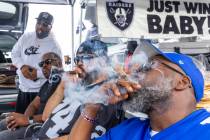
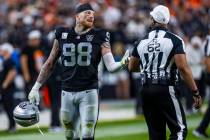
Raiders players try to define NFL fan behavior that crosses lines
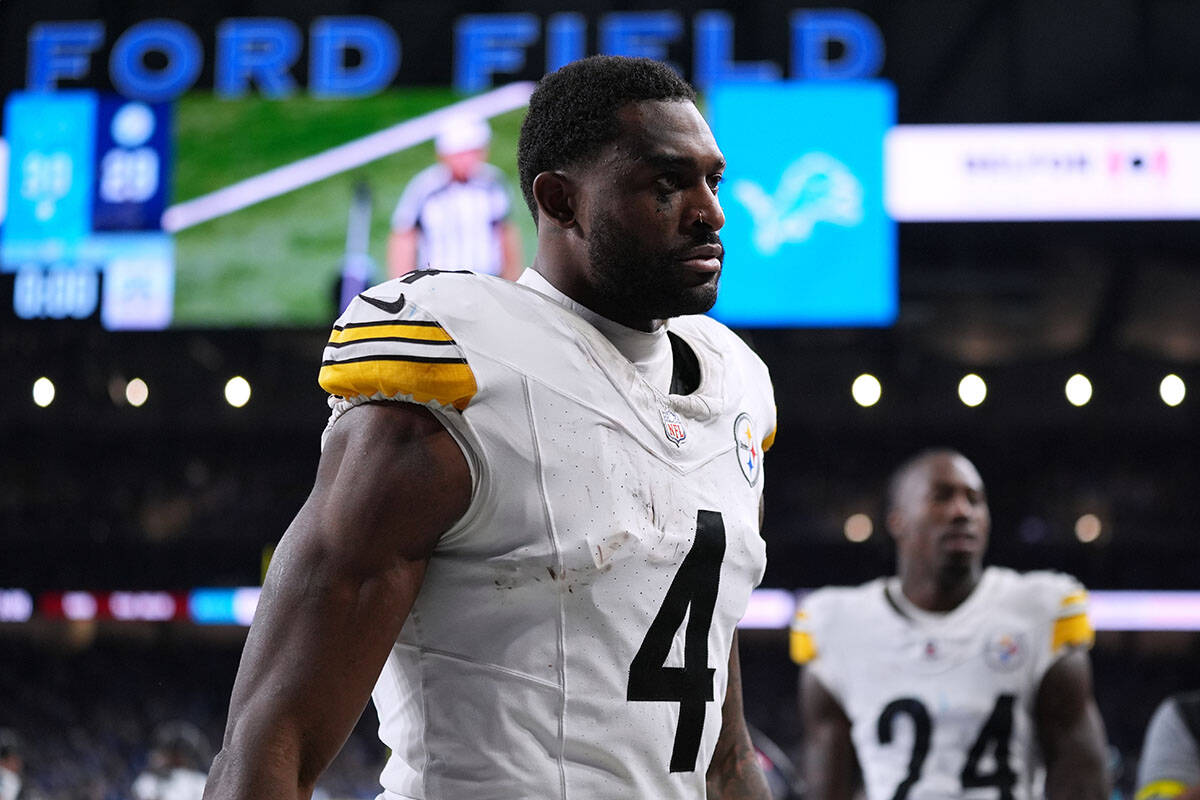




It’s debatable whether the line separating professional athletes and fans has thinned over the years. But as the recent altercation between Steelers wide receiver DK Metcalf and a fan at Detroit’s Ford Field showed, in-your-face incidents between players and fans have never felt more frequent.
It raises the question of how much leeway paying customers are allowed when taunting players or expressing their frustrations, what defines the difference between good-natured fun and impermissible, and how much athletes are expected to take before saying enough is enough and taking action?
After seeing and hearing pretty much everything from fans over the years, Raiders running back Raheem Mostert has adopted an in-one-ear, out-the-other policy.
“I tune it out. Because fans will be fans, whether they cheer for you or hate your guts,” Mostert said. “They’re always gonna try to get under your skin, and when you least expect it, try to find a vulnerability. In that situation, I feel like just not engaging with fans. I think that that’s the best thing that you could do.”
Within reason, of course.
“I don’t care about people talking about me as a player or as a person,” Mostert said. “But when you start talking about my kids and my wife, that’s when the line’s drawn.”
Recent trend
Metcalf was suspended for two games by the NFL after cameras caught him walking up to a fan sitting in the front row during the Steelers game against the Lions on Dec. 21, exchanging words with him and then appearing to throw a punch at the fan’s head.
The fan said Metcalf was mad because the fan heckled the Steelers receiver by calling him by his full name, DeKaylin Zecharius.
However, Tom Pelissero of the NFL Network reported that a source told him the fan made an offensive comment about Metcalf’s mother and called Metcalf “something we both know you don’t call a black man.”
The Metcalf incident follows a recent trend of incidents involving athletes and fans.
In just the last few years, NBA stars LeBron James, Russell Westbrook, Chris Paul and Trae Young have been prompted to ask security to eject fans who crossed the line with their heckling, including making offensive remarks about family members and, in Young’s case, a fan spitting at him.
Last season in Major League Baseball, a pair of fans were ejected from games after heckling Red Sox outfielder Jarren Duran and Diamondbacks second baseman Ketel Marte. In both instances, the fans referenced deeply personal subjects, including Duran’s struggles with mental health and Marte’s late mother.
Marte was brought to tears after hearing the fans’ taunts.
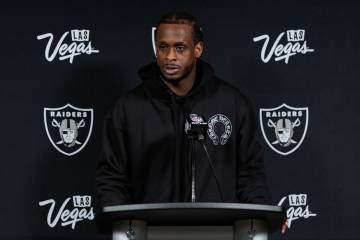
In addition to Metcalf’s altercation with the fan in Detroit, Raiders quarterback Geno Smith was caught on camera making obscene gestures at fans who were heckling him in Seattle and Las Vegas. Meanwhile, Baltimore Ravens quarterback Lamar Jackson delivered a two-handed push to a Bills fan who hit him and his teammate, DeAndre Hopkins, on their game-day helmets while celebrating a touchdown at Buffalo’s Highmark Stadium.
Smith, who apologized for the incidents he was involved in, understands the right of fans to express themselves and make their presence felt. Even if it means booing the home team out of frustration or trying to get under the skin of opposing players.
It’s part of the whole game-day experience and helps create a real home-field advantage. But Smith believes there has to be some sort of off-limits zone.
“Obviously, fans have the right to voice their opinions, and we never want to take that away from them, but it’s all got to be within the realm of not saying anything derogatory,” Smith said. “Obviously, you don’t want to use any words that would offend someone.”
Determining right from wrong
Without the benefit of a universal definition explaining what can and cannot be said, Smith continues to try to turn a deaf ear.
“That’s a judgment call, so players just got to block it out and just play football,” Smith said.
As this season has shown, Smith hasn’t always followed his own advice.
“There are some things that get said, and we’re all humans, and we would like for those things not to be said,” Smith said. “But you got to block it out and keep going.”
As Raiders tight end Michael Mayer explained, it might help if fans could sometimes put themselves in the shoes of players. Or at least consider what they would deem unacceptable if someone were to come up to them in everyday life with personal insults.
“You don’t want to be out there just disrespecting people,” Mayer said. “They got families, they got kids, they got girlfriends, they got lives. So don’t be disrespecting people.”
Mayer, Smith, and Mostert all agree on the positive role fans can play on game day and urge them to do their part. It helps create a home-field advantage.
“Some anger, some madness, I can understand,” Mayer said. “We want to win more games. So, I get that. But I feel like, you just don’t want to be out there disrespecting people who are putting their hearts out for this game.”
Mostert will put up with just about anything. But when it comes to his family, or anything with racial undertones, all bets are off.
“I think that that’s the ultimate line,” Mostert said. “Then you have to really speak your mind and really own up to what that person said or how they feel. And talk to them.”
Contact Vincent Bonsignore at vbonsignore@reviewjournal.com. Follow @VinnyBonsignore on X.
Up next
■ Who: Raiders vs Giants
■ When: 1:05 p.m. Sunday
■ Where: allegiant Stadium
■ TV: CBS
■ Radio: KRLV-AM (920), KOMP-FM (92.3)
■ Line: Raiders -1½; total 41½