



Las Vegas gambler charged in college basketball betting scandal
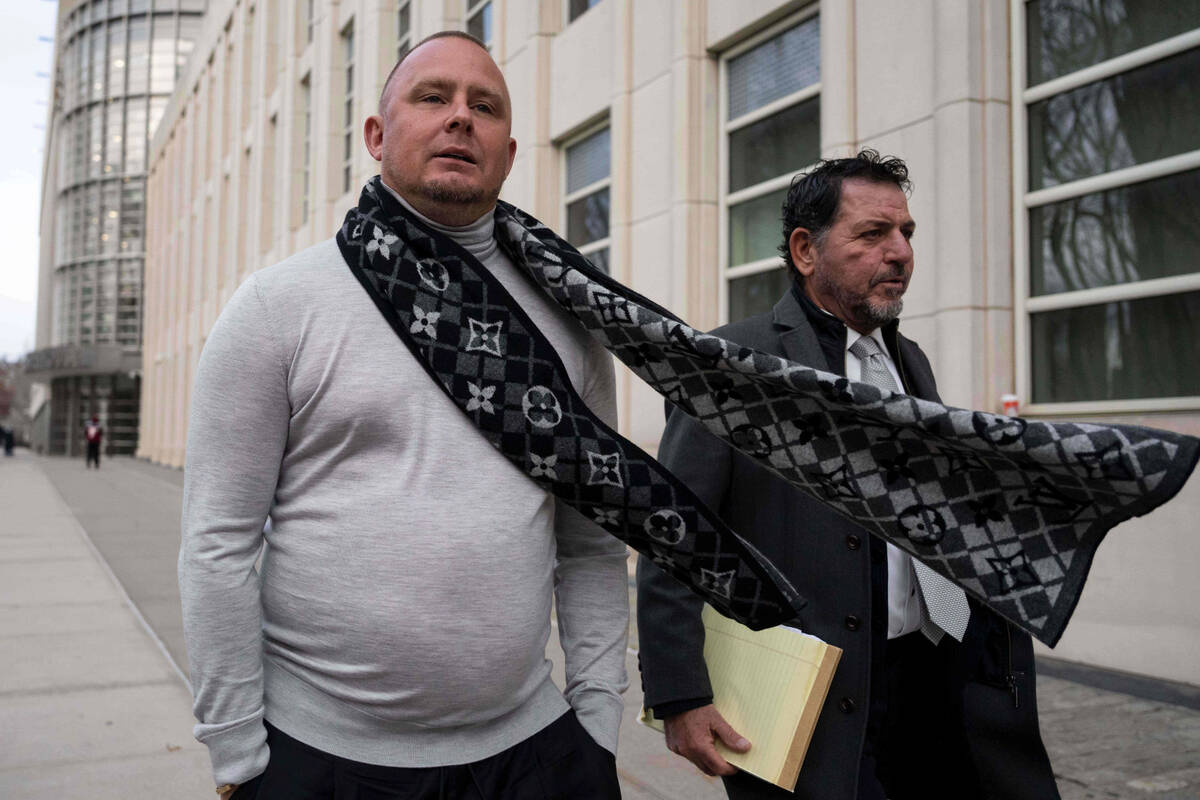

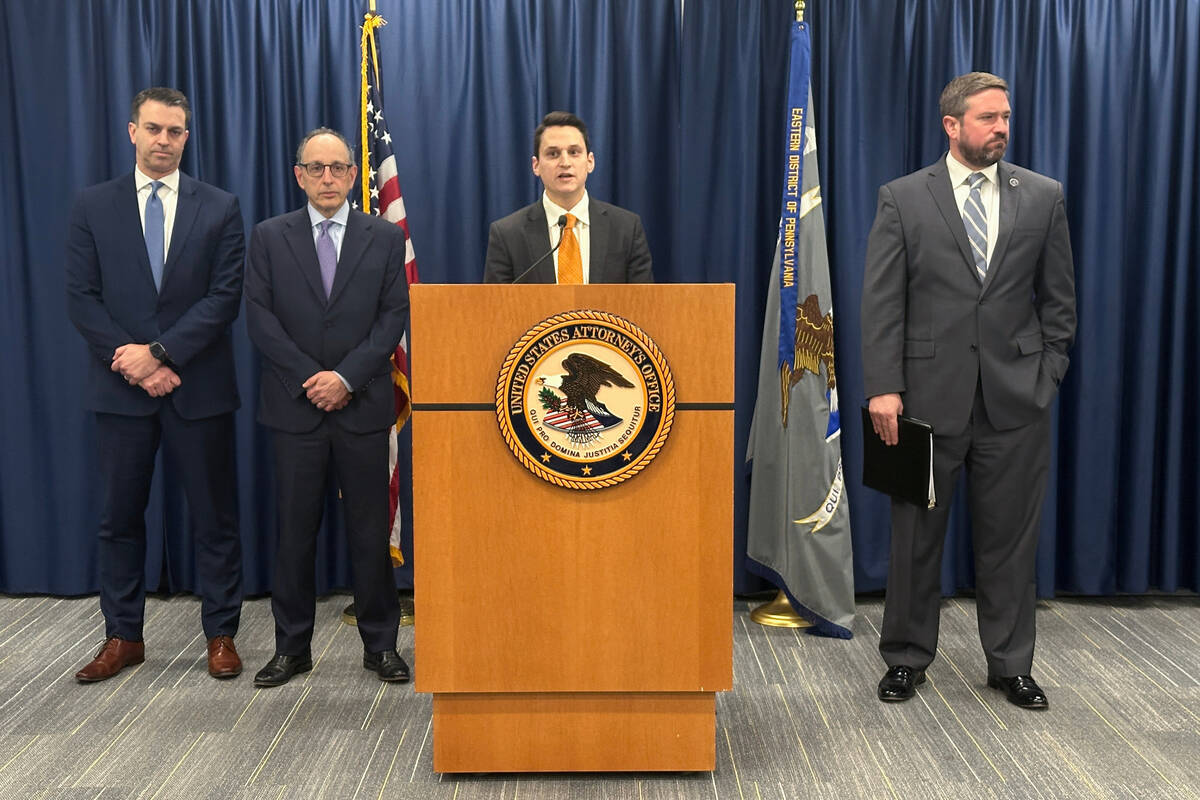




A new year. A new sports betting scandal. The same Las Vegas gambler at the center of it.
“Sugar” Shane Hennen, a resident of Pennsylvania and Nevada, was one of 26 people charged Thursday by federal prosecutors in Philadelphia in a sprawling point-shaving scheme to fix college basketball games.
The scheme involved at least 39 players on 17 NCAA Division I men’s basketball teams who rigged or attempted to rig more than 29 games in the 2023-24 and 2024-25 seasons, prosecutors said. Twenty of the defendants played college basketball the last two seasons and four defendants played in the last week.
Five defendants, including Hennen, were described by authorities as “fixers,” who recruited players to take part in the scheme and paid bribes typically ranging from $10,000 to $30,000 per game.
According to the indictment unsealed Thursday, fixers started with two games in the Chinese Basketball Association in 2023 and, after the scheme was successful, they moved on to fixing NCAA games as recently as January 2025.
Hennen allegedly texted another fixer that there is “Nothing guaranteed in this world but death, taxes and Chinese basketball,” court papers said.
He previously was charged in October 2025 in a federal probe into rigged poker and sports betting schemes involving former NBA players Damon Jones, Terry Rozier and Chauncey Billups, and members of Mafia families, according to court records.
In addition to Hennen allegedly participating in a scheme to use inside information to win prop bets on NBA games, he also was accused of providing cheating technology to others involved in a scheme to fix illegal poker games.
In January 2025, Hennen was arrested at Harry Reid International Airport after federal prosecutors accused him, in yet another case, of profiting from prop bets on former Toronto Raptors player Jontay Porter. Porter was banned from the NBA in April 2024 for violating league gambling rules.
Hennen was allegedly at the airport with a one-way ticket to Colombia when he was arrested. Defense attorney Todd Leventhal said his client had a round-trip ticket and was traveling for a dentist appointment.
‘No longer welcome’
Hennen is a known sports bettor in Las Vegas.
“Hennen is somebody that in the past did make wagers here,” Westgate vice president of race and sports John Murray said. “Obviously, he is no longer welcome to wager here, per compliance.
“Nevada is such a regulated market, and anytime someone is linked to these sorts of things, we’re not going to accept their action.”
Murray said it’s been years since Hennen bet at the SuperBook and that none of his wagers were suspicious.
“When you’re talking about getting down those large amounts of money on player props that these groups are doing, that wouldn’t be done here,” he said. “I just recall him making bets on games, nothing out of the ordinary.
“Nothing was suspicious here, as far as his wagers with us.”
‘Major red flags’
The schools named in the indictment were Abilene Christian, Alabama State, Buffalo, Coppin State, DePaul, Eastern Michigan, Fordham, Kennesaw State, La Salle, New Orleans, Nicholls State, North Carolina A&T, Northwestern State, Robert Morris, Saint Louis, Southern Miss and Tulane.
The players involved are Kennesaw State’s Simeon Cottle; Eastern Michigan’s Carlos Hart, with allegations tied to a previous stint at New Orleans; Texas Southern’s Oumar Koureissi, tied to his time at Nicholls State; and Delaware State’s Camian Shell, tied to his stop at North Carolina A&T.
Among the wagers listed in Thursday’s indictment were $458,000 on Towson to beat North Carolina A&T, $424,000 on Kent State to cover the first-half spread against Buffalo and a $30,000 first-half money line wager on St. Bonaventure over La Salle.
In a statement Thursday, Buffalo athletic director Mark Alnutt said the school will continue to cooperate with investigators.
“We believe these to be isolated incidents,” he said, “that in no way reflect the values and core ethics of the Division of Athletics or our men’s basketball program.”
A reason for limits
In a statement Thursday, NCAA president Charlie Baker said enforcement staffers from college sports’ governing body have opened sports-betting probes into roughly 40 athletes from 20 schools in the past year.
Murray was incredulous at the amounts allegedly wagered in the scheme.
“They wagered $458,000 on Towson to beat North Carolina A&T? Come on. Where were they making these wagers?” he said. “I don’t recall anything suspicious on a Towson game. All I can say is there’s a reason why we have limits. These amounts bet on these smaller games is a good way to get yourself in trouble.
“$30,000 on a first-half wager on St. Bonaventure over La Salle? If I didn’t know that customer, that would set off major red flags. We wouldn’t want to take wagers like that if we didn’t know who the customer was.”
Circa sportsbook director Chris Bennett said he’s glad the parties involved are going to get punished.
“That kind of crap makes my job a lot less enjoyable,” he said.
The Associated Press contributed to this report. Contact reporter Todd Dewey at tdewey@reviewjournal.com. Follow @tdewey33 on X.
How this scheme allegedly worked
Prosecutors say players involved could manipulate a game, and therefore the bets related to it, by intentionally underperforming. Gamblers working with those players could then place wagers based on "higher degree of certainty" as to whether a team would cover or fall short of the spread, according to the indictment.
For example, the indictment charges former college and NBA player Antonio Blakeney with taking payments from two high-stakes gamblers to underperform while in the Chinese Basketball Association during the 2022-23 season.
In one such game in March 2023, Blakeney scored roughly 21 points below his scoring average and his team lost by 31. That covered the spread for the favored opponent so fixers could win most of their bets, according to the indictment.
Fixers later recruited college players to help ensure their teams failed to cover the spread either for the first half or an entire game, offering payments typically ranging from $10,000 to $30,000 per game.
— Associated Press



